Hidden Flooring Costs: 7 Charges to Plan For
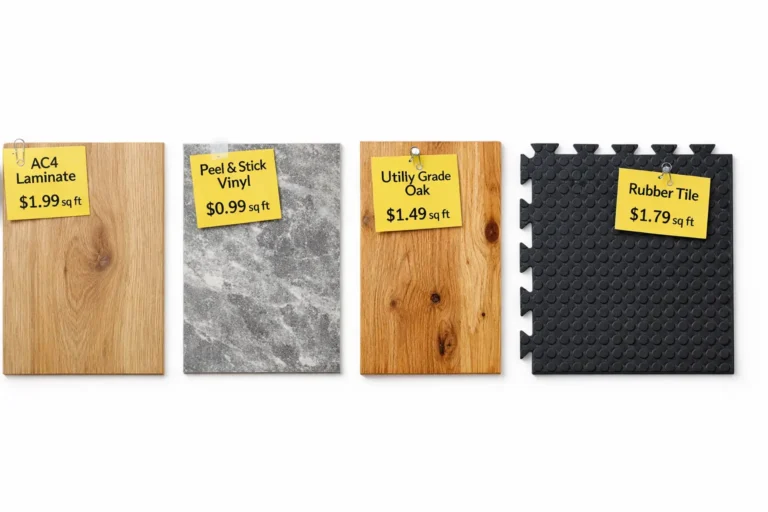
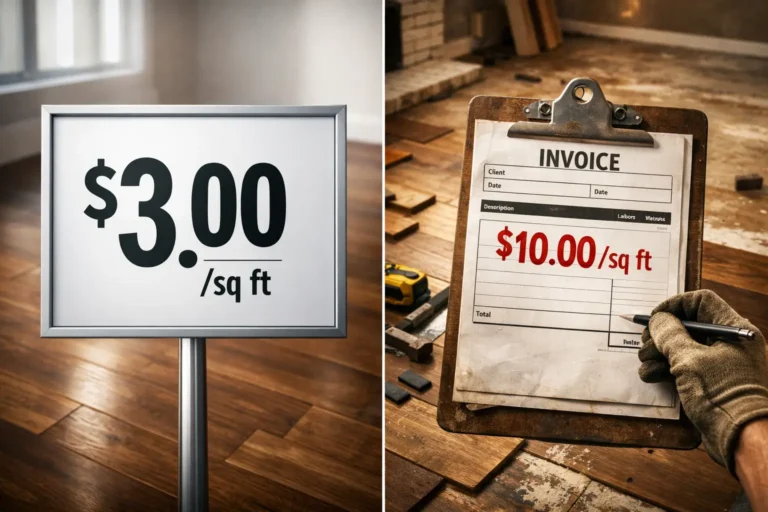
Most people sign a professional flooring contract, thinking they have the final number. Final project costs can increase when removal, disposal, subfloor preparation, trim, moisture work, furniture moving, or other items fall outside the initial scope.
This does not necessarily mean a contractor withheld information. Some conditions are difficult to confirm until the existing flooring is removed and the subfloor is visible. To see how these fees impact different materials, check our Flooring Cost Factors Guide.
Here are common extra costs of flooring installation that may sit outside a base quote and should be discussed before work begins.

Table of Contents
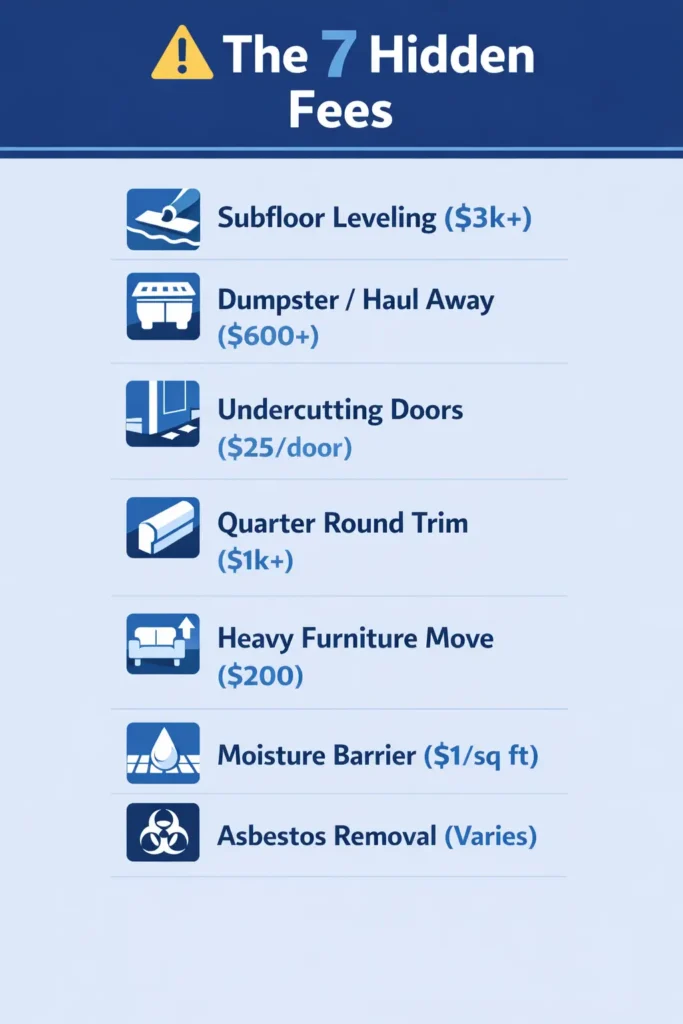
1. Subfloor Leveling and Preparation
Subfloor preparation can materially change a flooring budget when unevenness or damage is discovered.
Modern floors, especially Luxury Vinyl Plank (LVP) and laminate, can be sensitive to subfloor flatness. Required tolerances vary by product; if the subfloor exceeds the manufacturer’s allowed variation, such as 3/16 inch over 10 feet, movement, joint issues, noise, or a bouncing feel can occur.
- When It May Appear: A base installation quote may not include a full assessment of the subfloor integrity until the room is cleared or demolition exposes the substrate. If unevenness is found, additional preparation such as Self-Leveling Underlayment (SLU).
- The Cost: At rates that vary by product, region, and project conditions, preparation can become a significant additional line item rather than a universal fixed-cost add-on.
Pro Tip: Ask your contractor to walk the floor with a 10-foot straight edge before you pay a deposit. If this cannot be assessed before demolition, ask how subfloor preparation will be documented and priced if it becomes necessary.
2. The Demo & Haul Away Weight and Disposal Costs
Removal and disposal can be separate cost components, especially when debris is heavy or local disposal charges are high.
- Many homeowners see “Demo” on a quote and assume it means the trash goes to the dump, but the flooring demo and haul-away price often includes a weight surcharge. Disposal fees can be higher for heavy materials such as ceramic tile and old mortar.
- A 20-yard dumpster may have rental, delivery, weight, and disposal charges that vary by market; do not assume a fixed price range based only on container size.
- If your quote does not explicitly include disposal, debris removal may be billed separately or remain the homeowner’s responsibility. Confirm demolition, hauling, weight limits, and disposal terms in writing.
3. Protective Tape and Finish Damage
Temporary surface protection can damage some floor finishes if the tape, dwell time, or removal method is incompatible with the product.
4. Door Jambs and the Gap Problem
Your new floor is unlikely to be the same height as your old one.
- When the floor height changes, your doors won’t close, and your trim will appear to be floating. Undercutting door jambs is a slow, dusty process that requires a special saw. Some installers charge separately for this work, with rates varying by market and scope.
- If you go from thick carpet to thin vinyl, you will also see a giant gap under your baseboards. You will have to pay for Threshold Transitions or add Quarter Round molding. Quarter-round is inexpensive to purchase, but the labor to cut and nail it around an entire house can add a meaningful additional amount to your final bill.
5. Moisture Testing and Warranty Documentation
If a floor fails, warranty coverage depends on the product terms, installation conditions, documented testing, and the cause of the problem.
Warranty review may consider a missing or incomplete Moisture Test Report. Moisture testing and documentation requirements vary by product, subfloor, installation method, and warranty; failure to follow required procedures can affect warranty coverage.
Testing practices vary by installer; ask which moisture standard and documentation the flooring manufacturer requires. Ask whether the flooring system requires a Moisture Vapor Barrier; vapor-control requirements vary by product, slab conditions, local practice, and manufacturer instructions. Moisture problems can lead to additional remediation costs, but there is no universal fixed amount.
6. The Furniture Shuffle and Heavy Object Fees
Furniture and heavy-object moving may be outside the base installation scope and should be confirmed in the quote.
- If you have a piano, a pool table, or a large fridge, you can expect to pay a Heavy Object Fee of an amount that varies by item, access, crew, and market.
- If the crew must move furniture during installation, additional labor may apply depending on the contract. Compare the cost and practicality of clearing rooms yourself, using storage, or paying the installer for furniture handling.
7. Asbestos and 2026 Labor Rates
Older homes may contain flooring materials that warrant asbestos evaluation before disturbance, including some Asbestos Tile.
FAQs
What happens if I skip the subfloor leveling?
If the subfloor falls outside the flooring manufacturer’s flatness or condition requirements, the floor can develop movement, joint problems, noise, gaps, or other installation issues. Required preparation depends on the product and actual substrate.
Is it cheaper to do the demolition myself?
DIY demolition can reduce labor costs in some projects, but savings depend on disposal fees, equipment, transport, material type, safety requirements, and how much installer preparation remains afterward.
How can I tell if my contractor is performing a moisture test?
Ask which moisture test the flooring manufacturer requires, how it will be performed, and whether the readings will be documented. The appropriate meter or test method depends on the flooring and substrate.
Why is there a Minimum Trip Fee?
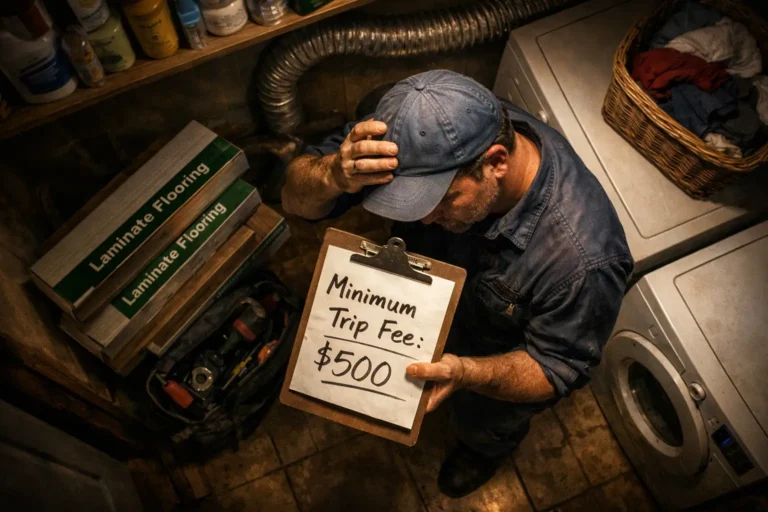
Some installers use minimum job, trip, setup, or mobilization charges because travel, scheduling, tools, and crew time still apply to small projects. The amount varies by contractor, market, and scope.
Can I reuse my old baseboards?
Sometimes. Reuse depends on the baseboard material, condition, removal method, fasteners, paint or caulk, and the new floor height. Some projects can reuse trim; others may need replacement or additional molding.
Will my new floor be ready to walk on immediately?
When the floor can be walked on depends on the product, adhesive or finish system, installation method, curing requirements, and manufacturer instructions. Some floating floors allow prompt use, while other systems require waiting.
Conclusion
Budget planning is more reliable when scope assumptions are documented. Walk the floor with your contractor, confirm whether moisture testing is required, and keep a contingency appropriate to the project’s uncertainty rather than assuming a fixed percentage. For more technical specifications, consult the National Wood Flooring Association (NWFA).
Ready to determine whether you actually need that $10/sq ft wood?