
Hardwood Flooring Cost 2026: Solid vs Engineered Prices
Hardwood flooring is one of the most expensive floors to install, but it can also be one of the longest-lasting. In 2026, most hardwood flooring projects cost about $9 to $25 per square foot installed, depending on whether you choose engineered wood, solid hardwood, oak, maple, hickory, walnut, or a high-end plank.
Material price is only one part of a hardwood budget. Labor, product-specific conditioning, subfloor preparation, moisture-related work, trim, transitions, waste, and finishing can all change the installed cost. To calculate your room area for planning, use our hardwood flooring calculator.
Table of Contents
Hardwood Flooring Cost: Quick Answer
In 2026, solid hardwood usually costs $11 to $25 per square foot installed, while engineered hardwood usually costs $9 to $20 per square foot installed. Material-only prices are lower, but the final installed cost depends on wood species, plank width, veneer thickness, subfloor condition, labor, trim, waste, and whether the floor is nailed, glued, or floated.
- Solid hardwood installed: $11 to $25 per sq ft
- Engineered hardwood installed: $9 to $20 per sq ft
- Hardwood labor only: about $4 to $9 per sq ft
- Common material range: about $4 to $16 per sq ft
- Best long-term value: white oak, red oak, or quality engineered wood with a thicker wear layer
Hardwood Flooring Cost Per Square Foot in 2026
In 2026, hardwood flooring usually costs $11.00 to $25.00 per square foot installed for solid hardwood and $9.00 to $20.00 per square foot installed for engineered hardwood. Material-only pricing is lower, but your final quote changes based on species, veneer thickness, subfloor prep, trim work, and labor.
| Hardwood Type | Material Cost Per Sq Ft | Installed Cost Per Sq Ft | Best For |
|---|---|---|---|
| Solid Hardwood | $5 to $16 | $11 to $25 | Long-term homes, refinishing, classic resale appeal |
| Engineered Hardwood | $5 to $11 | $9 to $20 | Concrete slabs, humidity changes, wider plank looks |
| High-End Engineered Hardwood | $8 to $15+ | $14 to $25+ | Premium designs, thicker wear layers, longer boards |
| Budget Real Wood | $4 to $6 | $9 to $15 | Maple, utility grade oak, rustic rooms, lower material budgets |
Solid and engineered hardwood serve different installation conditions and priorities. Compare the product construction, subfloor, moisture conditions, installation method, refinishing potential, maintenance, and project budget before choosing.
Solid Hardwood Cost
Solid hardwood is made from one full piece of wood. It costs more to install, but it can be sanded and refinished several times if the floor is maintained well. Solid hardwood may suit dry rooms and homeowners who value traditional construction and future refinishing, but resale appeal and service life depend on the home, market, species, finish, installation, and maintenance.
The tradeoff is moisture movement. Solid hardwood is not the best choice for basements, wet rooms, or direct concrete installation unless the subfloor system is built correctly.
Engineered Hardwood Cost
Engineered hardwood has a real wood wear layer over a plywood or composite core. It usually costs less to install than solid hardwood and handles humidity changes better, especially over concrete slabs or in homes where seasonal movement is a concern.
For most 2026 projects, engineered hardwood material costs about $5 to $11 per square foot, while high-end engineered hardwood can cost more because of thicker wear layers, stronger cores, wider planks, and longer board lengths.
If the wear layer is less than 3mm, long-term refinishing options may be limited. For labor-only pricing, see our flooring labor cost per sq ft guide.
High-End Engineered Hardwood Flooring Cost
High-end engineered hardwood costs more because you are paying for the wear layer, core quality, plank length, plank width, finish quality, and milling accuracy. A thicker wear layer gives the floor more long-term value because it may allow future sanding or light refinishing.
| Feature | Budget Engineered Wood | High-End Engineered Wood |
|---|---|---|
| Wear Layer | Thin, often limited refinishing | Thicker, better long-term value |
| Board Length | Shorter boards | Longer boards with a cleaner installed look |
| Core Quality | Basic plywood or composite core | Stronger core with better stability |
| Best Use | Budget remodels and lower-traffic rooms | Main living areas, premium remodels, long-term homes |
Hardwood Flooring Installation Labor Cost
Before scheduling a hardwood installation, ask how the installer will address product conditioning, moisture testing where required, subfloor flatness, transitions, fastening or adhesive, and cleanup for the specific flooring system.
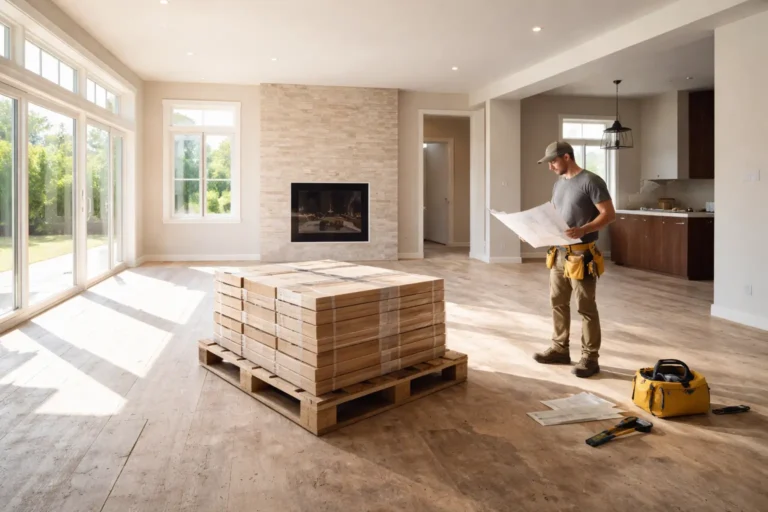
Some hardwood products require site conditioning or acclimation before installation. Follow the flooring manufacturer’s instructions rather than assuming one timing rule applies to every product. This process is often referred to as Acclimation, a standard strictly enforced by the National Wood Flooring Association (NWFA).
- Required conditioning time and method vary by species, product construction, moisture content, site conditions, packaging, installation method, and manufacturer instructions. Some products may require documented moisture conditions rather than a fixed number of days.
- Installing wood outside the manufacturer’s allowed moisture or site conditions can contribute to movement, gaps, cupping, buckling, or other performance problems.
The labor figures on this page are planning ranges, not universal rates. Actual labor depends on location, product, installation method, subfloor condition, layout, stairs, finishing, access, and the contractor’s scope.
Material Cost Breakdown: By Species (2026 Rates)
| Wood Type | Material Cost (sq ft) | Installed Cost (avg) | Lifespan |
|---|---|---|---|
| Oak (White/Red) | $5.00 – $12.00 | $11.00 – $18.00 | Long service life possible |
| Hickory | $5.00 – $13.00 | $12.00 – $20.00 | Long service life possible |
| Maple | $4.00 – $15.00 | $10.00 – $22.00 | Long service life possible |
| Walnut | $8.00 – $16.00 | $15.00 – $25.00 | Long service life possible |
| Exotics (Brazilian Cherry) | $9.00 – $15.00 | $18.00 – $25.00 | Long service life possible |
Best Hardwood Flooring Options Under $5 Per Square Foot
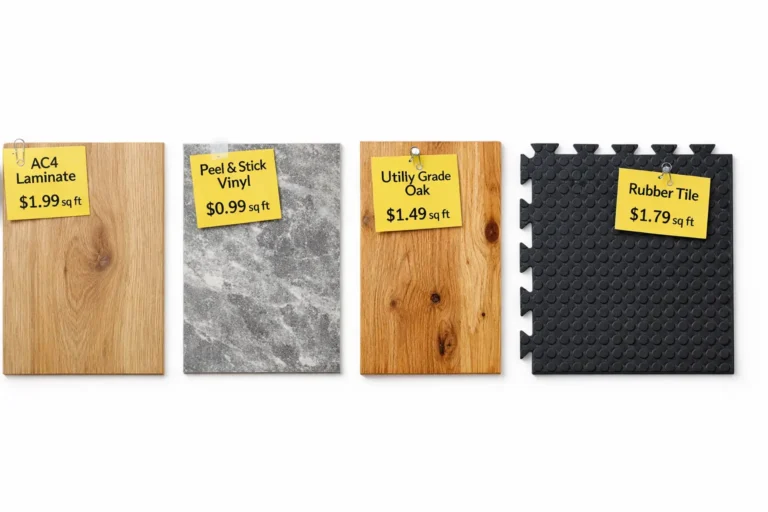
Real hardwood under $5 per square foot is limited in 2026, but it is not impossible. The most realistic options are basic maple, utility grade oak, closeout engineered hardwood, and unfinished or cabin-grade wood from local suppliers.
- Maple: Often the best starting point for lower material pricing if you want real hardwood.
- Utility grade oak: Good for rustic rooms, but you need extra waste because some boards may be unusable.
- Closeout engineered hardwood: Can be a good deal if the wear layer is thick enough and enough matching stock is available.
- Unfinished hardwood: Sometimes cheaper upfront, but finishing labor can raise the total installed cost.
If your goal is the lowest total project cost instead of real wood, compare these options with our best budget flooring options guide.
Hardwood Warranty Risks to Check Before Installation
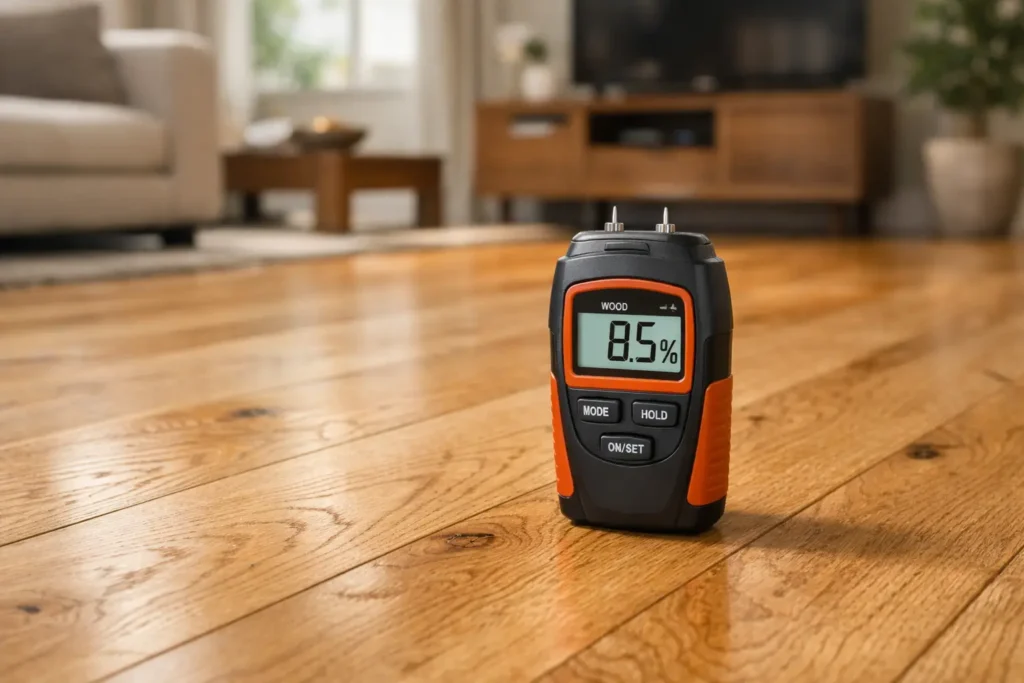
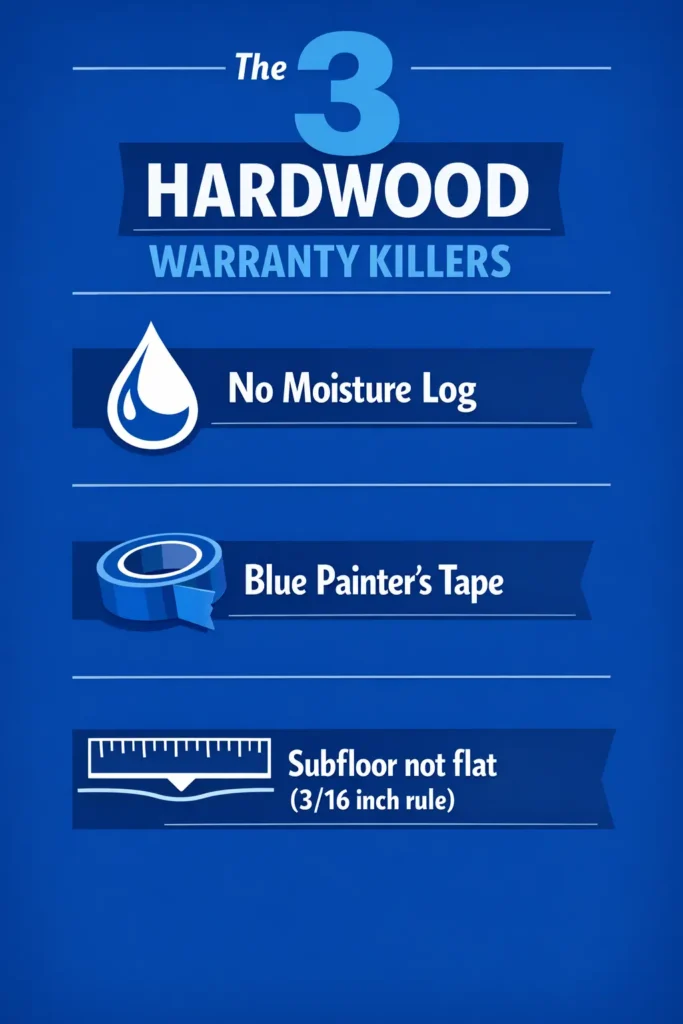
Hardwood warranties often depend on moisture testing, subfloor flatness, approved cleaning products, correct acclimation, and proper installation. Before the floor goes down, ask your installer to document the moisture reading, subfloor condition, and product requirements.
The Moisture Log
- If your installer doesn’t take a photo of the Digital Moisture Meter reading on the day of installation, your warranty is void.
- The manufacturer will simply claim your house was too damp and walk away. (See moisture guidelines from the USDA Forest Products Lab).
The Tape Trap
- Never let your painter put Blue Painter’s Tape on your new wood floor.
- Even gentle tape can strip the wood’s finish when removed.
- I have seen $12,000 floors ruined by a $5 roll of tape.
The 3/16-Inch Rule
- If your subfloor isn’t flat within 3/16 inch over 10 feet, boards will rub against each other.
- That rubbing is what causes the annoying squeaks that never go away.
Hardwood Maintenance Costs and Mistakes
Hardwood maintenance costs stay low when you use the right products, but the wrong cleaner can damage the finish and make future refinishing harder.
- Many Hardwood Cleaners sold in big-box stores contain wax or oils. They make the floor look shiny for an hour, but they leave a sticky film. When you finally try to refinish your floor in ten years, the new finish won’t stick to that old wax.
- Use a neutral-pH cleaner (e.g., Bona) and a microfiber mop. Also, never use a steam mop on real wood. It injects hot water into the grain, causing the wood to discolor and eventually rot from the inside out.
Hardwood Flooring Cost for a 2,000 Sq Ft House
For a 2,000 sq ft house, hardwood flooring can cost about $18,000 to $50,000 installed, depending on the wood type, labor rate, subfloor prep, trim, transitions, waste, and layout. Engineered hardwood usually lands on the lower to middle side of that range. Solid hardwood, wide planks, walnut, hickory, or premium white oak can push the project toward the higher end.
If you are planning a larger project, compare this with our flooring cost for large rooms guide.
FAQs
How much does hardwood flooring cost per square foot in 2026?
In 2026, hardwood flooring usually costs about $9 to $25 per square foot installed. Engineered hardwood often costs $9 to $20 per square foot installed, while solid hardwood usually costs $11 to $25 per square foot installed.
How much does engineered hardwood flooring cost per square foot?
Engineered hardwood usually costs about $5 to $11 per square foot for materials and about $9 to $20 per square foot installed. High-end engineered hardwood can cost more if it has a thick wear layer, wide planks, longer boards, or a premium finish.
Is solid hardwood more expensive than engineered hardwood?
Solid hardwood is usually more expensive to install because it often needs more careful acclimation, nailing, subfloor prep, and finishing details. Engineered hardwood can be cheaper and more stable in homes with concrete slabs or humidity changes.
What are the best hardwood floors under $5 per square foot?
The best real hardwood options under $5 per square foot are usually basic maple, utility grade oak, closeout engineered hardwood, and some unfinished or cabin-grade boards. Always check waste, wear layer, finish quality, and available stock before buying.
How much does hardwood flooring cost for a 2,000 sq ft house?
For a 2,000 sq ft house, hardwood flooring can cost about $18,000 to $50,000 installed. The final price depends on the species, engineered vs solid wood, labor, subfloor prep, trim, waste, and room layout.
What hardwood is best for dogs?
White oak and hickory are better choices for homes with dogs because they handle wear better than softer woods. Avoid soft woods and very dark glossy finishes if scratches will bother you.
Can I install hardwood in a kitchen?
Yes, hardwood can work in a kitchen, but it is not waterproof. Use a durable prefinished product, wipe spills quickly, protect areas near the sink and dishwasher, and consider tile or vinyl if water risk is your top concern.
Conclusion
Hardwood is a status symbol because it is difficult to obtain. It takes a week to acclimate, a week to install, and a lifetime to maintain. But it is the only floor that people will still love 50 years from now. If you are in your forever home, invest in White Oak. It is the gold standard for a reason.
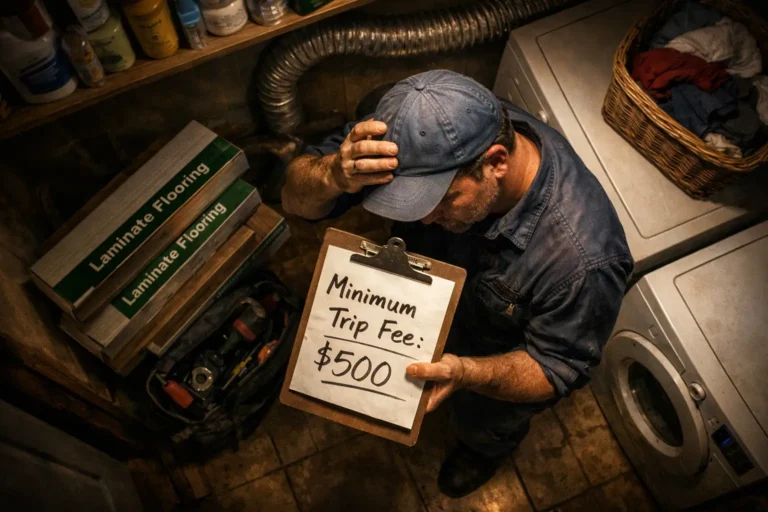
Ready to learn about the hidden fees that pop up during installation?
One Comment