
Best Budget Flooring Options 2026: Cost and Durability Guide
The best budget flooring in 2026 is not always the cheapest floor on the shelf. A good low-cost floor should still look clean, handle daily traffic, survive normal spills, and last long enough that you are not replacing it again in a few years.
For most homes, the best budget flooring options are AC4 laminate, sheet vinyl, peel-and-stick vinyl tile, open-box porcelain tile, polished concrete, and utility grade hardwood. The right choice depends on the room, moisture risk, pets, installation cost, and how much wear the floor will take.
If you are renovating a main living area, compare this guide with our best flooring for living room cost guide before choosing a material.
In 2026, the cheapest flooring options are usually sheet vinyl, peel-and-stick vinyl tile, polished concrete, and low-cost laminate. But the best budget flooring options are not always the absolute cheapest. The smarter choice is the one that still looks good, handles daily traffic, and does not fail the first time water or pets test it.
If you want a room-specific decision, compare this guide with our best flooring for pets and best kitchen flooring options guides.
Table of Contents
Best Budget Flooring Options: Quick Answer
AC4 laminate can be a strong budget flooring option for many busy homes because it gives you a wood-look floor, good scratch resistance, and a lower material price than hardwood. For wet rooms, sheet vinyl or open-box porcelain tile is usually safer. For the lowest DIY material cost, peel-and-stick vinyl tile and polished concrete can work, but they need careful prep.
- Best overall value: AC4 laminate
- Cheapest material: Peel-and-stick vinyl tile
- Best for kitchens: Sheet vinyl or budget LVP
- Best for bathrooms: Open-box porcelain tile or sheet vinyl
- Best for high traffic: AC4 laminate or porcelain tile
- Best real-wood budget option: Utility grade hardwood
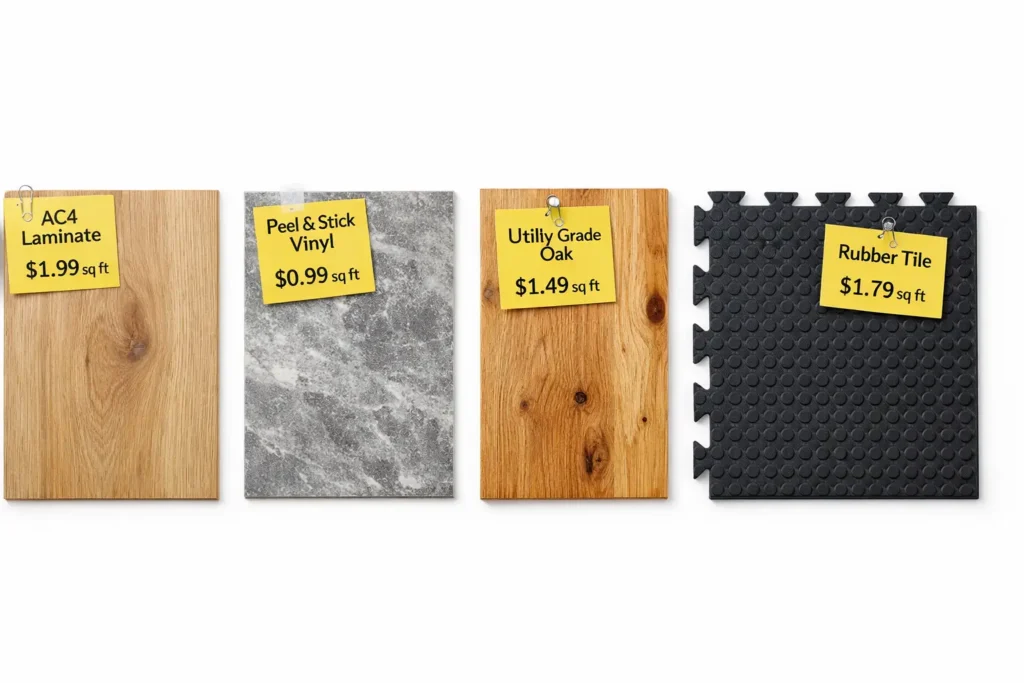
Cheapest Flooring Options Per Square Foot in 2026
Here is the fast comparison before you choose. The lowest material price is not always the best value once labor, floor prep, water risk, and replacement life are included.
If your goal is to find low cost flooring options that look great, start with price per square foot, then filter by water risk, traffic, and how long you want the floor to last.
| Flooring Type | Typical Budget Range | Best For | Main Catch |
|---|---|---|---|
| Peel-and-Stick Vinyl Tile | $1.00 to $2.50 per sq ft | Ultra-low-cost bathroom refreshes | Fails fast if the subfloor is not perfectly prepped |
| Sheet Vinyl | $1.50 to $3.50 per sq ft | Cheap waterproof coverage for large areas | Seams can become visible and collect dirt |
| Budget LVP | $2.00 to $4.50 per sq ft | Kitchens, rentals, basements, fast remodels | Thin wear layers scratch faster in busy homes |
| AC4 Laminate | Under $4.00 per sq ft | Living rooms, hallways, families with pets | Standing water still causes swelling risk |
| Utility Grade Hardwood | Around $3.00 per sq ft | Rustic real-wood looks on a budget | You need extra waste because many boards are unusable |
| Polished Concrete | Very low material cost | Homes already on a slab | Hard underfoot and difficult to DIY well |
If you are comparing whether a cheap floor is still worth buying, read our cheap vs expensive flooring guide.
1. Open-Box and Discontinued Tile
For a small space such as a bathroom or laundry room, it can be worth comparing regular stock with remnants, open-box, clearance, and discontinued tile.
- Go to the back of a dedicated tile shop and ask for remnants or discontinued stock. Some tile shops may have limited quantities of discontinued porcelain or ceramic tile, but available square footage, matching lots, condition, and return terms vary by seller.
- Clearance pricing can be substantial when a seller wants to move remaining stock, but do not assume a specific markdown. Compare the actual unit price and verify that enough matching material is available for the project and reasonable attic stock. Calculate your exact needs with our Tile Cost Calculator before you go.
2. AC4 Laminate: A Strong Budget Option
AC4 laminate can offer a useful balance of wood-look appearance, scratch resistance, and material cost for many homes, but the best fit depends on room moisture, product quality, traffic, installation, and maintenance.
- But check the AC Rating on the side of the box. If it says AC1 or AC2, leave it in the store; those are intended for guest bedrooms that no one ever walks into.
- For busy residential areas, consider AC4 when that rating matches the product’s intended use. Scratch performance and price still vary by manufacturer, wear surface, finish, pet activity, retailer, and market, so do not assume one rating guarantees a fixed price or scratch outcome. See average waterproof laminate costs here.
Best Budget Flooring for High-Traffic Areas
If you need the best budget flooring for high-traffic areas, do not chase the absolute lowest price. High-traffic rooms punish weak wear layers fast.
- AC4 laminate: Best overall value for busy homes, pets, and everyday foot traffic.
- Open-box porcelain tile: Excellent for entryways, bathrooms, and spaces where water and heavy wear matter more than warmth underfoot.
- Sheet vinyl: Good budget pick for kitchens and utility areas where waterproof performance matters more than resale value.
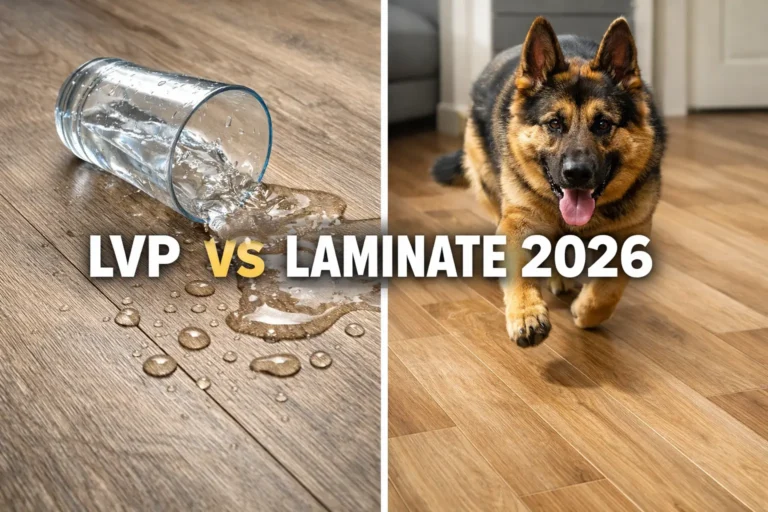
For a side-by-side comparison of two common budget choices, see our LVP vs laminate comparison. If you are choosing for wet rooms, also see best bathroom flooring options.
Low-Cost Flooring Options That Still Look Good
If appearance matters, avoid the cheapest product in every category. The best-looking cheap floors are usually the ones that copy a higher-end material without looking too thin, shiny, or artificial.
- AC4 laminate: Best cheap wood-look floor for living rooms, hallways, and busy family spaces.
- Budget LVP: Good for kitchens, basements, rentals, and rooms where water resistance matters.
- Open-box porcelain tile: Best for small bathrooms, laundry rooms, and entryways when you can find enough matching stock.
- Utility grade hardwood: Best if you want real wood and do not mind knots, color variation, and extra waste.
- Sheet vinyl: Best for a clean, low-cost kitchen or utility floor when seams are handled properly.
If you are trying to decide whether a cheap floor is actually worth buying, compare it with our cheap vs expensive flooring guide.
3. Utility Grade Hardwood
Ask your local lumberyard for Utility or cabin-grade wood.
- It is real wood, but it has knots, holes, and color changes. Utility or cabin-grade wood can sometimes be priced below select or premium grades because appearance variation and usable-board yield differ. Actual pricing varies by species, grade, seller, region, and inventory.
- If you like a rustic look, utility-grade real wood may compete with some resilient-flooring prices depending on local inventory and finishing requirements. You can calculate the finishing costs on our Hardwood Calculator.
Note: Usable yield can be lower with some utility-grade wood because boards may have defects, short lengths, knots, variation, or damage. Plan waste and attic stock from the actual grade rules, seller guidance, layout, and installer assessment rather than assuming a universal 10-15% discard rate.
4. Peel-and-Stick Vinyl Tiles
For a very low-cost bathroom refresh, peel-and-stick tile may fit a limited material budget such as $100, but the complete project cost and suitability still depend on substrate preparation, product quality, room conditions, trim, tools, and installation requirements.
Substrate preparation is important for self-adhesive tile. Cleaning, dryness, flatness, porosity, primer, and additional adhesive requirements vary by product, and poor preparation can contribute to lifting or bond failure. Do not assume a fixed failure timeline or that every product requires the same primer step to save $20.
5. Sheet Vinyl
Modern sheet vinyl comes in 12-foot rolls and looks surprisingly like real stone or wood.
- Sheet vinyl can provide broad water-resistant coverage with relatively few seams, but water performance depends on the product, seam treatment, perimeter details, substrate, and installation. Roll width also varies by product, so verify whether the room layout requires a seam.
- Poorly executed or unapproved seams can collect soil or allow moisture intrusion. Follow the flooring manufacturer’s seam method, adhesive or sealer requirements, and maintenance guidance rather than assuming one seam kit or a fixed failure timeline applies to every sheet-vinyl product.
6. Life-Proof Triexta Carpet
Carpet remains the most cost-effective option for covering a large living room or bedroom. You can estimate your yardage using our Carpet Cost Calculator.
But do not buy Builder Grade tan carpet. It is designed to look good for exactly 12 months before it turns into a matted mess. Instead, look for Triexta fibers.
The hidden catch: The carpet is cheap, but the pad underneath is what matters. If you buy a cheap pad, the carpet will feel hard and develop wear patterns where you walk. Allocate the extra funds to a moisture-barrier pad.
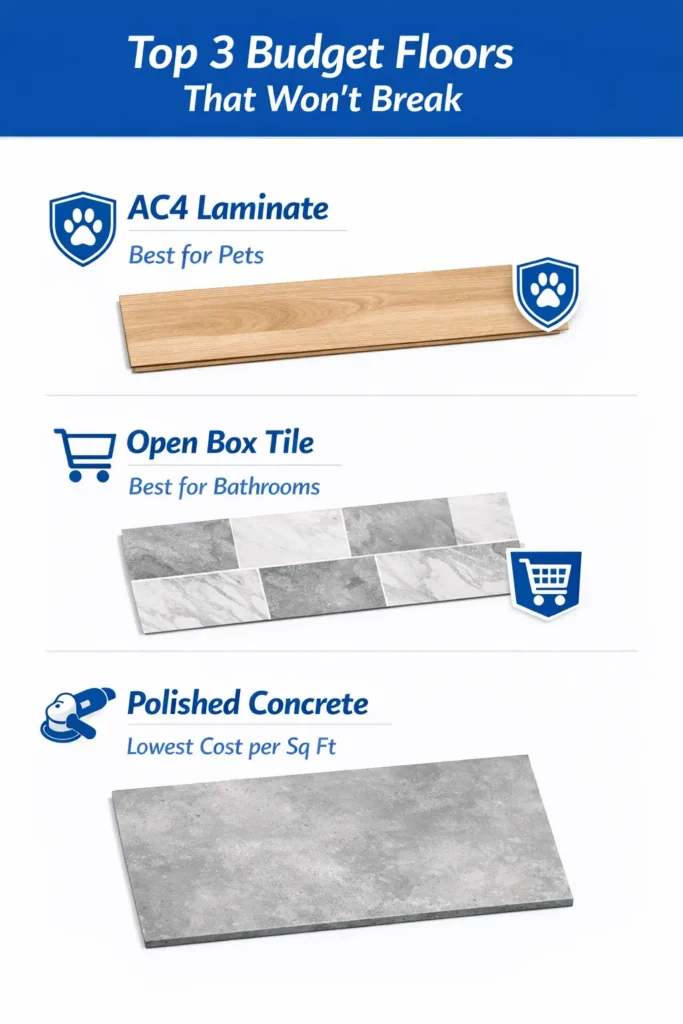
7. Polished Concrete (The Modern Steel)
If you are on a concrete slab, your floor is already there. You just need to uncover it.
- Renting a concrete grinder for a weekend is back-breaking work. It is loud and incredibly dusty.
- But if you finish it with a simple sealer, you have a floor that is bulletproof. It looks like a high-end art gallery and costs pennies per square foot in materials.
8. Bamboo Flooring
Bamboo is often sold as a green budget option.
- Avoid Horizontal or Vertical bamboo. It is soft but can scratch if you look at it the wrong way.
- Only buy strand woven bamboo if you choose bamboo at all. It is harder than basic horizontal or vertical bamboo and is usually the better budget pick for homes with daily foot traffic.
9. Interlocking Rubber Tiles
If you are flooring a basement or playroom, stop considering carpet.
- Black rubber tiles are inexpensive and can be installed in an hour. They handle moisture perfectly.
- The Friction: They smell like a tire shop for the first two weeks. Open your windows and run a fan before you move the furniture in, or you’ll get a headache.
10. Cork Tiles (The Joint Saver)
Cork is soft, warm, and surprisingly cheap if you buy the glue-down tiles.
- It is ideal for kitchens because it doesn’t strain your knees when you stand for long periods. The catch? You have to seal it yourself with three coats of polyurethane.
- If you skip the sealer, the first time you spill red wine, your floor is ruined.
Best Budget Flooring for a Whole House
For a whole-house project, do not choose a different cheap floor in every room. Too many material changes can make the home feel patched together and can add transition costs. A better plan is to use one main budget floor for most dry areas, then switch only where water risk is higher.
- Main living areas: AC4 laminate or budget LVP
- Kitchens and laundry rooms: Sheet vinyl, budget LVP, or tile if the budget allows
- Bathrooms: Open-box porcelain tile or sheet vinyl
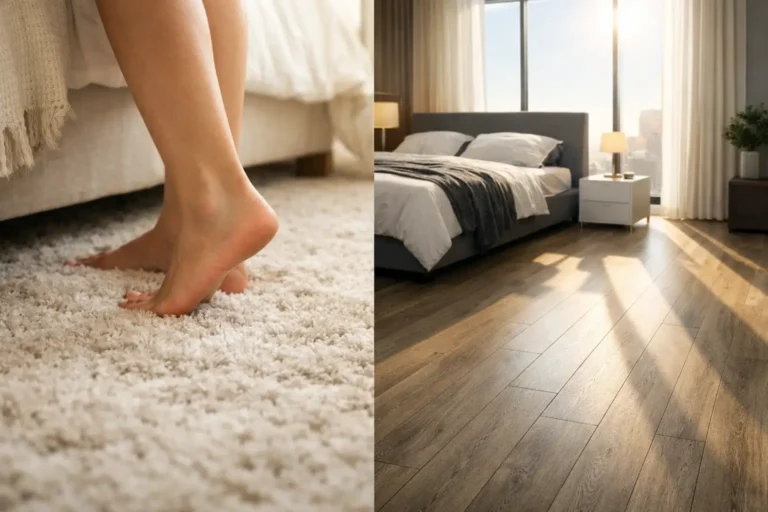
- Bedrooms: Carpet, laminate, or budget LVP depending on comfort and allergy needs
- Basements: LVP, sheet vinyl, rubber tile, or sealed concrete
For larger projects, use our flooring cost for large rooms guide to plan material waste, labor, and room-size pricing.
FAQs
What are the cheapest flooring options in 2026?
The cheapest flooring options in 2026 are usually peel-and-stick vinyl tile, sheet vinyl, polished concrete, and low-cost laminate. The best value choice is usually AC4 laminate or sheet vinyl because they balance price, appearance, and daily durability better than ultra-cheap materials.
What is the best budget flooring option overall?
AC4 laminate is the best overall budget flooring option for many homes. It is affordable, scratch-resistant, and works well in living rooms, hallways, bedrooms, and family spaces where standing water is not a major risk.
What low-cost flooring still looks good?
AC4 laminate, budget LVP, open-box porcelain tile, utility grade hardwood, and modern sheet vinyl can all look good on a lower budget. The key is to avoid very thin products, weak wear layers, poor patterns, and materials that do not fit the room.
What is the best budget flooring for high-traffic areas?
AC4 laminate is usually the best budget choice for high-traffic dry areas. Open-box porcelain tile is better for wet or gritty spaces such as entryways, bathrooms, and laundry rooms. Sheet vinyl can also work well in kitchens and utility areas.
What is the cheapest flooring for a 2,000 sq ft house?
Sheet vinyl, low-cost laminate, and budget LVP are usually the cheapest practical options for a 2,000 sq ft house. The final cost depends on labor, old floor removal, subfloor prep, transitions, trim, and waste.
Is cheap flooring worth it for a rental?
Cheap flooring can be worth it for a rental if it is durable and easy to replace. Budget LVP, sheet vinyl, and AC4 laminate often make more sense than cheap carpet because they can handle traffic, spills, and tenant turnover better.
Can I install budget flooring over old tile?
Yes, but only if the old tile is stable, flat, and clean. Grout lines may need to be filled first. If the surface is uneven, the new flooring can show dips, telegraph old grout lines, or fail early.
Conclusion
If you have children and pets, choose AC4 Laminate. If you want the lowest possible price and can do the work yourself, go for Polished Concrete. Avoid anything that doesn’t tell you the Wear Layer thickness. If the box is silent, it’s because the floor won’t last a year.
For the latest labor rates and material standards, check out the World Floor Covering Association (WFCA). They keep the industry honest, so you don’t have to.
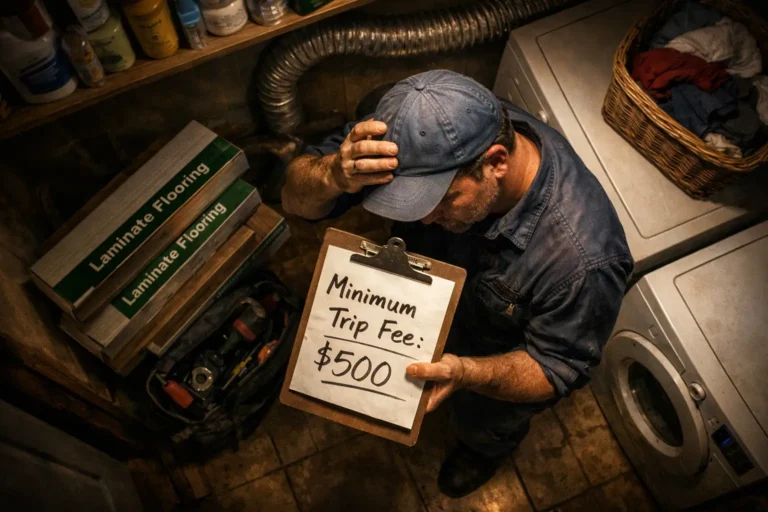
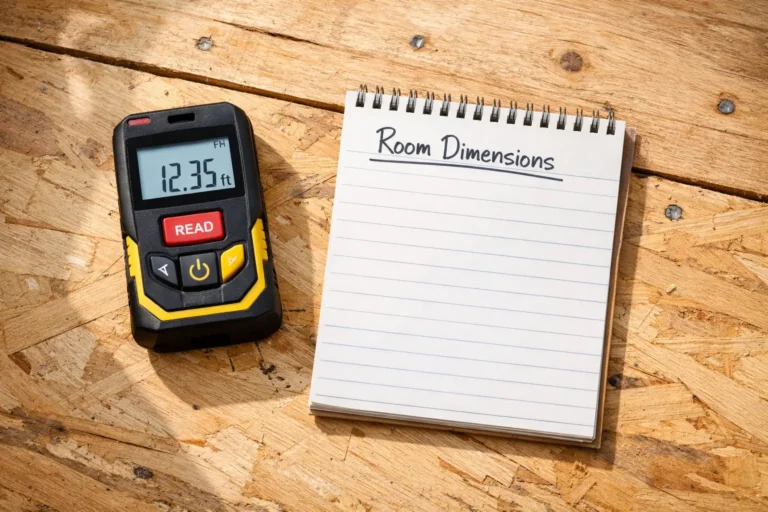
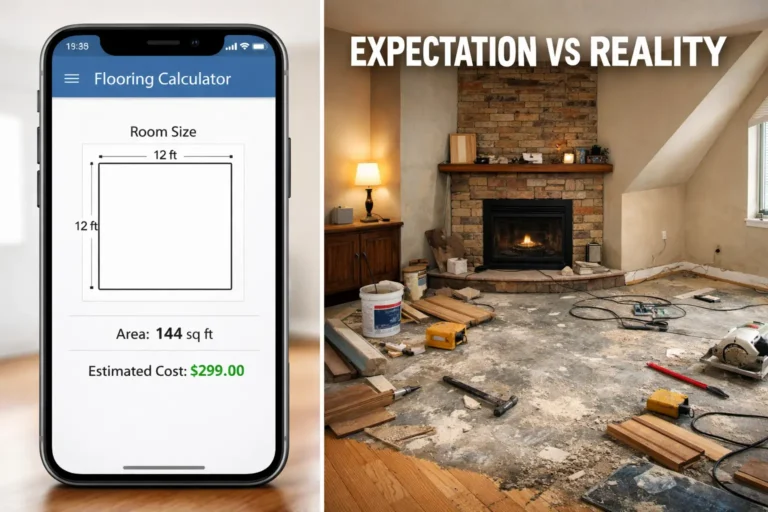
Ready to see the math for a single room?
One Comment