
Tile vs. Vinyl Flooring: The 2026 Cost & Durability Guide
Tile usually costs more than vinyl upfront, but vinyl is not always the better long-term buy. In most 2026 flooring projects, luxury vinyl plank is the cheaper and faster option, while porcelain or ceramic tile costs more because the labor is slower, heavier, and more specialized.
The right choice depends on the room, water exposure, subfloor condition, comfort, lifespan, and how long you plan to keep the floor. Vinyl works well for fast remodels and lower budgets. Tile makes more sense when moisture, durability, and long-term value matter more.
Table of Contents
Tile vs Vinyl Flooring: Quick Answer
Vinyl flooring is cheaper than tile in most projects. Vinyl usually costs about $7 to $12 per square foot installed, while tile usually costs about $15 to $35 per square foot installed. That means tile can cost roughly $8 to $23 more per square foot once labor, setting materials, grout, prep work, and installation time are included.
Choose vinyl if you want a lower upfront price, faster installation, and a softer floor. Choose tile if you want a longer-lasting floor for bathrooms, kitchens, laundry rooms, entryways, or wet areas.
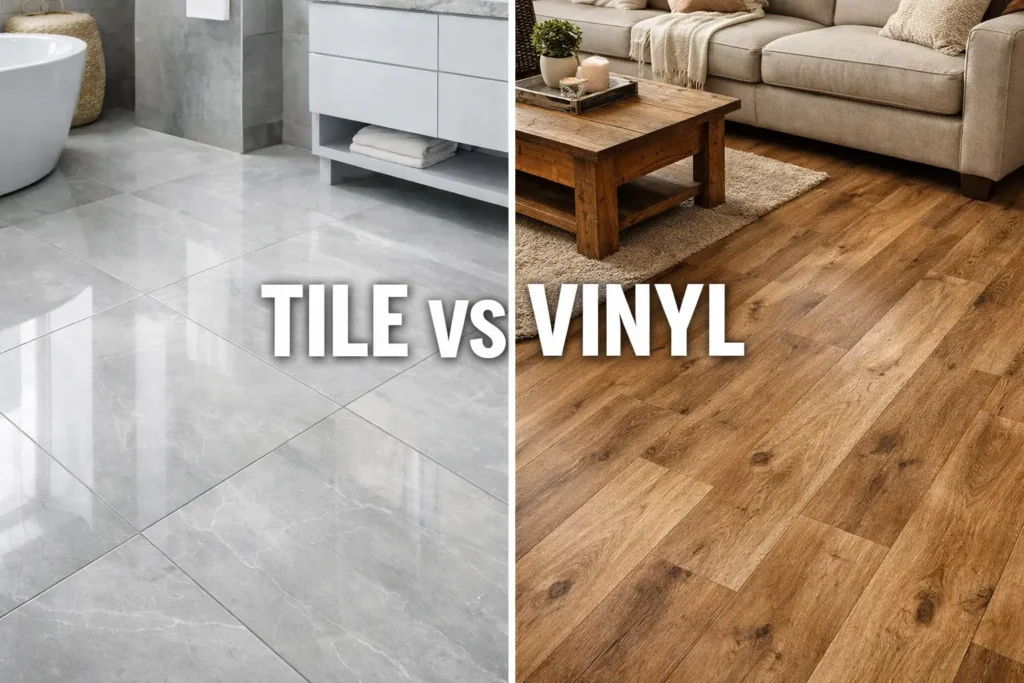
Tile vs Vinyl Flooring Cost in 2026
In 2026, vinyl flooring usually costs $7.00 to $12.00 per square foot installed, while tile flooring usually costs $15.00 to $35.00 per square foot installed. That means tile often costs about $8.00 to $23.00 more per square foot than vinyl once labor, setting materials, and the slower installation process are included.
Material price is only one part of the installed cost. Compare labor, preparation, removal, setting materials, trim, disposal, and other scope items alongside the product price.
If You Choose Vinyl (LVP/SPC)
In 2026, most people go for Luxury Vinyl Plank (LVP). You can find good stuff for $4.00 to $7.00 per square foot.
The labor is where you save. Some click-lock vinyl installations can be completed relatively quickly in straightforward rooms, but timing depends on the room, subfloor preparation, layout, trim, transitions, installer, and site conditions. Your total cost for materials and labor will range from $7.00 to $12.00 per square foot.
The Catch: Click-lock vinyl needs to meet the manufacturer’s subfloor-flatness requirements; excessive unevenness can contribute to movement, noise, or joint damage.
If You Choose Tile (Porcelain/Ceramic)
Tile often has a higher installed cost because of preparation, setting materials, cutting, curing, and grout. The cost difference happens. Porcelain tile typically ranges from $6.00 to $18.00 per square foot.
Tile labor can be a significant part of the project because the work may involve substrate preparation, layout, cutting, setting, curing, grout, waterproofing, and multiple visits. Labor rates and installer availability vary by market.
For planning, the page uses a broad installed range of $15.00 and $35.00 per square foot for some projects, but current local quotes may fall outside that range. Installation duration depends on room size, tile, substrate, layout, curing requirements, grout, and project complexity.
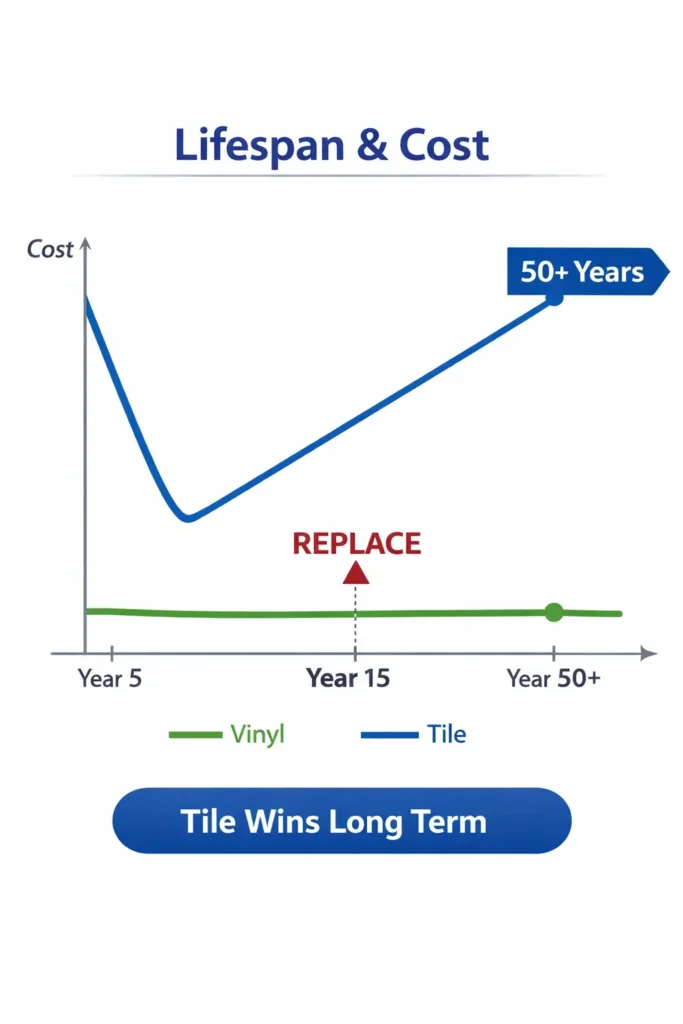
Tile vs Vinyl Flooring Cost Comparison
| Feature | Luxury Vinyl (LVP/SPC) | Porcelain/Ceramic Tile |
|---|---|---|
| Installed Cost (avg) | $7 – $12 /sq ft | $15 – $35 /sq ft |
| Wait Time for Pros | Varies by market and project | Varies by market and project |
| Real Life Expectancy | Often 15–20 years; product and use vary | 50+ years possible with suitable installation and maintenance |
| Feel Underfoot | Often softer-feeling underfoot | May feel cooler and harder underfoot |
| Cleaning | Cleaning needs vary by product and use | Cleaning needs vary by tile and grout system |
Why Tile Costs More Than Vinyl
Tile costs more because the installation has more steps. A tile installer may need to level the floor, apply backer board or an uncoupling membrane, spread mortar, set each tile, cut edges carefully, wait for curing, grout the floor, and clean the surface. That extra time is why tile labor usually costs much more than vinyl labor.
Vinyl plank installation is faster because the planks usually click together over a prepared subfloor. That does not mean vinyl is always cheap. A poor subfloor, moisture problems, transitions, trim, old floor removal, or leveling work can still raise the final price. For labor-only planning, check our flooring labor cost per sq ft guide.
Commercial Applications, Durability, Maintenance, and Performance
If you are comparing vinyl vs tile flooring for commercial applications, the right answer depends on traffic, moisture exposure, cleaning routines, and how long the floor needs to last without replacement.
| Use Case | Common Fit | Why |
|---|---|---|
| Restaurants, entryways, wet service areas | Tile | Can provide strong durability in demanding areas when the tile assembly is suitable; moisture performance depends on product, substrate, grout, waterproofing, installation, traffic, and maintenance. |
| Offices, waiting rooms, light retail | Vinyl | Lower installed cost, faster installation, less downtime, and easier comfort underfoot for standing employees. |
| Bathrooms, laundry areas, mudrooms | Tile | Can be well suited to splash-prone rooms when the complete tile assembly is appropriate; water performance depends on installation and waterproofing details. |
| Basements, fast remodels, budget-sensitive projects | Vinyl | Lower upfront cost, quicker install, and softer feel make vinyl easier for short timeline projects. |
Durability: Tile can provide strong long-term wear and dent resistance, but service life depends on the tile, substrate, grout, installation, traffic, damage, and maintenance. Vinyl can also perform well in residential use, with durability varying by product construction, wear layer, finish, traffic, and sunlight exposure.
Maintenance: Daily cleaning requirements vary by flooring product and use. Vinyl has no grout lines, while tile maintenance depends on the tile and grout system, sealing where required, cleaning routine, traffic, and installation condition.
Performance: Tile may suit projects that prioritize wear resistance and a durable tile assembly, while vinyl may suit projects that prioritize lower installed cost, faster installation, or a more resilient feel underfoot. The better fit depends on the room, product, installation, and expected use. For room-specific planning, see our best bathroom flooring options and best kitchen flooring options.
The Pros and Cons
Tile: Durability and Trade-Offs
Tile can provide strong wear and dent resistance, but chips, cracks, grout condition, substrate movement, and surface finish still matter. Any resale contribution depends on the home, market, design, and installation quality. According to the Tile Council of North America, porcelain tile can be a low-porosity, cleanable surface when installed and maintained appropriately.
- The Bad: Tile may feel cooler underfoot depending on room temperature, substrate, heating, and footwear. Acoustics vary with the floor assembly, room furnishings, and surrounding surfaces.
- The Shatter Factor: Hard tile surfaces provide little cushioning, so dropped fragile objects may be more likely to break than on softer flooring.
Vinyl (The Comfortable Plastic)
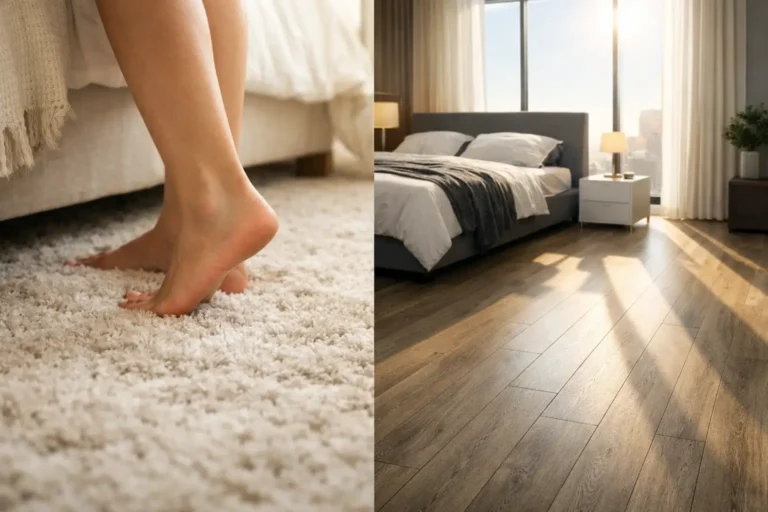
Vinyl often feels more resilient underfoot than hard tile. Comfort is subjective and also depends on the product construction, backing, subfloor, footwear, and time spent standing.
- The Bad: It hates the sun. In 2026, even high-end LVP can warp or fade if exposed to 8 hours of direct sunlight daily.
- The Repair Nightmare: If you scratch a plank in the middle of the room, you often have to take apart the entire floor, starting from the wall, to reach it.
Waterproof Limits: Tile vs Vinyl in Wet Areas
Salespeople love to use the word waterproof. But here is the reality check from FEMA guidelines on flood-resistant materials.
Many vinyl plank cores resist swelling from water, but flood performance depends on the complete installation. Water may reach seams, edges, penetrations, or the subfloor, so product-specific exposure limits and remediation guidance matter.
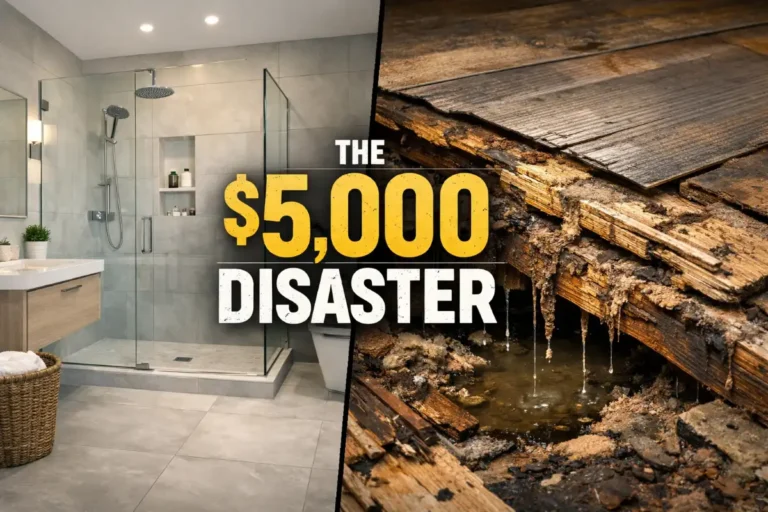
Water that reaches beneath flooring can affect the subfloor and may create moisture or mold risks if it is not addressed. For severe water events, tile can offer strong water resistance as part of a suitable assembly. Tile performance still depends on the tile, grout, substrate, waterproofing where required, installation quality, and the type and duration of water exposure.
Daily Headaches
Floating Floors and Fixed Cabinet Loads
Fixed cabinets and other heavy permanent loads can affect some floating-floor systems. Whether flooring may run beneath cabinets depends on the product and manufacturer instructions; incorrect restraint can contribute to movement or joint damage.
Warranty Details Matter
Vinyl warranties often depend on proper installation, moisture testing, subfloor flatness, approved underlayment, and normal indoor conditions. Before choosing LVP or SPC, read the warranty limits carefully and make sure your installer documents the subfloor condition before the floor goes down.
FAQs
Is LVP or tile cheaper?
LVP is usually cheaper than tile. In most 2026 projects, LVP costs about $7 to $12 per square foot installed, while tile costs about $15 to $35 per square foot installed.
What is the cost difference between tile and vinyl flooring?
Tile usually costs about $8 to $23 more per square foot than vinyl after labor, prep, mortar, grout, and installation time are included. The exact gap depends on the room size, subfloor condition, tile type, and installer rates.
Is it cheaper to install tile or vinyl flooring?
Vinyl is cheaper to install because the process is faster and requires less specialized labor. Tile installation takes longer because the installer has to prep the surface, set the tile, let it cure, grout it, and clean the finished floor.
Which lasts longer, tile or vinyl?
Tile can provide a longer service life than many vinyl products when the tile assembly is suitable and maintained, but actual lifespan varies with product quality, substrate, installation, traffic, damage, sunlight, and maintenance.
Which is better for bathrooms, tile or vinyl?
Both tile and vinyl can be suitable for bathrooms when the specific product and installation system are approved for the space. Water performance depends on seams, edges, substrate, waterproofing where required, and manufacturer instructions.
Conclusion
Over a long ownership period, tile may have a lower annualized cost if it lasts longer, while vinyl may have a lower upfront cost. Actual service life, replacement timing, maintenance, and total cost vary by product, installation, traffic, damage, and household conditions.
For shorter ownership periods, vinyl’s lower upfront installed cost may be attractive, but value still depends on product quality, condition, installation, and local market preferences.

One Comment