Average Flooring Installation Cost Per Sq Ft in 2026
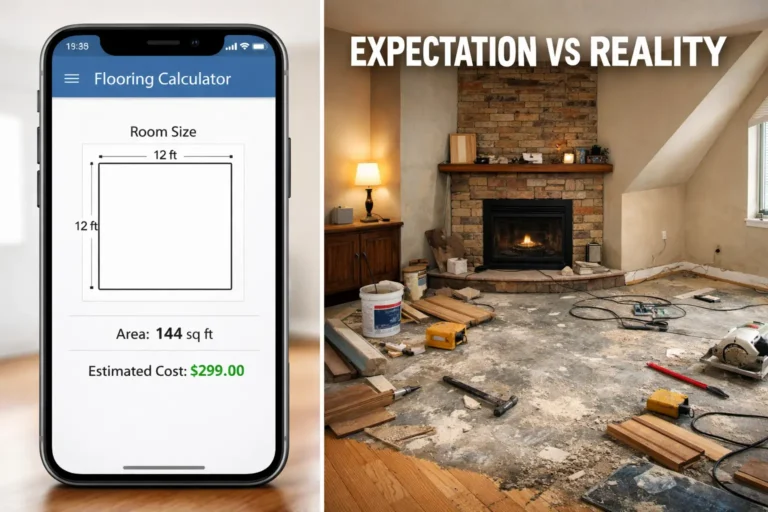
Most homeowners start their projects by considering material costs. They see a beautiful floor priced at $3.00 per square foot and think they are ready to proceed. Then the contractor hands them a quote, and that $3.00 suddenly balloons to $10.00 or even $15.00 per square foot.
The installed price depends on several variables at once, including the flooring material, local labor rates, subfloor condition, removal, preparation, access, trim, delivery, and project size. A low material price does not necessarily mean a low installed price.
This guide uses broad planning ranges for full installed cost, including material and labor. Actual written quotes can differ because of location, product, preparation, removal, access, trim, delivery, taxes, minimum charges, and other scope items. For a deeper dive into hidden fees, check our Flooring Cost Factors Guide.
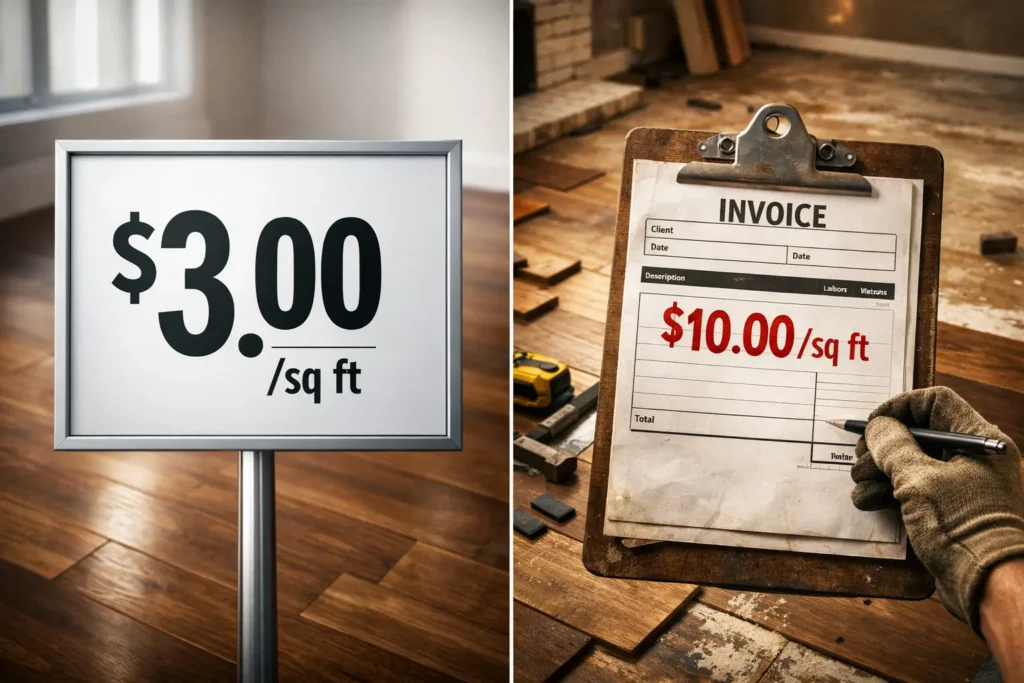
Table of Contents
Average Flooring Installation Cost Per Square Foot in 2026
In 2026, the average cost to install flooring per square foot usually lands between about $4.00 and $28.00 installed, depending on the material, labor market, subfloor condition, and how much prep the job needs. Lower-cost laminate and vinyl projects sit near the bottom of that range, while hardwood and tile push the average much higher.
This page covers the full installed cost, meaning materials plus labor. If you want labor-only pricing, see our flooring labor cost per sq ft guide. If you want the extra charges that often get missed, read our hidden flooring costs guide.
The 2026 Cost Breakdown by Material
Material choice can have a major effect on the budget, but product price alone does not determine performance. Subfloor condition, installation requirements, product quality, maintenance, and room conditions also matter.
| Flooring Material | Material Cost (per sq ft) | Labor Cost (per sq ft) | Total Average Installed |
|---|---|---|---|
| Laminate | $1.50 – $4.00 | $2.50 – $5.00 | $4.00 – $9.00 |
| Vinyl Plank (LVP) | $2.00 – $6.00 | $3.00 – $5.50 | $5.00 – $11.50 |
| Engineered Wood | $5.00 – $11.00 | $4.00 – $9.00 | $9.00 – $20.00 |
| Solid Hardwood | $7.00 – $15.00 | $6.00 – $12.00 | $13.00 – $27.00 |
| Ceramic/Porcelain Tile | $2.00 – $12.00 | $7.00 – $16.00 | $9.00 – $28.00 |
What the Average Looks Like in Real Projects
A basic laminate or LVP install usually lands near the low end of the average because the material is cheaper and the layout is simpler.
The average rises when you add furniture moving, trim work, transitions, and extra waste for longer sight lines.
These spaces usually sit above the average because moisture prep, cut-heavy layouts, and specialty labor push the installed price higher.
If you are comparing room sizes instead of materials, use our small room flooring cost guide and large room flooring cost guide.
Project Factors That Can Change the Average
Average figures do not capture every project condition. The examples below show why stairs, availability, removal, and finish repairs can change a written quote. For broader flooring research, see Consumer Reports.
Stairs are often priced separately from open floor area because each tread, riser, nosing, cut, and transition can require additional work. Do not assume a universal labor rate such as one fixed per-step amount; ask how the installer prices the specific staircase and what materials and finish details are included.
Product availability and delivery dates can change. Before demolition, confirm that the required material, matching trim, transitions, and any special-order components are available or have a delivery plan that fits the project schedule.
Removal can affect adjacent trim, paint, drywall, or door components depending on the existing flooring and demolition method. Ask how protection and repair of finished surfaces will be handled rather than assuming a fixed allowance such as a universal touch-up amount.
Costs That May Sit Outside the Basic Average
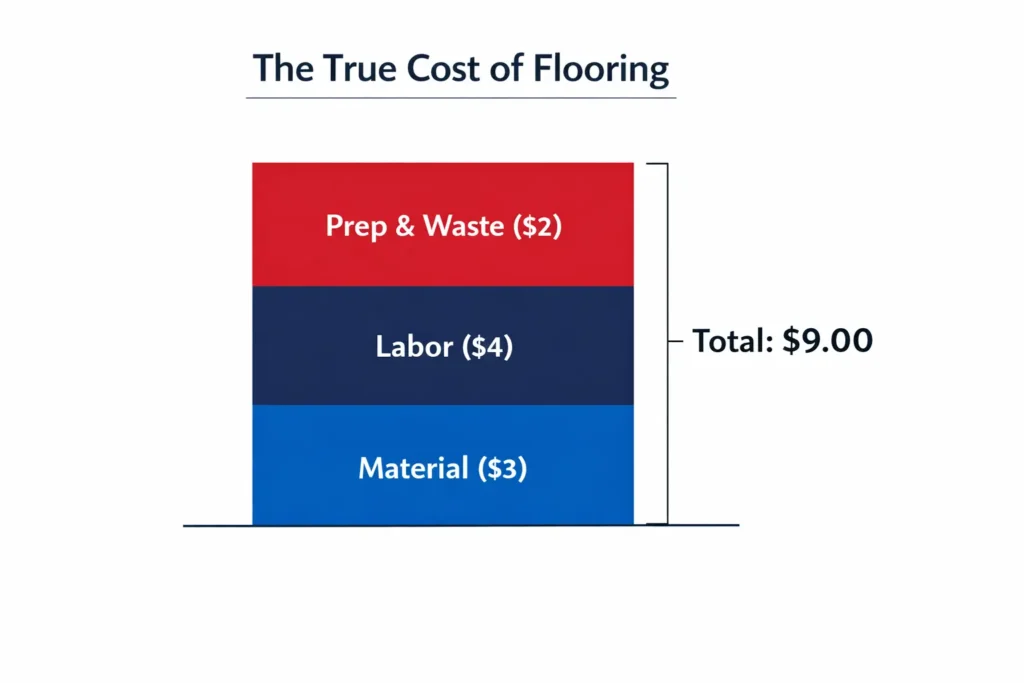
When you ask, “What is the average flooring installation cost per sq ft?”, most people forget to include the prep work. Preparation and scope differences are a common reason an actual quote differs from a simple per-square-foot average.
- Subfloor preparation: Patching, grinding, leveling products, moisture work, and labor can add cost when the substrate is outside the flooring manufacturer’s requirements. The amount depends on the condition, area, product, and preparation method.
- Removal of old flooring: Removal and disposal can be priced separately and vary by existing material, adhesives, access, disposal requirements, and subfloor condition. See our carpet cost calculator when planning a carpet project.
- Furniture handling: Furniture moving may be included, excluded, or priced separately. Heavy or specialty items can require extra labor or equipment, so confirm responsibilities and pricing in the written scope.
Regional Pricing: Where You Live Matters
In the U.S., your local economy heavily influences the average in 2026. The comparison below starts with U.S. pricing, then shows UK, Canada, and Australia for context. For more detailed local cost data, sites like Angi track regional averages.
Local labor, material availability, project size, access, removal, preparation, taxes, and minimum charges can materially change the installed price.
Quotes are commonly discussed per square metre, but the final scope may also include underlay, preparation, removal, trims, delivery, and applicable taxes.
Use local currency, local units, and written regional quotes rather than converting a U.S. average directly; labor, freight, taxes, and product availability differ by market.
In high-density areas, access, parking, tolls, congestion rules, and travel can affect a quote. Do not assume a universal logistics percentage. Ask which access or travel charges apply to your specific project and whether they are already included.
The Warranty: Your Subfloor is Your Insurance
A long product warranty does not automatically cover every click, gap, movement, moisture issue, or installation problem. Coverage and exclusions vary by manufacturer, so review the written warranty and installation requirements before work begins.
The Readiness Rule:
- Flatness: Excessive dips or humps can affect locking systems, movement, appearance, and warranty compliance. Use the manufacturer’s stated subfloor-flatness tolerance.
- Moisture: Moisture testing, vapor-control requirements, and approved underlayments vary by substrate and flooring system. Follow the product’s written installation instructions.
- Debris: Clean the substrate as required before installation because debris can interfere with fit, flatness, or the finished surface.
FAQs
Is it cheaper to buy the materials myself?
Sometimes, but not automatically. Installer material pricing may include sourcing, delivery, handling, warranty coordination, or contractor discounts. Compare the total installed quote, taxes, delivery, return terms, and who is responsible for shortages or damaged material before deciding who should buy the flooring.
Can I save money by removing it myself?
DIY removal can reduce labor charges in some projects, but the savings vary by flooring type, disposal, adhesives, subfloor condition, local fees, and the installer’s scope. Confirm what must be removed and how the substrate should be left before demolition. Materials that may contain hazardous substances should be handled according to applicable safety requirements.
What is a waste factor?
A waste factor is extra material allowed for cuts, layout, defects, pattern alignment, and possible future repairs. The appropriate percentage varies by product, room geometry, pattern, installation method, and manufacturer guidance. See our Waste Calculation Guide before ordering.
Why is hardwood installation so expensive?
Hardwood installation can cost more because the required substrate preparation, fastening or adhesive method, acclimation, layout, trim, and finishing steps vary by product. Site-finished solid wood, prefinished wood, and engineered wood can have very different labor requirements, so compare the actual scope rather than assuming one process or timeline.
Should I pay for a professional estimate?
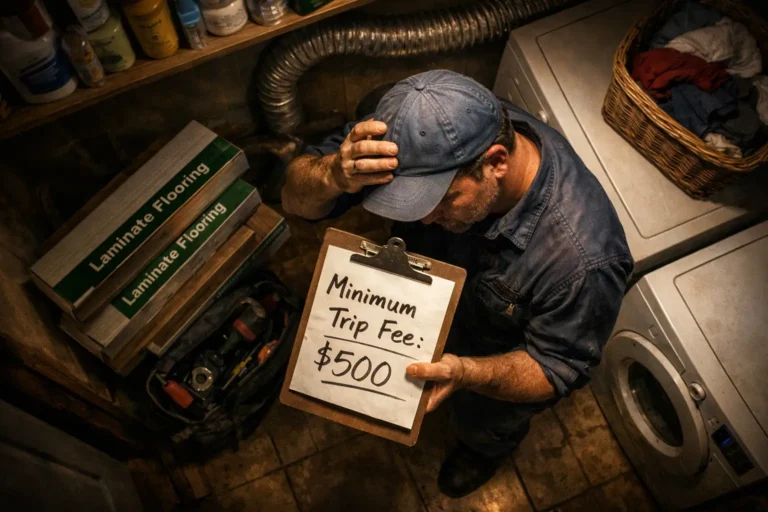
Some installers provide free estimates, while others charge for measuring, consultation, or a site visit. Whether that fee is credited to the project varies by company, so ask about the estimate policy before booking.
What is the average cost to install flooring per square foot in 2026?
For most 2026 projects, flooring installation usually ranges from about $4.00 to $28.00 per square foot installed. The final number depends on the flooring material, labor rate, removal, prep work, and whether the room includes stairs, transitions, or moisture issues.
What is the average cost for floor installation in a typical room?
A typical room sits closer to the middle of the range when you choose laminate or LVP and the subfloor is in good condition. Costs rise quickly in kitchens, bathrooms, staircases, and older homes where leveling, removal, or moisture barriers are needed.
Conclusion
Don’t let the average cost fool you into thinking every quote will be the same. The best way to get a fair price is to obtain three written quotes and ensure they all include the same scope: removal, preparation, and trim.
Ready to find out what you are actually paying for?