Best Bathroom Flooring Options 2026: Cost, Water Resistance and Durability
Bathroom flooring needs to handle routine water exposure, cleaning, and wet-area conditions. Appearance matters, but material selection should also consider the complete floor assembly, seams, penetrations, waterproofing where required, and installation instructions. Water-damage risk depends on the flooring system, exposure, and how quickly leaks are addressed.
Water damage can lead to a repair cost if moisture damages the subfloor or surrounding materials; the amount varies with the extent of damage, labor, materials, and local conditions.
For bathroom flooring, prioritize a system suited to expected water exposure. Surface flooring, seams, edges, penetrations, waterproofing details, and substrate preparation all affect how the assembly manages moisture. If you are comparing quotes, make sure you know how to negotiate with a flooring contractor first.
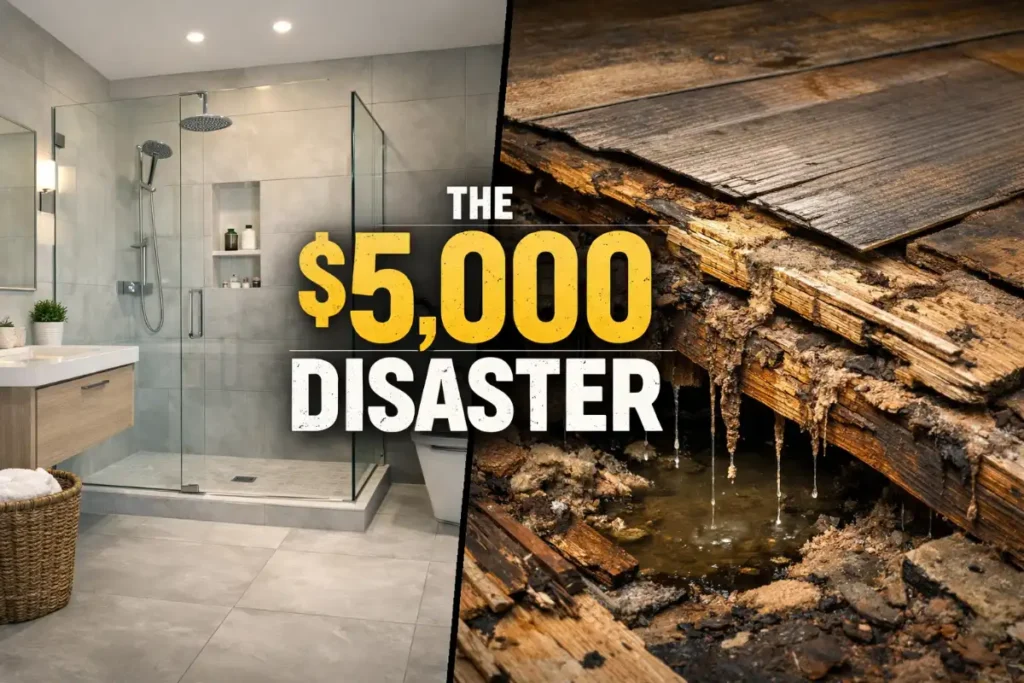
Table of Contents
What It Really Costs: Bathroom Flooring in 2026
Don’t guess your budget based on the price tags at the store. The bathroom flooring installation cost varies with material, labor, removal, substrate preparation, waterproofing details, fixtures, and local conditions. Contractor availability and pricing also vary by market and project scope.
If you’re looking for a bathroom flooring estimate, here is how the math usually works. (See our Cost Factors Guide for full breakdowns).
- Materials: $2.50 to $7.00 per sq ft.
- Labor: $2.00 to $8.00 per sq ft.
- Ripping out the old floor: $0.50 to $2.00 per sq ft.
- Fixing or leveling the subfloor: $1.00 to $3.00 per sq ft.
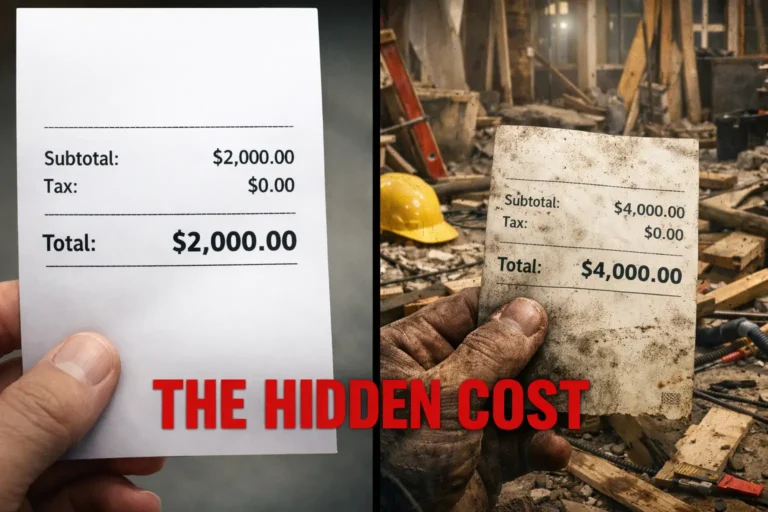
A 50 sq ft bathroom can vary widely in total cost depending on material, labor, removal, preparation, waterproofing, fixtures, hidden damage, and local pricing. Subfloor damage can materially increase the scope after inspection.
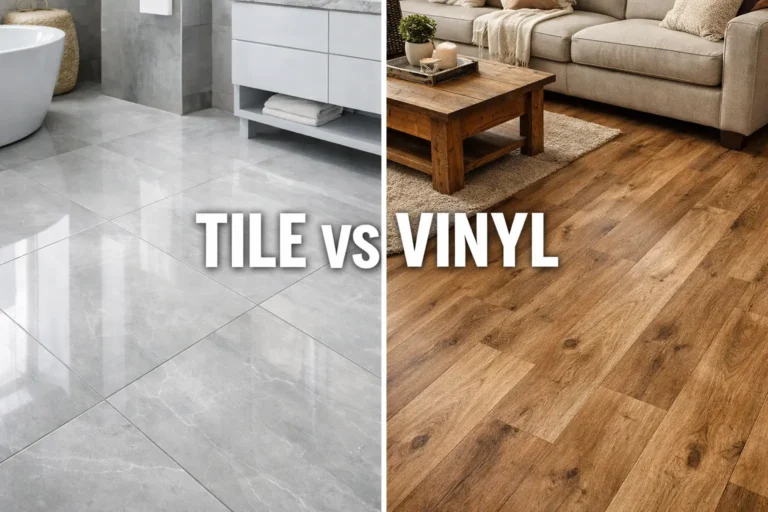
Porcelain Tile: A Durable Bathroom Option
If you want the best value for bathroom floor replacement, porcelain tile can be a strong option. It may have a potential resale-value benefit. Any resale benefit depends on the local market, buyer preferences, project quality, and overall home condition.
Porcelain and Ceramic: Key Differences
Porcelain is fired at much higher temperatures than regular ceramic. It’s denser and harder. Porcelain tile typically has very low water absorption, but overall bathroom water performance depends on the tile assembly, grout, waterproofing, penetrations, and installation.
Choosing Grout for Wet Areas
Cement-based grout is commonly used and can be appropriate when selected, installed, sealed, and maintained for the specific tile and wet-area conditions. Ask which grout system is appropriate for the installation. Cement-based grout is porous and may absorb moisture or stains if product and maintenance requirements are not followed. Appearance over time depends on grout type, sealing requirements, cleaning, ventilation, and use.
The Fix: Consider epoxy grout. Epoxy grout generally has low water absorption and strong stain resistance, but performance depends on the product and installation. It may cost more to install and does not replace a properly designed bathroom waterproofing system.
Big Tiles and Matte Finishes
In 2026, we’re moving toward large-format tiles (like those big 12×24 slabs). These look expensive and have fewer grout lines to clean. For wet areas, compare the product’s published slip-resistance information rather than choosing by appearance alone. Surface texture, finish, contaminants, water, and footwear all affect traction. A matte finish may provide different traction characteristics, but performance is product-specific.
SPC Vinyl: The Warm Alternative
If you think tile feels too cold, SPC vinyl flooring can be another option when its water-performance, comfort, and maintenance characteristics fit the room. SPC stands for Stone Plastic Composite. It’s basically limestone powder mixed with plastic. You can check exact material pricing on our Vinyl Calculator.
The Benefits of the Stone Core
It is waterproof-rated by some manufacturers. Water resistance, swelling, denting, and impact performance vary by product and installation. Check the manufacturer’s bathroom-use and water-exposure guidance for the exact flooring.
The Real-World Friction: Leveling
Here is the catch: vinyl is thin. Click-lock flooring needs to meet the manufacturer’s subfloor-flatness tolerance. Excessive unevenness can contribute to movement, joint damage, or a bouncing feel.
The Fix: Address any required floor leveling and bathroom prep. Follow the flooring manufacturer’s flatness and preparation requirements before installation.
Design Trends 2026: What’s In and What’s Out
Design preferences change over time, so choose finishes that fit the room, maintenance needs, and your longer-term preferences.
🛑 What to Avoid (The Out List)
- Builder-grade gray: Cool gray wood-look floors remain available, but preferences vary by homeowner, room, lighting, and local market.
- Busy checkerboard: Bold black-and-white patterns create a strong visual effect and may not fit every room.
- Glossy finishes: These show every footprint and water splash.
✅ What to Use (The In List)
- Warm neutrals: Think beige, taupe, and muted terracotta.
- 3D Texture: Tiles with ridges or waves add depth to the room.
- Spa-inspired visuals: Realistic stone and hardwood looks that make the bathroom feel like a retreat.
- Creative shapes: Hexagons and diamonds are available design options; suitability depends on the room and homeowner preference.
The Toilet Wax Ring
This is one installation detail to check in luxury vinyl plank bathroom installation.
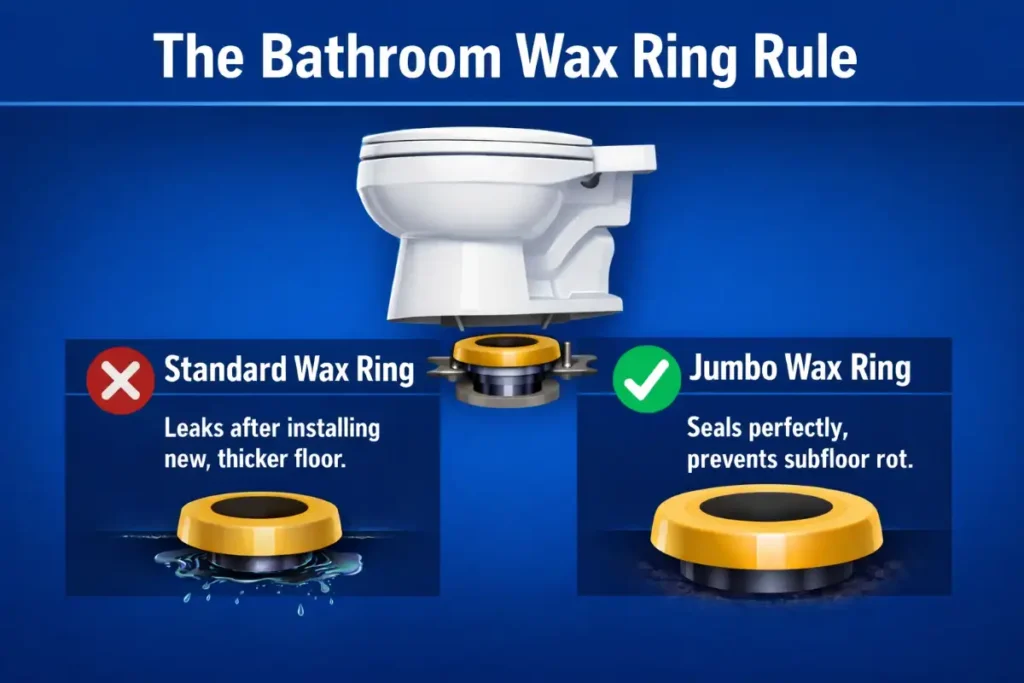
When you put down a new floor, the floor usually goes up in height. If your installer puts a standard wax ring back under the toilet, it might not seat properly on the pipe.
The Result: An incorrectly seated toilet seal can allow hidden leakage and may damage the subfloor over time.
The Fix: Use the toilet seal or flange solution specified for the final floor height, which may include a jumbo wax ring or a flange extender when appropriate. The correct choice depends on flange position, toilet design, and installation requirements.
Specialty Flooring: From Slate to Sheet Vinyl
Sheet Vinyl for Budget-Conscious Projects
If you are on a tight budget, installing sheet vinyl in the bathroom can be a practical option. Sheet vinyl can reduce the number of seams compared with plank products, but water performance still depends on seams, edges, penetrations, and installation. Its service life varies by product, traffic, installation, and care rather than a guaranteed number of years.
Natural Stone: Slate and Marble
- Slate: Naturally slip-resistant because of its texture. Some slate installations require periodic sealing; the need and frequency depend on the stone, sealer, use, and manufacturer or installer guidance.
- Marble: The ultimate luxury. Use a honed finish; it may show scratches differently from a polished finish, and wet-area traction depends on the specific stone finish and slip rating.
Eco-Friendly: Linoleum
Linoleum isn’t vinyl. It’s made from linseed oil and wood flour. Linoleum can be a durable option, but health-related properties and service life vary by product rather than a guaranteed lifespan. Review product certifications, maintenance requirements, and bathroom-use guidance if environmental impact is a priority.
FAQs
What is the best waterproof flooring for a bathroom?
Porcelain tile is the best, but SPC vinyl is the best budget-friendly pick. Neither surface flooring nor perimeter silicone guarantees that water cannot reach the subfloor. Performance depends on the complete floor assembly, seams, edges, penetrations, waterproofing where required, and installation instructions.
How do I find a bathroom flooring contractor near me?
Don’t just pick the cheapest person on Facebook. Ask if they do moisture testing and if they use epoxy grout. The appropriate testing and grout system depend on the product, substrate, wet-area design, and manufacturer instructions.
Is a heated floor worth the money?
Yes. Tile is a great heat conductor. In 2026, having a heated bathroom floor is a major selling point. It makes a cold Monday morning much easier to handle.
Can I install vinyl over my old tile?
Installing vinyl over existing tile may be permitted for some products when the substrate meets the manufacturer’s requirements for condition, flatness, bond, moisture, height, and preparation. Follow the exact flooring and underlayment instructions rather than assuming grout-line filling is always required.
Conclusion
For a long-term bathroom project, consider large-format porcelain tile and epoxy grout. This can be a durable system when the tile, grout, waterproofing, substrate preparation, and installation details are appropriate. For a rental or guest bath, SPC vinyl can be another practical option when the product is approved for bathroom use and the subfloor meets the manufacturer’s preparation and flatness requirements.
Before you start, get a professional quote for bathroom flooring. Make sure they check for subfloor repair issues. It’s better to know the real price now than to be surprised halfway through the job. You can review official moisture damage prevention guidelines via the EPA’s Mold Guide or TCNA Standards.
If you want to rethink carpet for other areas, view our Carpet Calculator.