How to Estimate Flooring Costs: Step-by-Step Method
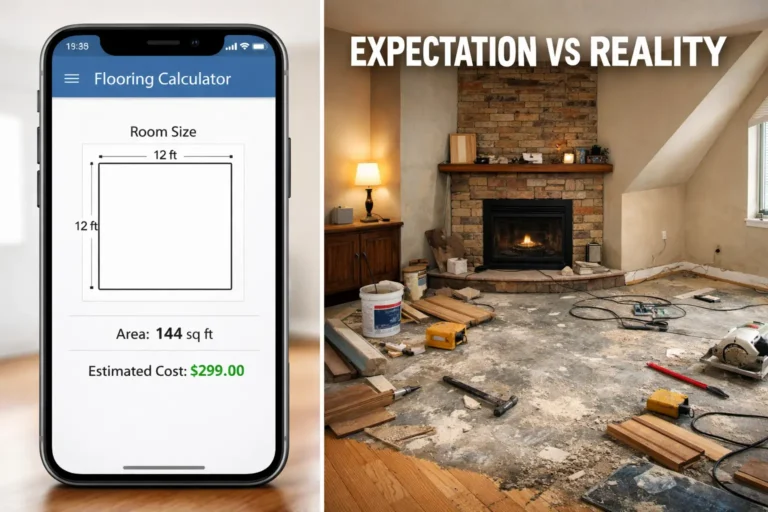
Most homeowners walk into a showroom, see a beautiful plank for $3.50 per square foot, and assume their 500-square-foot room will cost $1,750. That material-only figure does not include labor, waste, removal, subfloor preparation, trim, delivery, taxes, or other project-specific costs. A complete planning estimate should add the items that apply to the actual scope instead of assuming a universal final total.
This guide shows a step-by-step method for building a more complete planning estimate. The method separates room area, waste, material, labor, removal, subfloor preparation, trim, taxes, and other scope items so you can compare the result with current written quotes.
Table of Contents
Why the Displayed Material Price Is Not the Full Project Cost
Installation pricing can be structured differently by retailers and independent contractors. Advertised rates may apply only to a defined basic scope, while preparation, removal, stairs, transitions, minimum charges, or other work may be separate. BLS data, labor conditions and installer pay vary by occupation, region, and market, so use current local quotes for project-specific labor pricing.
| Labor Task | 2026 Price Range | The Real-World Friction |
|---|---|---|
| Basic Installation | $1.50-$4.50 /sq ft | Only applies to a spotless, empty room. |
| Subfloor Leveling | $50-$90 /per bag | If your floor waves, you might need 10+ bags. |
| Stair Installation | $15-$150 /per step | Hardwood is high-end; LVP is cheaper. |
| Minimum Trip Fee | $350-$700 | Doing a tiny bathroom? You’ll still pay this. |
Some quotes may include a travel or fuel charge or a parking charge depending on location, access, and the contractor’s pricing policy. Ask whether travel, tolls, parking, and similar access costs are included before comparing totals.
Getting Rid of the Old Stuff
Ripping up your old floor is a dirty, heavy job. If you pay a pro to do it, you aren’t just paying for their time; you’re paying for the dump fees.
$1.00-$2.00 per sq ft. It’s easy to rip up, but it’s bulky and takes up a lot of room in a trailer.
$3.00-$5.00 per sq ft. This is back-breaking work and requires scraping the subfloor.
$5.00-$9.00 per sq ft. Tile removal can involve heavy debris, dust control, equipment, and disposal, so its cost depends on the assembly and site conditions.
Disposal note: Disposal and recycling requirements vary by location and material (check EPA guidelines). Ask your contractor if the removal fee includes the dump fee. If disposal is excluded, confirm who is responsible for hauling, container rental, weight limits, and local disposal fees.
Subfloor Prep: The Invisible Cost
You can’t put a new floor on a bad foundation. In 2026, thinner click-lock floors like those found in our Vinyl Calculator may have product-specific subfloor-flatness requirements, which can include tolerances such as 3/16 inch.
If your floor has a dip or a hump, the installer will have to use Self-Leveling Underlayment (SLU). This is a liquid cement that is poured to level the floor.
- The Cost: $45–$75 per bag for materials plus $60 per hour for labor.
- Planning issue: The amount of leveling material and labor cannot always be known until the substrate is evaluated. Ask how additional preparation will be measured, approved, and priced if more work is needed.
Regional Pricing: USA, UK, Canada, and Australia
The example ranges below are broad planning figures for a 500 sq ft (46 m²) room:
USA & Canada
- Budget (Laminate/Vinyl): $2,500-$4,500
- Mid-Range (Engineered Wood): $5,000-$8,500 (See Hardwood Calculator)
- High-End (Hardwood/Tile): $9,000-$15,000+
UK & Australia
- Budget (LVT/Laminate): £1,800-£3,200 / $3,500-$6,000 AUD
- Mid-Range (Timber/Hybrid): £4,000-£6,500 / $8,000-$12,000 AUD
- High-End (Stone/Hardwood): £8,000+ / $15,000+ AUD
The Extra Parts People Forget to Budget
People focus on the plank price and forget the trim price. These parts are necessary to complete the floor.
- Transition Strips: Pricing and quantity vary by product, doorway, material transition, profile, and installer. Confirm which transitions are actually required and whether they are included in the quote.
- Quarter-Round / Beading: Material and labor pricing varies by profile and market. Quarter-round or other trim may be used where appropriate to finish perimeter details.
- Moisture Barrier (Concrete): Vapor-control requirements and costs depend on the flooring product, slab condition, installation method, local practice, and manufacturer instructions. Do not assume the same membrane or price applies to every concrete installation.
FAQs
Can I save money by buying the flooring myself?
Yes. Contractors often add a 10–20% markup on materials. Buying the boxes yourself can save you hundreds, but make sure you order the correct quantity using our measurement guide.
Why did my quote include a Furniture Fee?
Installers aren’t movers. If they have to touch your sofa, fridge, or bed, they charge $150–$400 per room. Save money by moving everything yourself before they arrive.
What is a Site Visit Fee?
In 2026, many high-quality pros charge $75-$100 to come out and give you an estimate. They usually subtract this from your final bill if you hire them. This filters out people who aren’t serious.
Is tile significantly more expensive to install?
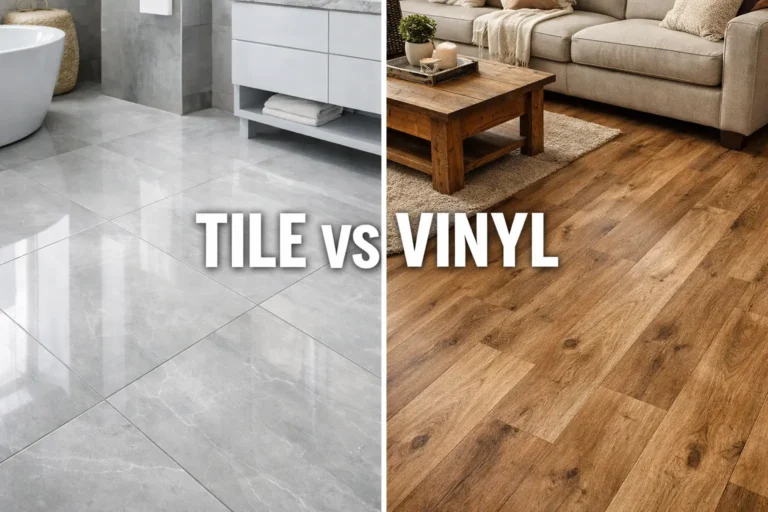
Yes. As shown in our Tile Cost Calculator, tile requires three separate trips: one to lay the tile, one to grout, and one to seal. You are paying for the installer’s gas and time for those extra days.
Should I pay for Acclimation time?
You don’t pay for time; you pay for delivery. Wood and LVP need to acclimate to your home’s temperature for 48–72 hours. Some stores charge a double delivery fee when they must drop off the wood early.
Final Check: Before You Hand Over the Deposit
- Check the Dye-Lot: Ensure all boxes were made in the same batch so the colors match.
- Haul-Away: Confirm that removal includes taking the old floor to the dump.
- Payment Terms: Never pay more than 30% upfront. In 2026, a contractor requesting 50% or more is a major red flag.
- Written Guarantee: Get a 1-year artistry warranty in writing. If a plank pops up in six months, you shouldn’t have to pay them to come back.
Conclusion
Estimation is about protecting yourself from the Hidden Middle. The material is the easy part; the prep and the parts are what drive costs. Take your time, get three quotes, and always keep a 20% contingency fund for the surprises waiting under your old carpet.
Ready to start picking your materials? Use our calculators to find the best floor for your budget.