
Flooring Cost for Large Rooms: Volume, Labor and Material Planning
When you are flooring a large room like a 500-square-foot great room or a 1,200-square-foot open-concept living space, the math changes. In a small room, you get hit with trip fees and minimums. In a large room, the project may create more room for buying power.
Large projects may qualify for different material, delivery, or labor pricing because suppliers and installers can spread some setup and logistics costs across more square footage. Compare written volume pricing rather than assuming a discount is automatic.
Because the area is large, even a small per-square-foot change in waste, preparation, delivery, or labor can materially change the project total.
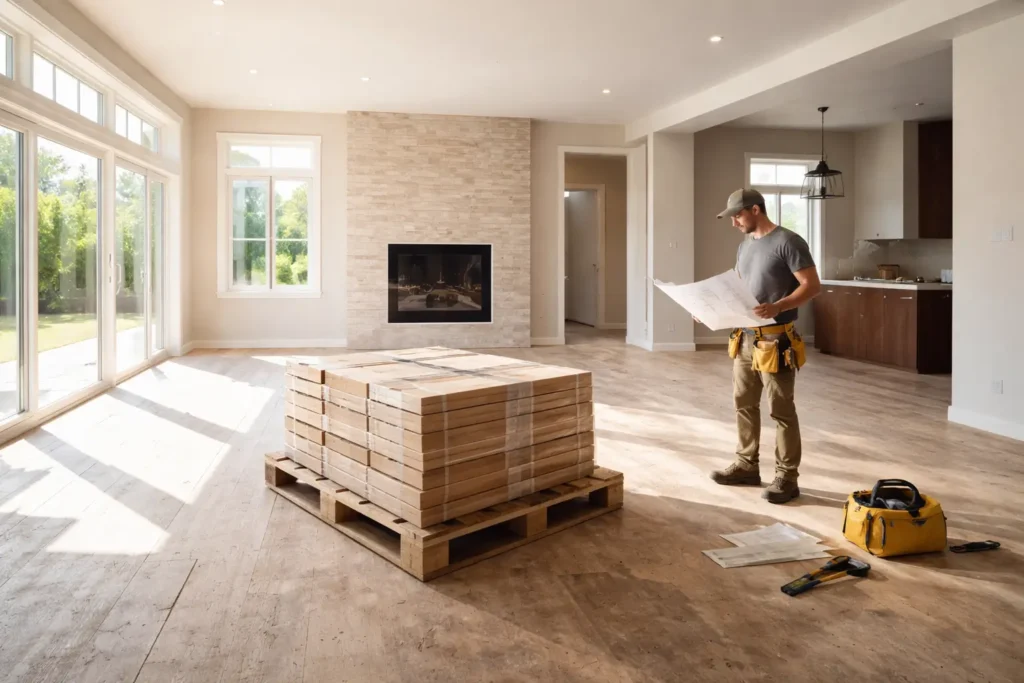
Table of Contents
Bulk Purchasing and Volume Pricing
For a large material order, compare retail, local dealer, liquidator, contractor-supply, and special-order pricing before deciding where to buy.
Check pricing from a local flooring liquidator or a contractor-supply warehouse as possible sources for volume pricing. Some sellers offer pallet or quantity discounts, but the amount varies by product, inventory, market, and seller; treat figures such as 15% to 20% as examples rather than a standard discount. Ask for the unit price, required quantity, return policy, matching-lot details, and delivery terms in writing.
🚚 Delivery and Handling:
Delivery charges depend on order weight, distance, access, unloading method, seller policy, and local market. Large flooring orders can be heavy, so treat a quoted delivery range such as $250 to $400 as an example rather than a universal fee, and confirm whether curbside, driveway, threshold, or inside delivery is included.
✅ Planning tip: Ask whether delivery can be discounted, bundled, or included before you pay. Availability of free or reduced delivery depends on the seller, order size, distance, product, and current promotion.
Large Room Cost Breakdown
On a large project, your install laminate flooring cost per square foot may be lower on some straightforward large projects because setup and travel are spread across more square footage, but labor still depends on layout, preparation, material, access, transitions, furniture, and installer pricing. (See our Flooring Cost Factors guide for a detailed labor breakdown).
| Material Type | Material Cost (500+ sq ft) | Total Installed Cost (Avg) |
|---|---|---|
| Laminate (Waterproof) | $2.50 – $4.50 | $6.50 – $11.00 |
| Luxury Vinyl Plank (LVP) | $3.00 – $6.00 | $7.00 – $12.00 |
| Engineered Hardwood | $6.00 – $13.00 | $12.00 – $22.00 |
| Broadloom Carpet | $2.00 – $4.50 | $5.00 – $9.00 |
In 2026, hardwood floor square footage per day varies substantially by product, installation method, crew size, room layout, prep work, acclimation or conditioning requirements, finishing, and site conditions. Do not infer overcharging from project duration alone; compare the written scope and schedule.
Subfloor Flatness and Stability
Subfloor variation can be more noticeable across a large continuous installation, but the relevant tolerance and corrective work depend on the flooring system and substrate.
Deflection and Subfloor Movement
Across a large installation, dips, humps, and movement can affect fit and performance. If the substrate has excessive deflection, or movement beyond the flooring system’s allowed limits, a large area of click-lock planks may experience joint stress, movement, noise, or separation over time.
The Leveling Contingency
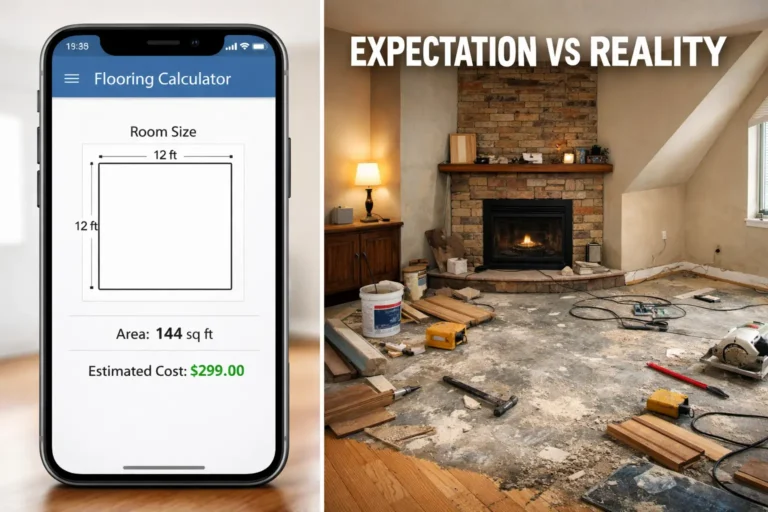
A quote may separate installation labor from the subfloor leveling assessment. Excessive subfloor variation can contribute to movement, noise, joint stress, or other installation problems, so confirm how flatness will be checked and corrected if necessary.
Managing the Waste Factor and Staggering
The bigger the room, the more you stand to lose on waste.
📉 Waste Planning
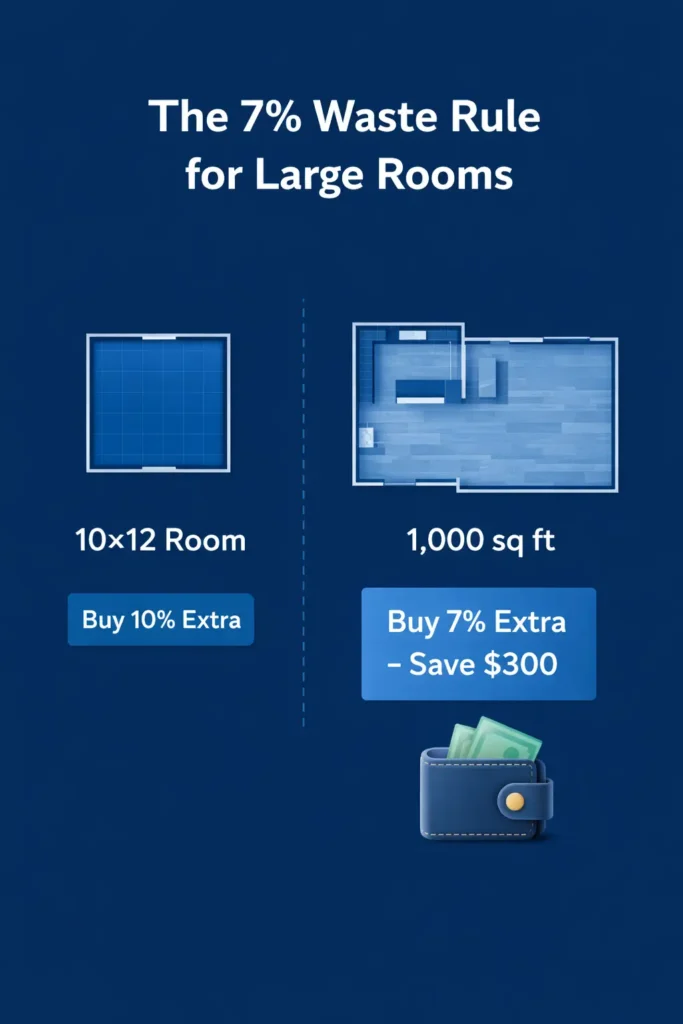
Waste allowance depends on room shape, plank or tile size, layout direction, pattern, defects, cuts, attic stock, and manufacturer guidance. Some simple layouts may use less waste than complex rooms, but do not assume a universal 5% to 7%.
On a large project, even a small change in the waste allowance can affect the material quantity and cost. Treat a figure such as $200 to $400 as an example only; actual savings depend on material price, usable offcuts, return policy, and the final required quantity.
📏 The Stagger Pattern
For plank layouts, follow the manufacturer’s minimum end-joint offset and staggering instructions rather than assuming every product requires an 8- to 12-inch offset.
Repeated H-joints can create an undesirable visual pattern and may conflict with product-specific layout instructions. Joint performance depends on the locking system, subfloor, installation, traffic, and manufacturer requirements.
Expansion Gaps and Transition Requirements
Laminate and LVP are floating floors. Floating-floor systems can move with temperature and humidity changes. Maximum continuous-run length and required breaks vary by product, room geometry, climate, and installation instructions. Follow the product’s written requirement for an expansion gap or transition strip only where the flooring system and room configuration require it.
- The Friction: Some homeowners prefer an uninterrupted visual run, but aesthetic preference should be balanced with the flooring manufacturer’s expansion and transition requirements.
- Why it matters: If required expansion space or movement breaks are omitted, a floating floor can bind, peak, buckle, or stress its joints. The correct remedy depends on the cause, flooring system, and installation conditions.
Insights from the Field
Common practical questions on large projects include furniture handling, installation over existing surfaces, and product conditioning:
The Furniture Shuffle
Furniture handling may be included or priced separately. Treat a quoted range such as $300 to $600 as an example rather than a universal charge. If you plan to move furniture yourself, confirm timing, storage, access, and installer requirements before the job starts.
Installing Over Existing Tile
If you are installing over old tile, the existing surface may need cleaning, flattening, patching, or other preparation depending on grout depth, tile condition, vinyl type, underlayment, and manufacturer instructions. Do not assume every tile installation needs the same treatment or that pattern transfer will occur on a fixed timeline.
Product Conditioning and Acclimation
Do not assume every flooring product needs the same conditioning period. Treat a fixed period such as 48 to 72 hours. Follow the manufacturer’s requirements for storage, site conditions, temperature, humidity, moisture, and acclimation or conditioning before installation.
FAQs
How much should I pay for 400-500 sq feet of flooring?
In 2026, budget between $3,000 and $5,500 for a professional mid-range install.
Is a large room cheaper per square foot?
Yes. You can usually shave $0.50 to $1.00 off the labor rate because the crew saves time on travel and setup.
Can I get a discount for a whole-house job?
Absolutely. Always ask for a Volume Discount on the labor. If they are staying on one site for three days, they will make more money and should pass some of the savings along to you. (To verify contractor credibility, check resources at USA.gov).
What is the best flooring for a large basement?
Luxury Vinyl Plank (LVP). It handles the moisture of a large concrete slab and is much cheaper than tiling a massive area.
Conclusion
When the project is great, small details like the expansion gap and underlayment quality matter more than ever. Don’t be penny-wise and pound-foolish. Spend the money on the subfloor prep, so your massive investment doesn’t literally crack under the pressure.
For the latest on bulk material pricing and 2026 contractor standards, check out the National Wood Flooring Association (NWFA).
Ready to find out if you should even hire a pro?
Check out our final guide: [DIY vs Professional Flooring Cost: Is Saving $2,000 Worth the Back Pain?].



One Comment