
Cheap vs Expensive Flooring: Cost, Durability and Value
You walk into a local warehouse and find a wood-look plank for $1.89 per square foot, while the boutique showroom down the street is asking $12.50 for something that looks, at a glance, nearly identical.
Lower-priced flooring can be a good fit in some rooms, but price alone does not predict appearance, durability, repairability, or service life. Product construction, wear surface, substrate, installation, traffic, moisture, sunlight, and maintenance all matter. This guide compares the Diminishing Returns of flooring so you can evaluate where additional spending improves specifications that matter for your project and where it mainly changes design, format, or branding.
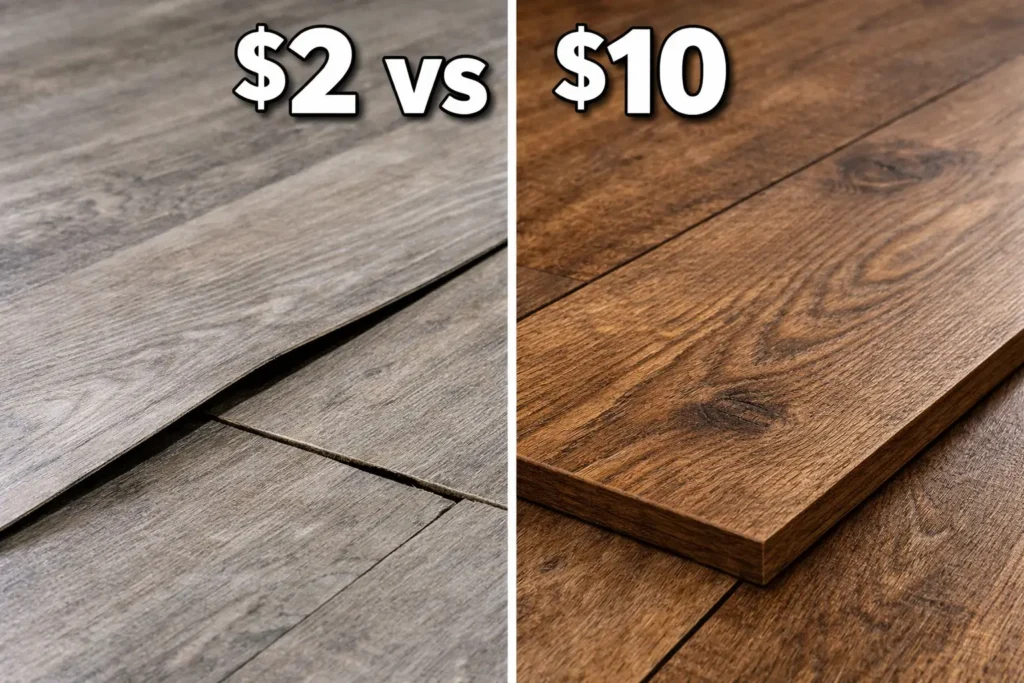
Table of Contents
Visual Variation and Pattern Repeat
One difference between lower- and higher-priced planks can be how the product handles Pattern Repeat. Because modern synthetic floors like LVP and Laminate are essentially high-resolution photographs printed onto plastic or wood-fiber cores, the variety of those photos determines how realistic the floor looks.
The Budget Tier ($1.50-$3.00): The Matrix Effect
Some budget collections use fewer printed visuals than premium collections, which can make pattern repetition more noticeable in large rooms. The number of unique visuals varies by product; do not assume a fixed range such as 5 to 8 unique planks for every budget product.
The Experience: In a larger room, limited visual variation can make repeated knots or grain patterns easier to notice. Check product samples, carton variation, and layout before installation if this matters to you.
The Luxury Tier ($8.00-$12.00): The Infinite Grain
Some premium collections provide 20 to 50 unique planks or other visual-variation systems before a repeat, but the actual number and print technology vary by collection.
The Experience: More visual variation and aligned texture can create a more convincing wood look, but appearance is subjective and depends on print quality, texture, plank mix, lighting, and installation.
Core Density: The Skeleton of Your Floor
Core construction is one factor in flooring performance, alongside the wear surface, backing, installation system, room conditions, and maintenance. SPC (Stone Plastic Composite) is common in many current products, but construction and density vary by product and price tier.
| Feature | Budget Tiers ($2–$4) | Premium Tiers ($7–$12) |
|---|---|---|
| Material Core | WPC (Wood-Plastic) or low-density Vinyl | High-Density SPC (Crushed Limestone) |
| Plank Thickness | 3.5mm-4.5mm | 8mm-12mm |
| Acoustics | High Hollow Clack | Deep, Solid Thud |
| Indentation | Heavy furniture may leave dents depending on the product, load and use. | High dent resistance, depending on product construction and use. |
Acoustics vary with plank construction, backing, underlayment, installation method, subfloor, room furnishings, and footwear. Higher price does not automatically mean quieter performance, so compare published acoustic specifications where sound matters.
Wear Layer and Surface Protection
The Wear Layer is the clear, protective coating applied to the print. This is the only thing standing between your dog’s claws and the pretty wood pattern.
- 📉 Bargain Flooring (6 mil-12 mil): Thinner wear layers may be suitable for lower-traffic uses, but visible wear depends on the product, finish, traffic, pets, cleaning, grit, sunlight, and maintenance; do not assume a fixed 24-month failure timeline.
- 📈 Premium Flooring (20mil-30 mil): Some higher-spec products use Ceramic Bead or Aluminum Oxide or other additives in the wear surface. Scratch and abrasion performance still depends on the complete product and should not be described as diamond-hard or scratch-proof.
Tactile Experience: EIR and The Feel Test
Texture quality can differ across price tiers, but there are realistic and less-realistic products at many prices. Compare actual samples rather than assuming a $2 or $8 price point determines how authentic a surface feels. This is due to EIR (Embossed in Register) technology.
EIR can add aligned surface texture and may affect traction. Slip resistance depends on the specific surface, finish, contaminants, footwear, cleaning, testing method, and wet conditions. Do not assume price or texture alone determines safety; use product slip-resistance information where that is important.
Hydrothermal Expansion
Temperature, humidity, substrate conditions, product construction, and installation details can all affect dimensional movement. Many flooring systems can experience dimensional movement as temperature or humidity changes, with the amount depending on product construction and installation conditions. For standards on moisture control, see the NWFA Technical Guidelines.
Dimensional stability varies by product and construction. Some lower-priced floors may have different Dimensional Stability. Heat-related movement and buckling risk depend on product limits, expansion space, sunlight, subfloor, installation, and indoor conditions. Higher-priced SPC may offer strong stability, but no price tier is universally thermally stable.
Balancing Price and Product Specifications
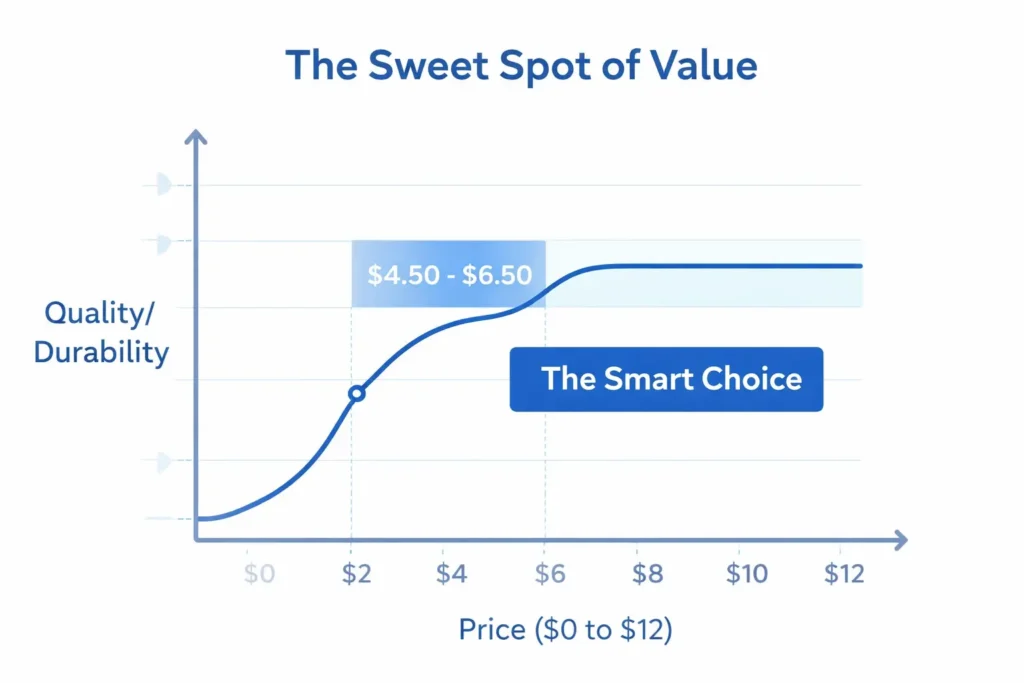
Additional spending can improve wear surfaces, visuals, formats, core construction, warranty terms, or manufacturing tolerances, but the value of those differences depends on the project and product.
For planning, treat any suggested $4.50 to $6.50 per square foot range as an example rather than a universal optimum. Market ranges can help with comparison, including 2026 market data from Angi. Products in this range may offer features such as:
- ✅ A 20 mil wear layer, with performance dependent on the specific product and use rather than being pet- or kid-proof.
- ✅ A high-density SPC stone core.
- ✅ Integrated Underlayment, which may change material and labor requirements depending on the product and installation.
- ✅ EIR Texture for aligned visual texture; slip performance remains product-specific.
At higher price points such as $9.00 per square foot, additional cost may reflect Luxury Logistics like extra-wide planks or specialized patterns like Herringbone.
The Cost of a Do-Over
One potential long-term cost is early replacement. A simple way to compare options is the Amortization of Failure. If a lower-cost floor needs replacement earlier than expected, the next project can include more than the original material price. You have to pay for:
- The removal and disposal of the old floor (Check Removal Costs).
- The purchase of the new floor.
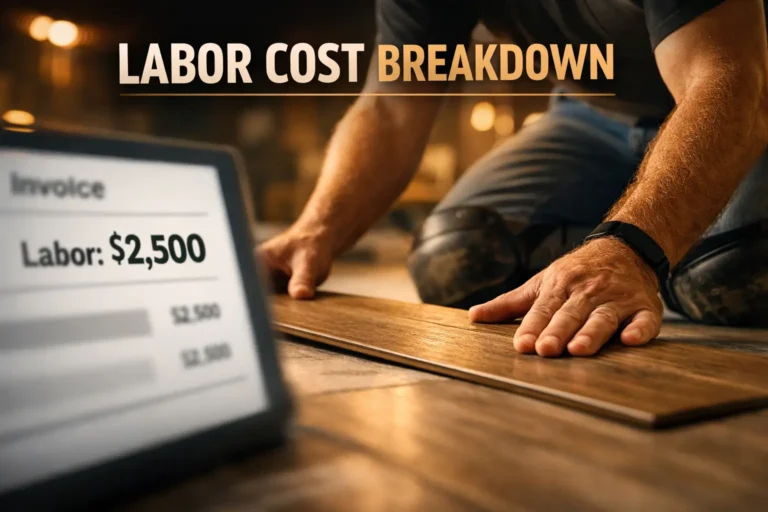
- The labor to install the new floor, at whatever rates apply at that future time.
A higher-priced floor can have a lower annualized cost if it lasts substantially longer, but service life and replacement frequency should be treated as scenarios rather than guaranteed outcomes.
FAQs
Does higher-end flooring increase a home’s resale value?
Replacing carpet with LVP may affect buyer appeal or resale value, but ROI varies by local market, product quality, installation, room condition and overall property value.
Why is my expensive floor still scratching?
Even a $20-per-foot floor can scratch if you don’t use felt pads. If your priority is Scratch Resistance, a high-end Laminate can offer stronger scratch resistance than some vinyl products, depending on the wear surface, rating, finish, traffic, and product quality.
Is thicker always better for durability?
Not always. A 5mm SPC (Stone Core) is more stable and dent-resistant than an 8mm WPC (Wood-Plastic Core). In 2026, check the Core Material before reviewing the total thickness.
Is it okay to use cheap flooring in closets?
Yes. Use the premium planks in your Living Room and Kitchen where guests see them. Use a color-matched, budget-friendly version in Closets and Spare Bedrooms to save your budget.
Conclusion
Don’t buy the $2.00 plank for a high-traffic family home. It is a disposable product that will show its age within 36 months. However, you don’t need the $12.00 designer plank unless you require Infinite patterns.
The Smart Money choice for 2026 is the $5.00 to $6.00 range.
One Comment