
Tile vs. Vinyl Flooring: The 2026 Cost & Durability Guide
Choosing a floor in 2026 is a big decision that most people get wrong. You see a beautiful porcelain tile and a high-end vinyl plank and think they look the same.
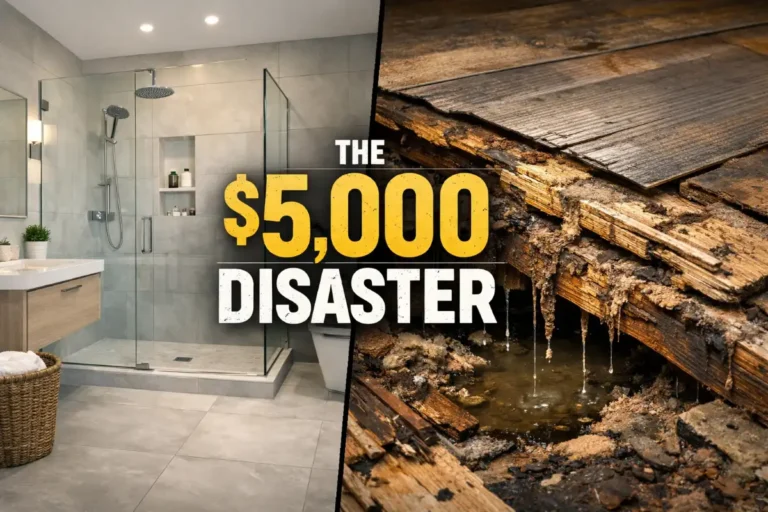
One is a permanent part of your house that can last fifty years. The other is a plastic-based floor you might replace in a decade. If you make the wrong choice now, you could end up with frozen feet, shattered dishes, or a $5,000 bill for a subfloor fix you never saw coming.
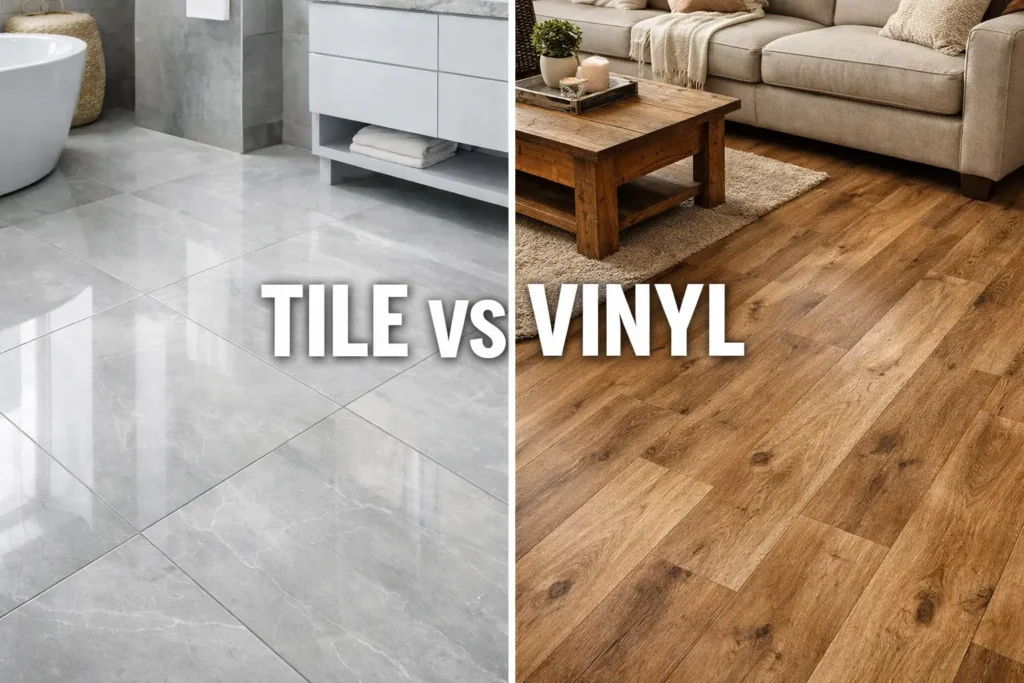
Table of Contents
Tile vs Vinyl Flooring Cost in 2026
In 2026, vinyl flooring usually costs $7.00 to $12.00 per square foot installed, while tile flooring usually costs $15.00 to $35.00 per square foot installed. That means tile often costs about $8.00 to $23.00 more per square foot than vinyl once labor, setting materials, and the slower installation process are included.
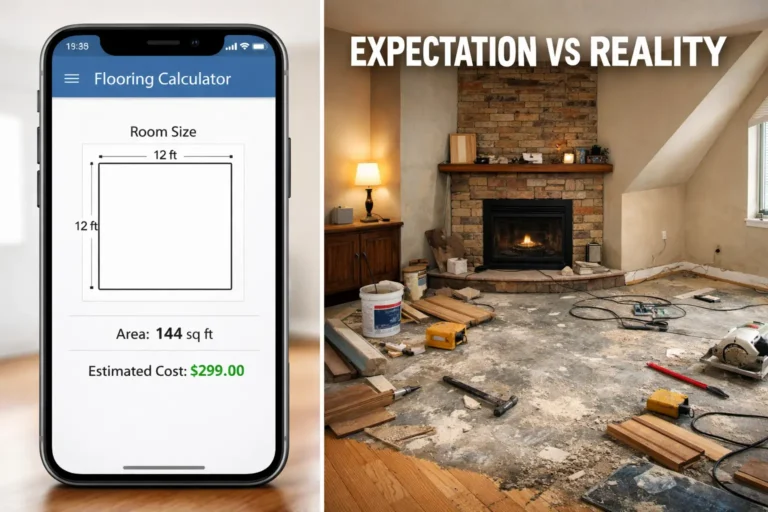
Do not look at the price tag on the box and think that is what you will pay. Most people ignore the labor and the mess.
If You Choose Vinyl (LVP/SPC)
In 2026, most people go for Luxury Vinyl Plank (LVP). You can find good stuff for $4.00 to $7.00 per square foot.
The labor is where you save. Because vinyl clicks together like a puzzle, a pro can finish a 500-square-foot room in a single weekend. Your total cost for materials and labor will range from $7.00 to $12.00 per square foot.
The Catch: If your floor isn’t perfectly flat, that cheap vinyl will start to click and pop every time you walk on it.
If You Choose Tile (Porcelain/Ceramic)
Tile is where the “Sticker Shock” happens. Porcelain tile typically ranges from $6.00 to $18.00 per square foot.
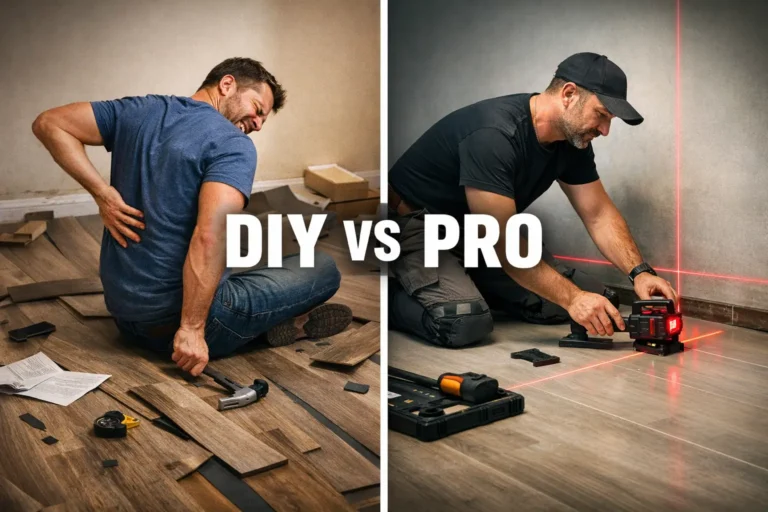
Labor is the real budget killer. In 2026, there is a massive shortage of skilled tile setters. You are paying for a craftsman, not a handyman.
Expect to pay between $15.00 and $35.00 per square foot for the full job. It is slow. The installer must place the tile, set it, wait for it to dry, and then return to it. It takes a week. It is expensive.
The Comparison Table: 2026 Quick Look
| Feature | Luxury Vinyl (LVP/SPC) | Porcelain/Ceramic Tile |
|---|---|---|
| Installed Cost (avg) | $7 – $12 /sq ft | $15 – $35 /sq ft |
| Wait Time for Pros | 7–14 Days | 2–3 Months |
| Real Life Expectancy | 15–20 Years | 50+ Years |
| Feel Underfoot | Warm and Soft | Cold and Hard |
| Cleaning | Easy (Sweep/Mop) | Hard (Grout Scrubbing) |
Commercial Applications, Durability, Maintenance, and Performance
If you are comparing vinyl vs tile flooring for commercial applications, the right answer depends on traffic, moisture exposure, cleaning routines, and how long the floor needs to last without replacement.
| Use Case | Better Choice | Why |
|---|---|---|
| Restaurants, entryways, wet service areas | Tile | Better long-term durability, better flood resistance, and stronger performance under constant moisture and heavy traffic. |
| Offices, waiting rooms, light retail | Vinyl | Lower installed cost, faster installation, less downtime, and easier comfort underfoot for standing employees. |
| Bathrooms, laundry areas, mudrooms | Tile | Handles repeated water exposure better and is usually the safer long-term choice in splash-prone rooms. |
| Basements, fast remodels, budget-sensitive projects | Vinyl | Lower upfront cost, quicker install, and softer feel make vinyl easier for short timeline projects. |
Durability: Tile usually wins for long-term wear, dent resistance, and lifespan. Vinyl performs well for everyday residential use, but it is more vulnerable to scratches, gouges, and sun-related wear over time.
Maintenance: Vinyl is easier for daily cleaning because it has no grout lines. Tile is tougher overall, but grout maintenance adds time and cost, especially in busy homes or commercial spaces.
Performance: Choose tile when water, heavy traffic, and long-term durability matter most. Choose vinyl when lower installation cost, faster turnaround, and softer underfoot comfort matter more. For room-specific planning, see our best bathroom flooring options and best kitchen flooring options.
The Pros and Cons
Tile (The Permanent Rock)
You can drag a grand piano across it. It is as hard as stone and increases your home’s appraisal value. According to the Tile Council of North America, porcelain is the most hygienic surface available.
- The Bad: It is a thermal thief. It pulls the heat right out of your feet. It also creates an echo that makes a quiet house feel loud.
- The Shatter Factor: If you drop a phone on porcelain, the phone loses. Every time.
Vinyl (The Comfortable Plastic)
It is kind to your joints. There is a slight bounce that makes standing in the kitchen for hours much easier.
- The Bad: It hates the sun. In 2026, even high-end LVP can warp or fade if exposed to 8 hours of direct sunlight daily.
- The Repair Nightmare: If you scratch a plank in the middle of the room, you often have to take apart the entire floor, starting from the wall, to reach it.
The Waterproof Lie: What Your Subfloor Hates
Salespeople love to use the word waterproof. But here is the reality check from FEMA guidelines on flood-resistant materials.
Vinyl planks are made of plastic. The planks themselves won’t swell, but water is sneaky. It can and will seep through the tiny cracks between the planks during a flood.
The water is trapped under the wood subfloor. This creates a mold factory you can’t see until it is too late. If you want a floor that can survive a real flood, tile is the only answer. It is a solid, grouted surface that keeps water on top for easy mopping.
Daily Headaches
The Cabinet Weight Trap
If you are doing a full kitchen renovation, listen to this. You cannot place heavy kitchen cabinets on a floating vinyl floor. The weight pins the floor down. This stops it from expanding when the weather changes, which causes the joints to snap and the floor to buckle.
The Warranty Trap
Most Lifetime Warranties on vinyl are a scam. If you find a defect, the brand will request a frequency test report dated the day it was installed. If your installer didn’t use a digital meter to verify that the floor was dry, your claim will be rejected immediately.
FAQs
Is it cheaper to install tile or vinyl flooring?
Yes, vinyl is much cheaper to install. You save on materials and save even more on labor because it takes a fraction of the time. (Compare prices with our Bedroom Flooring Comparison).
What lasts longer, tile or vinyl?
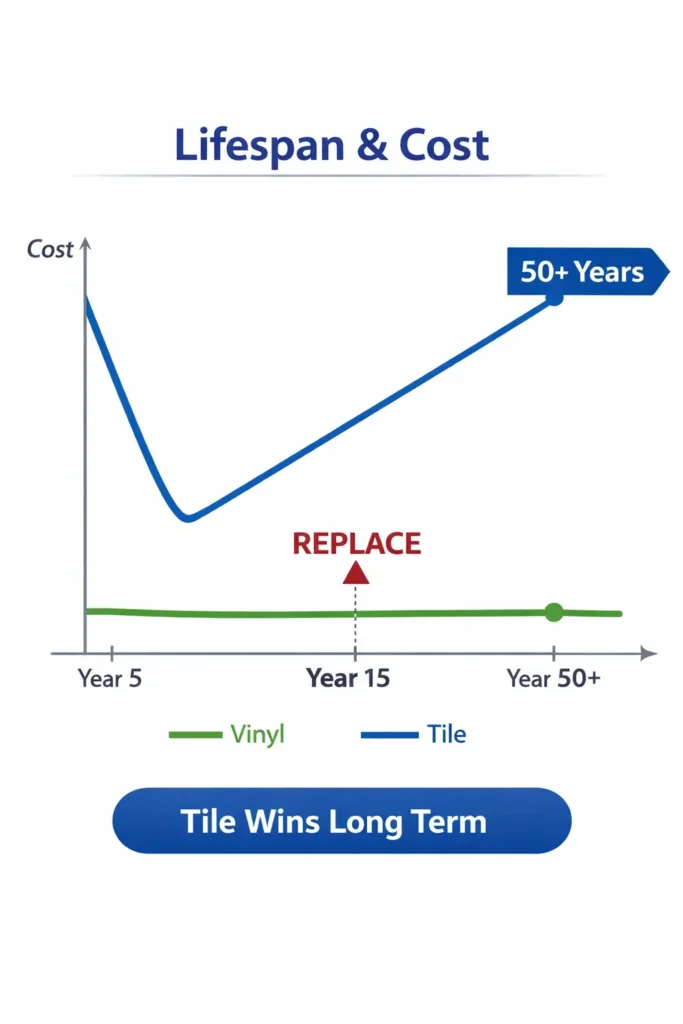
Tile wins. A well-installed porcelain floor can last as long as the house. Vinyl usually needs to be replaced every 15 to 20 years.
Is vinyl cheaper than tiling?
Yes. For a standard 2,000 sq ft house, vinyl costs roughly $15,000–$25,000. Tile for the house could easily soar over $40,000.
What is the cost difference between tile and vinyl flooring?
In 2026, vinyl flooring usually runs $7.00 to $12.00 per square foot installed, while tile usually runs $15.00 to $35.00 per square foot installed. In most projects, tile costs about $8.00 to $23.00 more per square foot than vinyl because labor is slower, more specialized, and more expensive.
Which is better, vinyl or tiles?
Use tile in bathrooms, laundry rooms, and entryways. Use vinyl in basements or living areas for a fast, warm update.
Conclusion
If you plan to stay in your home for 30 years, tile is the more cost-effective flooring option. Vinyl is a disposable floor. You will likely pay to replace it twice in thirty years. When you add up the cost of two vinyl jobs versus one tile job, the price gap closes.
However, if you plan to move in five years, vinyl is the smarter move for your cash.



One Comment