
LVP vs. Laminate: Which Floor Actually Wins in 2026?
You are standing in a flooring aisle, staring at two planks that appear identical, but one costs twice as much. The salesperson tells you both are waterproof, but your gut tells you something is off.
You are right. In 2026, marketing for Waterproof Laminate has become so aggressive that it is almost impossible for a typical person to tell the difference between a floor that survived a flood and one that will swell like a sponge.
Pick the wrong one, and you’ll either be staring at scratched-up plastic in six months or ripping up moldy wood after a minor sink leak. This guide is your shield against the hype. We will examine the real-world friction of living with these floors so you can spend your money once.
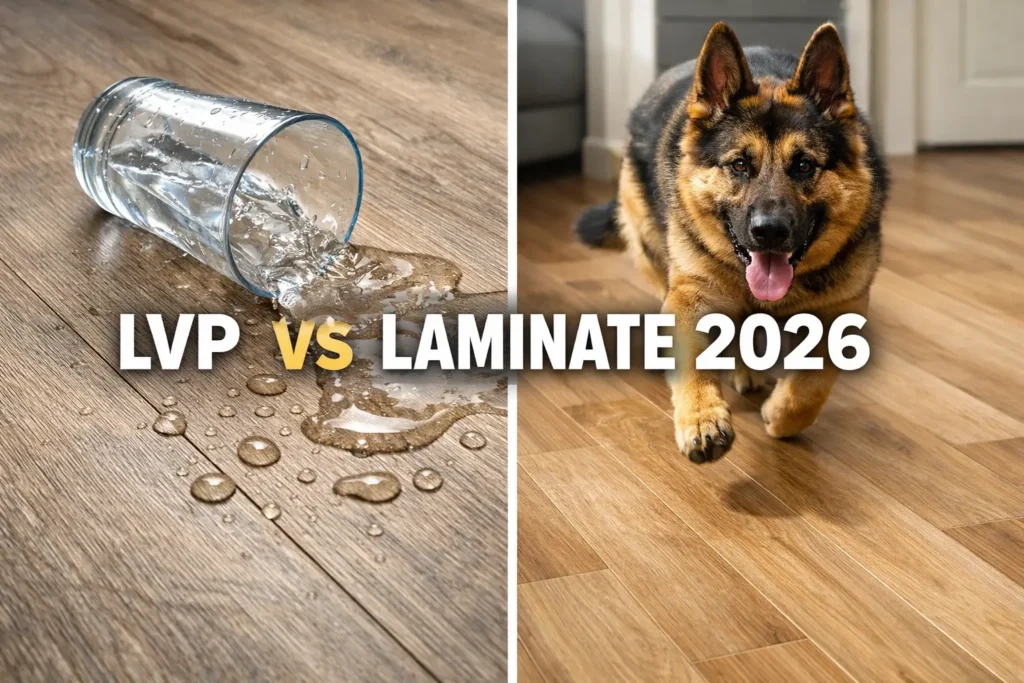
Table of Contents
The Waterproof War: Marketing vs. Chemistry
By 2026, the term “waterproof” will have lost almost all meaning in the flooring industry. According to the National Association of Home Builders (NAHB), water damage is a leading cause of flooring failure.
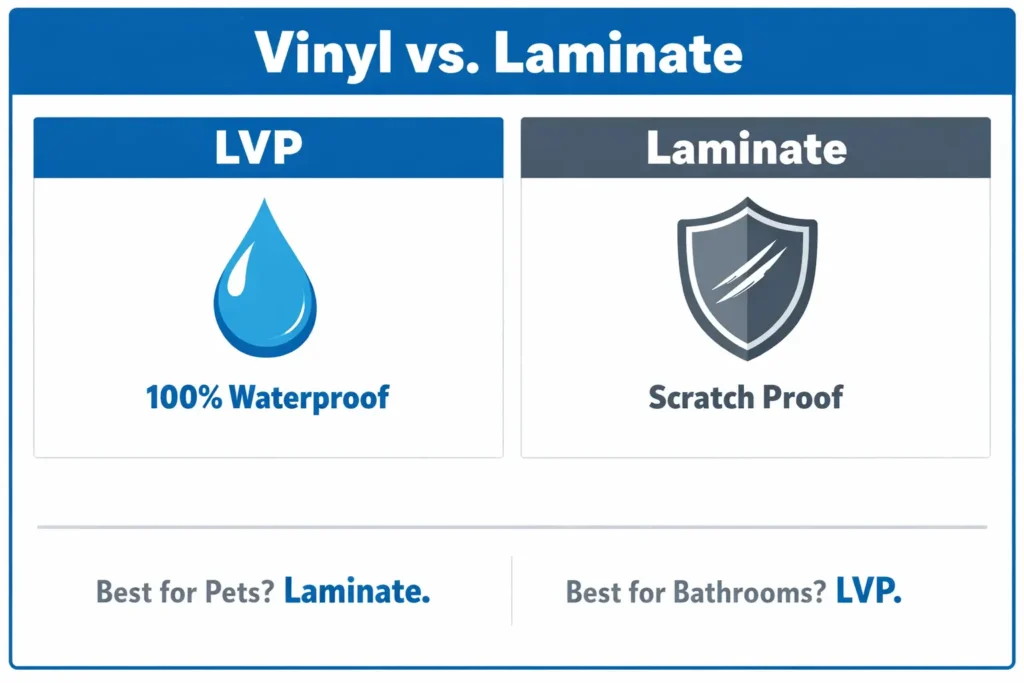
Laminate is made of wood fibers at its core (HDF). No matter how many Hydro-Seals or Aqua-Guards they spray on it, the core is still wood. Most 2026 waterproof laminates only guarantee they can hold water for 24 to 72 hours. If a pipe bursts while you are at work, the laminate is likely damaged.
LVP (Luxury Vinyl Plank) is synthetic. It is usually made of SPC (Stone Plastic Composite) or WPC (Wood Plastic Composite). You could submerge an SPC plank in a bathtub for a week, and it would not change shape.
The Scratch Test: Why Laminate is the 2026 Champion
If you have a 70lb dog or kids who treat the hallway like a racetrack, you need a hard surface. Laminate is the king of scratch resistance. It uses a top layer of aluminum oxide, one of the hardest minerals on earth. In 2026, you should look for an AC4 or AC5 rating.
LVP is softer. Even the commercial-grade material with a 20-mil wear layer can still scuff. If you drag a heavy chair across LVP without felt pads, you will see a white mark that is almost impossible to remove.
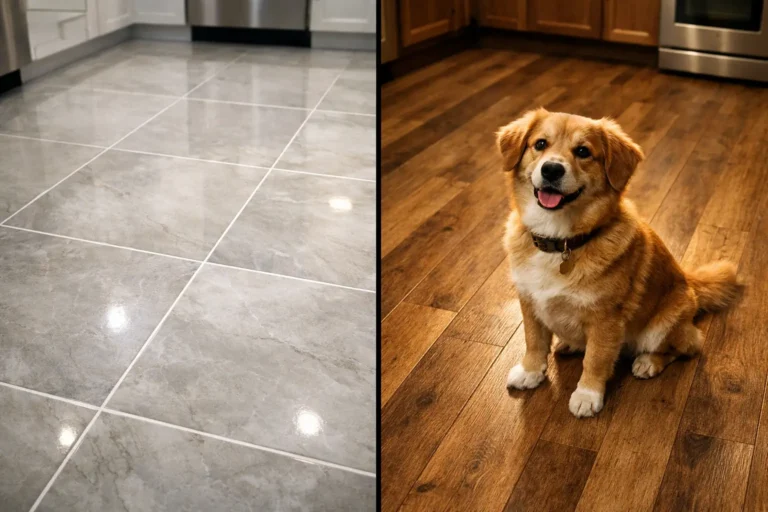
Lived-in Detail: If your dog has zoomies, their claws will leave micro-scratches on LVP over time, making it look dull. On a high-end laminate, those same claws might not even leave a smudge.
Comparison Table: 2026 Performance Specs
| Feature | Luxury Vinyl Plank (LVP) | Laminate Flooring |
|---|---|---|
| Material Core | Synthetic (Stone/Plastic) | Organic (Wood Fiber) |
| Water Status | 100% Waterproof | Water-Resistant (24-72 hrs) |
| Scratch Rating | Good (Depends on Mils) | Best (AC4/AC5 Rated) |
| Best For Pets | Small dogs / Potty training | Large dogs (Heavy claws) |
| Cut Method | Score & Snap (Quiet) | Saw (Noisy/Dusty) |
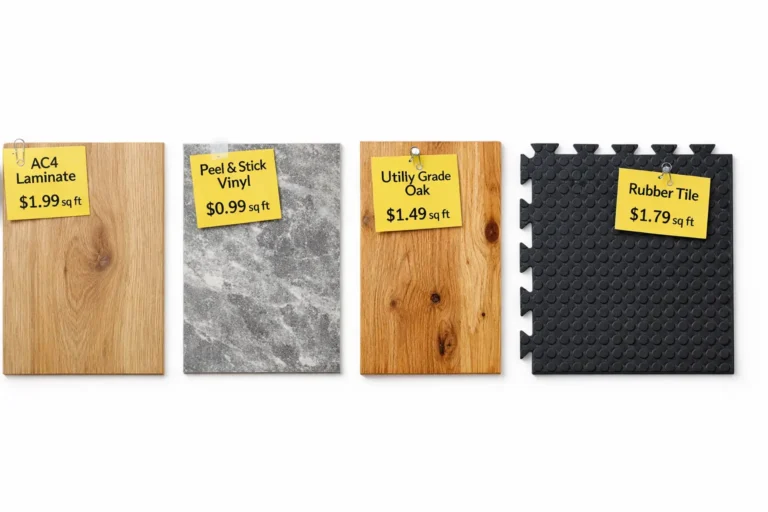
| Average Cost | $3.50 – $7.50 /sq ft | $1.50 – $5.00 /sq ft |
Avoiding the “Plastic Clack”
One of the biggest complaints about fake wood is the sound. Laminate is thick and rigid. If you use a cheap underlayment, walking on it sounds like clack-clack-clack. It feels hollow. LVP is denser. Because it is usually thinner and glued or clipped closer to the subfloor, it produces a duller thud.
The Tip: In 2026, many LVP planks come with Integrated Underlayment. This means the foam is already on the bottom of the plank. It saves you money and reduces noise for the people in the room below.
2026 Style Trends: The End of Cool Gray
Stop looking at the gray floors. In 2026, the flooring world has moved back to warmth. The big trend this year is EIR (Embossed in Register) texture. This is where the bumps and grooves you feel match the wood grain you see. It makes the floor look incredibly real.
Laminate actually does this better than LVP. Because laminate is thicker, manufacturers can press deeper textures into it. If you want a floor that looks like $15.00-per-foot White Oak (see our Hardwood Guide), a high-end laminate will fool almost everyone.
Installation Friction: What the Pros Don’t Tell You
Both floors are labeled DIY Friendly, but only the LVP is truly clean.
- LVP (Clean): You can cut LVP with a utility knife. You just score it and snap it like a piece of chocolate. There is no dust or noise.
- Laminate (Messy): Requires a saw. This creates a massive cloud of fine wood dust that will cover every piece of furniture in your house.
The Subfloor Trap: Concrete vs. Wood
Where you live matters more than the floor you pick. For more on this, check Consumer Reports.
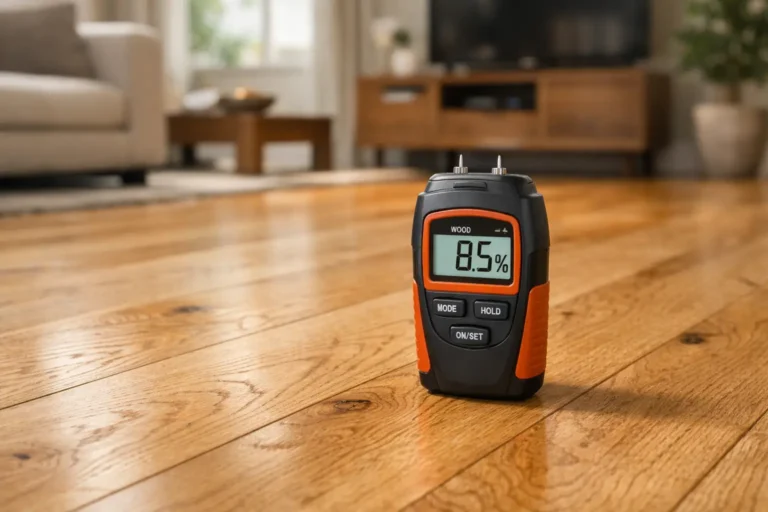
You must use a moisture barrier, even if the floor says it’s waterproof. Concrete breathes moisture, which can cause the bottom of a laminate floor to rot within a year.
You may have a plywood subfloor. If you install LVP in a bathroom and it leaks, the plywood underneath will rot, and you won’t notice it until the floor feels mushy.
FAQs
Can I use a steam mop on LVP?
No. Never use steam on LVP or Laminate. The heat can melt the glue or force moisture into the core. Use a damp microfiber mop and a pH-neutral cleaner.
Which is better for resale value?
In 2026, LVP is slightly more appealing for resale in starter homes because people value the word “waterproof.” In higher-end homes, people prefer the more realistic look of premium laminate.
How do I tell a good LVP from a bad one?
Check the Wear Layer. Do not buy anything under 12 mil. For a home with dogs, you want 20 mil. Anything less will look like a scratched mess within two years.
Why does my laminate floor have a gap?
This usually means you didn’t leave an Expansion Gap at the walls. When humidity changes, the floor tends to shift. If it hits the wall, it will buckle or pop its joints. (Check Measurement Guide).
Is SPC better than WPC?
SPC (Stone Plastic) is harder and better at resisting dents from heavy furniture. WPC (Wood Plastic) is softer and warmer underfoot. For most families, SPC is the safer 2026 bet.
Conclusion
There is no better floor than the one that fits your life. Choose LVP if you are flooring a basement, a bathroom, or a kitchen. It is the only material that gives you total peace of mind against spills.
Choose Laminate if you want the most beautiful wood look and have big dogs with heavy claws. Just be sure to wipe up any major spills within a few hours to protect the joints.
Ready to start picking your colors?

One Comment