Hidden Flooring Costs: 7 Things Contractors Won’t Tell You
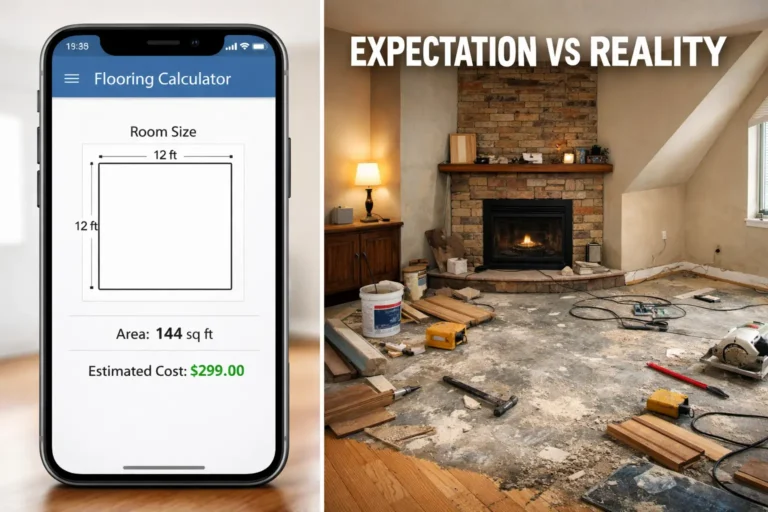
Most people sign a professional flooring contract, thinking they have the final number. But wait. By the time the last plank is clicked into place, they have often spent 30% more than they planned.
This isn’t always because the contractor is trying to scam you. It is because the real world under your old, dusty carpet is full of physical traps that stay hidden until the demo starts. To see how these fees impact different materials, check our Flooring Cost Factors Guide.
Here is the truth about the extra costs of flooring installation that can drain your budget in 2026.

Table of Contents
1. The Subfloor Leveling Trap
This is the single biggest reason flooring budgets die a sudden death.
Modern floors, especially Luxury Vinyl Plank (LVP) and Laminate, are lazy and follow the exact shape of the subfloor. If your concrete or plywood has a dip greater than 3/16 inch over 10 feet, your new floor will eventually develop cracks, clicks, or a trampoline-like feel.
- The Surprise: A contractor will provide a quote for the installation, but they usually won’t assess the subfloor integrity until the room is empty and your old floor is in the trash. Suddenly, they discover the floor is wavy and tell you that you need Self-Leveling Underlayment (SLU).
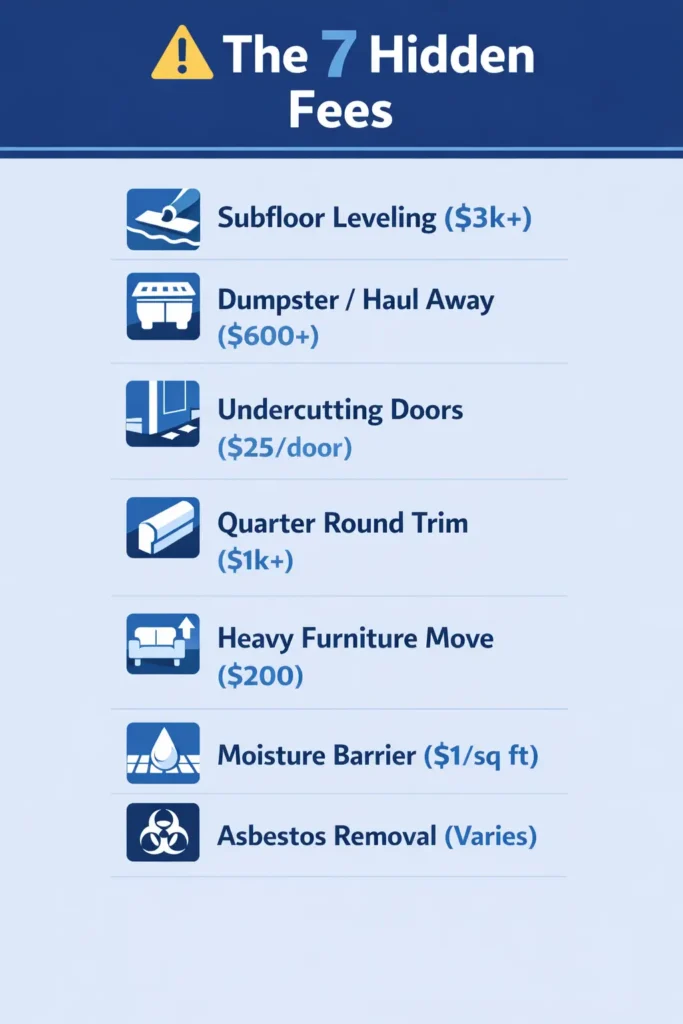
- The Cost: At $45 a bag plus $2.00 per foot for labor, a standard 1,000-square-foot house just found a hidden $3,500 bill.
Pro Tip: Ask your contractor to walk the floor with a 10-foot straight edge before you pay a deposit. If they refuse, they plan to address the leveling issues later, when you are too far into the project to say no.
2. The Demo & Haul Away Weight Tax
Ripping out old flooring is the easy part. Getting rid of it is where the real money vanishes.
- Many homeowners see “Demo” on a quote and assume it means the trash goes to the dump, but the flooring demo and haul-away price often includes a weight surcharge. In 2026, landfills increased their fees for heavy materials such as ceramic tile and old mortar.
- A 20-yard dumpster can cost $600 to $900 just to sit on your driveway for a week.
- If your quote doesn’t explicitly state disposal fees are included, you might find a mountain of debris on your lawn Friday afternoon, and a contractor who says, “Hauling isn’t my job.”
3. The Tape Trap and Finish Damage
This is a tiny detail that ruins expensive floors every single year.
4. Door Jambs and the Gap Problem
Your new floor is unlikely to be the same height as your old one.
- When the floor height changes, your doors won’t close, and your trim will appear to be floating. Undercutting door jambs is a slow, dusty process that requires a special saw. Many installers charge $15 to $25 per jamb.
- If you go from thick carpet to thin vinyl, you will also see a giant gap under your baseboards. You will have to pay for Threshold Transitions or add Quarter Round molding. Quarter-round is inexpensive to purchase, but the labor to cut and nail it around an entire house can add $1,000 to your final bill.
5. The Moisture Log Warranty Catch
If your floor fails within two years, the brand will do everything possible to deny your claim.
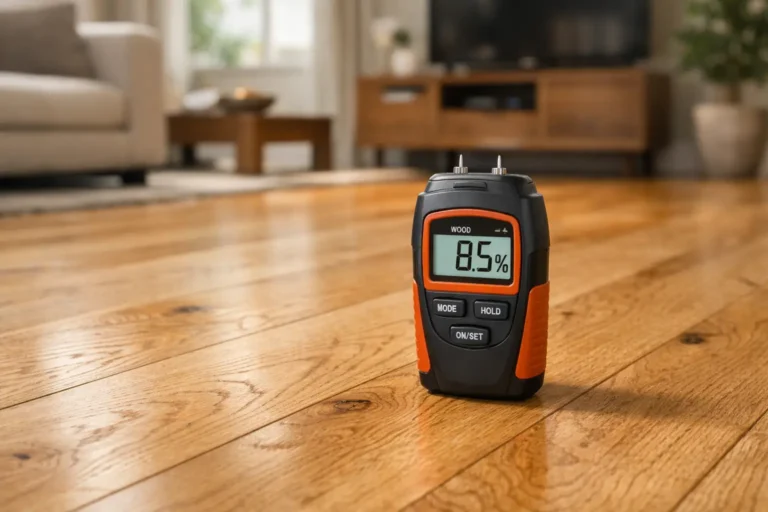
Their favorite weapon is the missing Moisture Test Report. If your installer didn’t use a digital meter to check your concrete slab and record the results on the day of installation, your Lifetime Warranty is void.
Most handypersons skip this because it takes time, and the meters are expensive. Make sure they also install a Moisture Vapor Barrier, typically a 6-mil polyethylene membrane over concrete. Without it, you risk mold remediation flooring costs of up to $5,000.
6. The Furniture Shuffle and Heavy Object Fees
Contractors are there to lay floors, not to be your moving crew.
- If you have a piano, a pool table, or a large fridge, you can expect to pay a Heavy Object Fee of $150 to $300 per item.
- Also, watch out for the shuffle. If the crew must move your bed from one side of the room to the other while they work, they will charge you for the extra time at the hourly rate. It is always cheaper to rent a storage pod and clear the floor yourself.
7. Asbestos and 2026 Labor Rates
If your house was built before 1980, there is a hidden danger under your carpet: Asbestos Tile.
FAQs
What happens if I skip the subfloor leveling?
Your floor will fail. The locking joints on LVP or laminate flooring will flex with each step, eventually snapping and leaving gaps that trap dirt and moisture.
Is it cheaper to do the demolition myself?
Only if you have a means of transporting the trash. If you have to rent a truck and pay landfill fees yourself, you might only save $100 for a lot of back-breaking work.
How can I tell if my contractor is performing a moisture test?
Ask to see the tool. It is a handheld device with two pins or a flat sensor. If they don’t have one on the truck, they aren’t testing.
Why is there a Minimum Trip Fee?
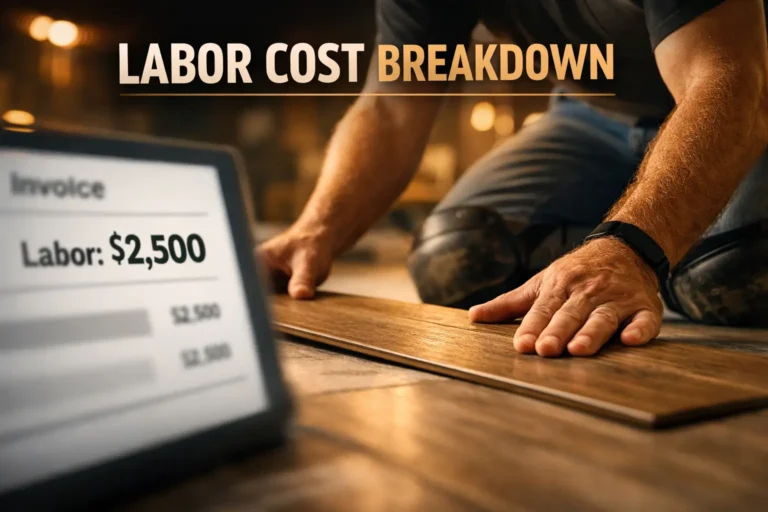
In 2026, labor is scarce. Pros won’t take a small 50-square-foot job at a per-square-foot rate because they lose money on travel and setup. They usually charge a minimum of $500 to $800.
Can I reuse my old baseboards?
Maybe. But taking them off without breaking them is nearly impossible. Most people end up buying new ones or adding a quarter-round to hide the mess.
Will my new floor be ready to walk on immediately?
For floating floors, such as vinyl, yes. For glue-down or finished-on-site hardwood, you might have to wait 24 to 72 hours for everything to set.
Conclusion
Assumption is the mother of all budget failures. Walk the floor with your contractor, demand a moisture test, and always keep a 20% emergency fund ready for what lies beneath the carpet. For more technical specifications, consult the National Wood Flooring Association (NWFA).
Ready to determine whether you actually need that $10/sq ft wood?