
Flooring Cost for Large Rooms: Save Thousands on Big Jobs
When you are flooring a large room like a 500-square-foot great room or a 1,200-square-foot open-concept living space, the math changes. In a small room, you get hit with trip fees and minimums. In a large room, you have buying power.
You are the big fish every contractor wants to land, which means you can negotiate better rates and find wholesale flooring prices that aren’t available for small jobs.
But wait. If you don’t watch the waste factor and the subfloor prep on a big space, a tiny $1.00 mistake can turn into a $1,000 disaster.
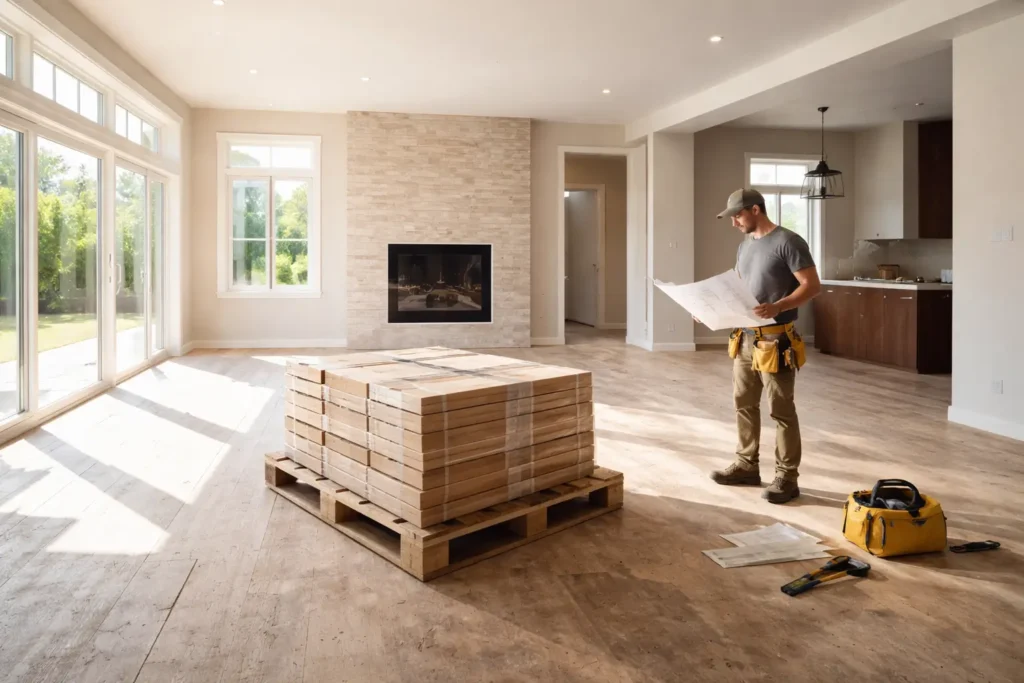
Table of Contents
The Wholesale Power Play
If you are buying more than 500 square feet of material, do not buy it off the shelf at a retail store.
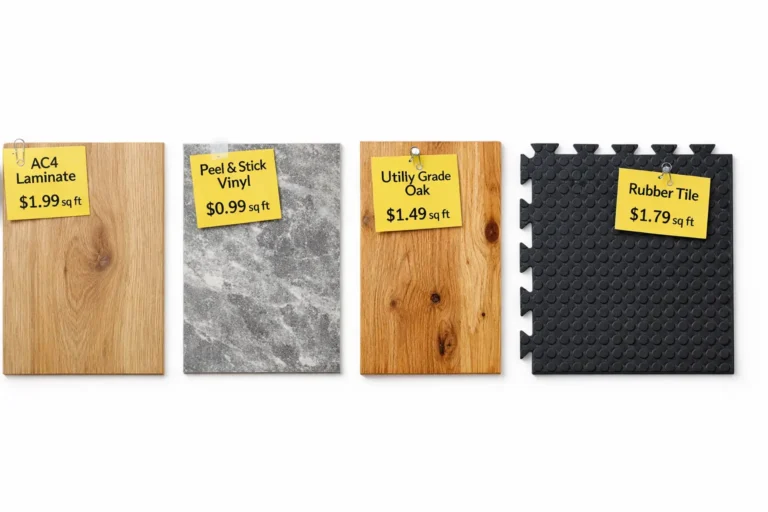
Go to a local flooring liquidator or a contractor supply warehouse. In 2026, these shops offer Pallet Pricing, where they drop the price by 15% to 20% if you buy the whole pallet. Taking advantage of a bulk flooring discount is essential for large open concept flooring costs.
🚚 Delivery Tax:
Retailers often show a low price on the tag but charge a fortune for delivery. For a large project, those boxes are often heavy, over 2,000 lbs. If you don’t have a truck, they might charge you $250 to $400 to drop the pallet in your driveway.
✅ The Fix: Negotiate Free Delivery into the contract before you pay. If they want to move 1,000 square feet of stock, they will almost always say yes to keep the inventory moving.
Large Room Cost Breakdown
On a large project, your install laminate flooring cost per square foot should actually go down because the crew is more efficient. They can get into a rhythm and finish the job faster per square foot than in a cramped bathroom. (See our Flooring Cost Factors guide for a detailed labor breakdown).
| Material Type | Material Cost (500+ sq ft) | Total Installed Cost (Avg) |
|---|---|---|
| Laminate (Waterproof) | $2.50 – $4.50 | $6.50 – $11.00 |
| Luxury Vinyl Plank (LVP) | $3.00 – $6.00 | $7.00 – $12.00 |
| Engineered Hardwood | $6.00 – $13.00 | $12.00 – $22.00 |
| Broadloom Carpet | $2.00 – $4.50 | $5.00 – $9.00 |
In 2026, hardwood floor square footage per day for a pro is about 500-800 sq ft for pre-finished boards. If a contractor tells you a 1,000 sq ft job will take two weeks, they are either overbooked or overcharging you for labor.
Technical Traps: Subfloor and Stability
In a small room, a slightly wavy floor is annoying. In a large room, it is a structural failure.
The Deflection Trap
Because the floor covers a massive area, any dips or humps in your subfloor are magnified. If your subfloor has too much deflection, it bounces when you walk, and a large area of click-lock planks will eventually pull apart at the seams.
The Leveling Contingency
Contractors often quote the installation but skip the subfloor leveling check. If they lay 1,000 square feet over a wavy floor, you will hear a crunching or clicking sound every time you walk.
Managing the Waste Factor and Staggering
The bigger the room, the more you stand to lose on waste.
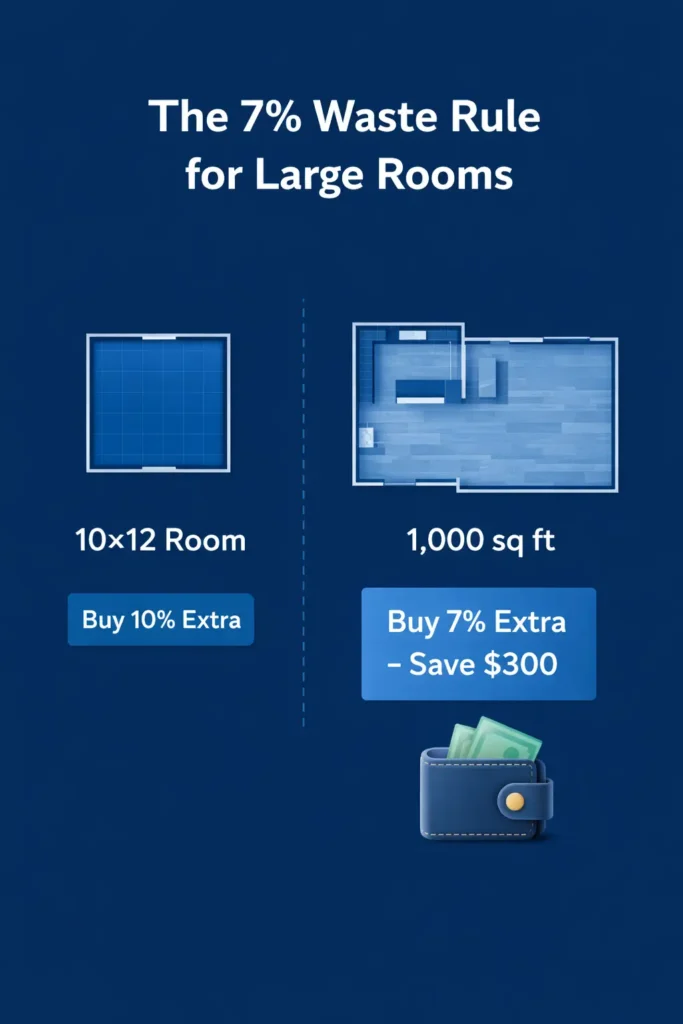
📉 The 7% Rule
Standard advice is to buy 10% extra for waste. But in a massive, square room, you can often get away with 5% to 7%.
On a 1,200-square-foot project, that 3% difference saves you the cost of 36 square feet, which is about $200 to $400 in your pocket.
📏 The Stagger Pattern
In large rooms, make sure the installer staggers the boards by at least 8 to 12 inches.
If they H-joint the floor, lining up the seams every other row, it looks like a staircase, and the joints won’t be strong enough to hold the weight of your furniture.
The Expansion Gap and Transition Strip Scam
Laminate and LVP are floating floors. They move with the temperature. In a large room, that movement is huge. If you have a run of floor longer than 30 or 40 feet, you must have an expansion gap or a Transition Strip (T-molding) in the middle of the floor.
- The Friction: Many homeowners hate the look of a transition strip in the middle of a big room. Some contractors will skip it to make you happy.
- Don’t let them: If you skip the gap on a 40-foot run, the floor will tent (pop up like a mountain) in the middle of the room during a humid summer. You will have to cut the floor while it is already installed, which is a total mess.
Insights from the Field
Based on recent discussions in flooring communities like Reddit and Quora:
The Furniture Shuffle
For a large 1,200 sq ft house, pros usually charge an extra $300 to $600 to move furniture. Save that money by renting a storage pod for the week and clearing the floor yourself.
The Subfloor Ghost
If you are installing over old tile, you must fill the grout lines. If you don’t, the ghost of the old tile pattern will show up on your new vinyl floor within a year.
The Acclimation Rule
Never let a contractor install the floor the day it arrives. It needs to sit in the room for 48 to 72 hours. If they rush, the floor will shrink or expand after installation, causing permanent gaps.
FAQs
How much should I pay for 400-500 sq feet of flooring?
In 2026, budget between $3,000 and $5,500 for a professional mid-range install.
Is a large room cheaper per square foot?
Yes. You can usually shave $0.50 to $1.00 off the labor rate because the crew saves time on travel and setup.
Can I get a discount for a whole-house job?
Absolutely. Always ask for a Volume Discount on the labor. If they are staying on one site for three days, they will make more money and should pass some of the savings along to you. (To verify contractor credibility, check resources at USA.gov).
What is the best flooring for a large basement?
Luxury Vinyl Plank (LVP). It handles the moisture of a large concrete slab and is much cheaper than tiling a massive area.
Conclusion
When the project is great, small details like the expansion gap and underlayment quality matter more than ever. Don’t be penny-wise and pound-foolish. Spend the money on the subfloor prep, so your massive investment doesn’t literally crack under the pressure.
For the latest on bulk material pricing and 2026 contractor standards, check out the National Wood Flooring Association (NWFA).
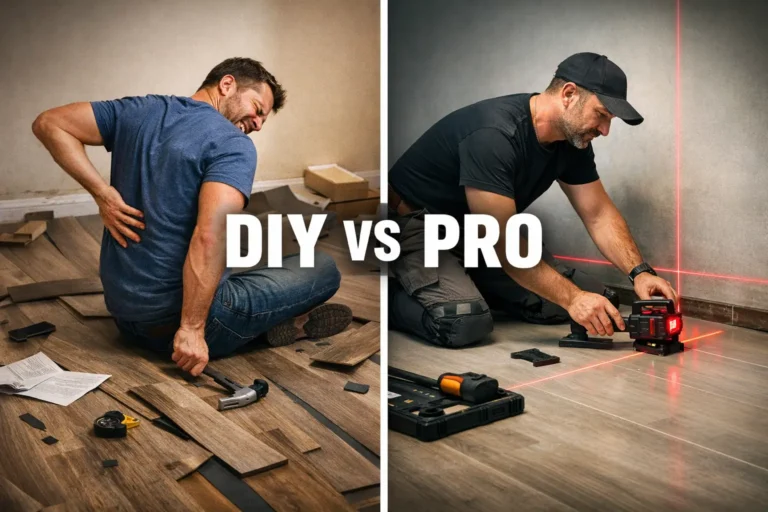
Ready to find out if you should even hire a pro?
Check out our final guide: [DIY vs Professional Flooring Cost: Is Saving $2,000 Worth the Back Pain?].

One Comment