Best Bathroom Flooring Options 2026: Soggy Subfloor Fix
Your bathroom floor is the only part of your house that needs to act like a swimming pool. Most people pick a floor because it looks pretty on a Pinterest board. But they forget that water is a slow-motion wrecking ball. If you choose the wrong material, you aren’t just looking at a bit of mold.
You’re looking at a $5,000 repair bill to fix rotted wood in a few years.
In 2026, the goal is zero-anxiety flooring. You want something that keeps water on the surface, where you can see it. You don’t want it soaking into the wood or concrete underneath. If you are comparing quotes, make sure you know how to negotiate with a flooring contractor first.
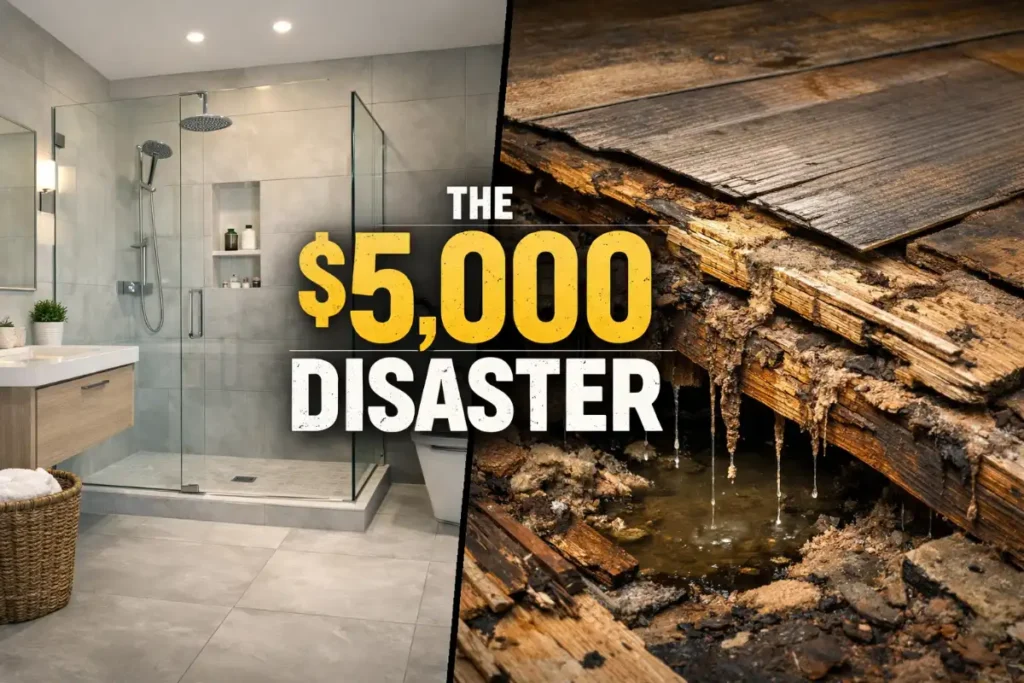
Table of Contents
What It Really Costs: Bathroom Flooring in 2026
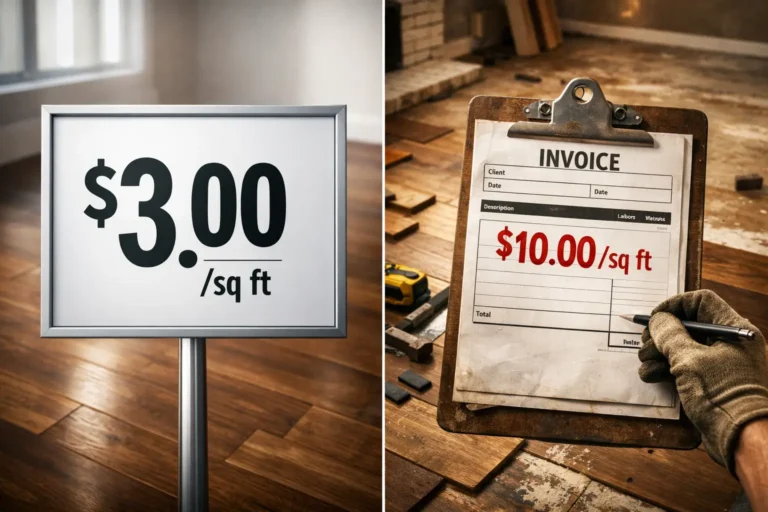
Don’t guess your budget based on the price tags at the store. The bathroom flooring installation cost is mostly labor and prep work. In 2026, finding a good contractor is harder than ever, so prices have gone up.
If you’re looking for a bathroom flooring estimate, here is how the math usually works. (See our Cost Factors Guide for full breakdowns).
- Materials: $2.50 to $7.00 per sq ft.
- Labor: $2.00 to $8.00 per sq ft.
- Ripping out the old floor: $0.50 to $2.00 per sq ft.
- Fixing or leveling the subfloor: $1.00 to $3.00 per sq ft.
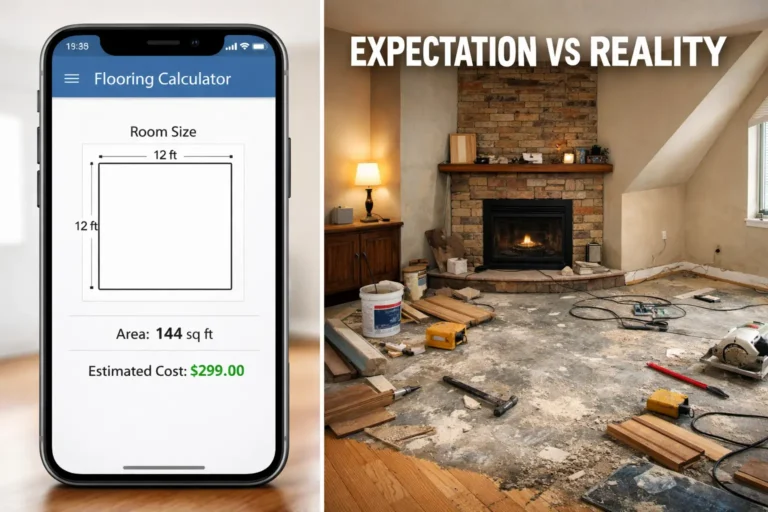
For a standard 50 sq ft bathroom, you’ll likely pay between $335 and $517 for the whole job. That’s assuming the floor underneath is healthy. But if the wood is rotted, that price can double in a single afternoon.
Porcelain Tile: The 2026 Gold Standard
If you want the best value for bathroom floor replacement, porcelain tile is the winner. It has a 70% ROI. This means it practically pays for itself when you sell the house.
Why Porcelain Beats Ceramic
Porcelain is fired at much higher temperatures than regular ceramic. It’s denser and harder. It absorbs almost zero moisture. If your bathtub overflows, a porcelain floor won’t even care.
The Grout Scam to Avoid
Contractors love using cheap cement-based grout because it’s easy for them to spread. Don’t let them do it. Cement grout is full of tiny holes. It soaks up dirty bath water and grease. Your beautiful floor lines will turn black and gross within six months.
The Fix: Demand epoxy grout. It is 100% waterproof and stain-proof. It costs more in labor because it dries fast, but it saves you from scrubbing on your hands and knees later.
Big Tiles and Matte Finishes
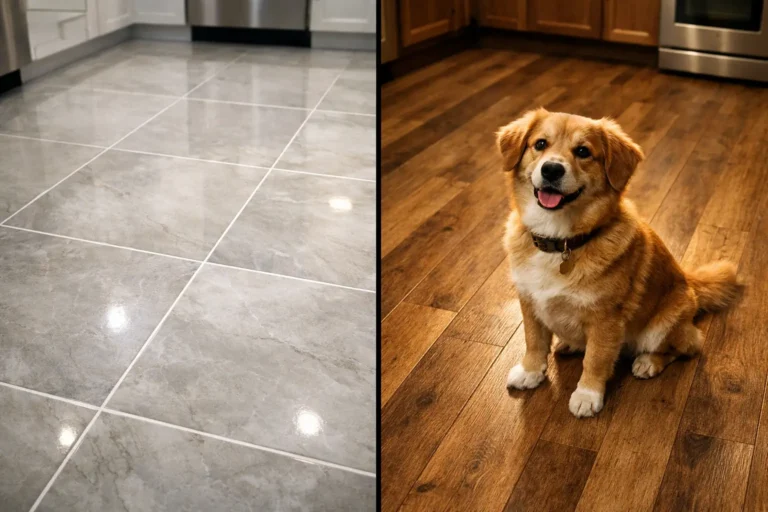
In 2026, we’re moving toward large-format tiles (like those big 12×24 slabs). These look expensive and have fewer grout lines to clean. Also, stay away from shiny, glossy tiles. They look like a “show home,” but they are dangerous ice rinks when wet. Stick to a matte finish so you don’t slip.
SPC Vinyl: The Warm Alternative
If you think tile feels too cold, SPC vinyl flooring is the 2026 favorite. SPC stands for Stone Plastic Composite. It’s basically limestone powder mixed with plastic. You can check exact material pricing on our Vinyl Calculator.
The Benefits of the Stone Core
It is 100% waterproof. Unlike old-school laminate, it won’t warp or swell if it gets soaked. It also handles hits well. If you drop a heavy glass bottle of cologne, the floor won’t crack.
The Real-World Friction: Leveling
Here is the catch: vinyl is thin. If your subfloor isn’t perfectly flat, the click-lock joints will eventually snap. You’ll feel the floor bouncing when you walk on it.
The Fix: Spend the extra money on floor leveling and bathroom prep. It’s better to pay $150 for a bag of leveler now than to rip up a $2,000 floor later.
Design Trends 2026: What’s In and What’s Out
Style moves fast. If you want your house to look modern, you have to leave 2025 behind.
🛑 What to Avoid (The Out List)
- Builder-grade gray: Those cool gray wood-look floors are over. They look like a cheap house flip.
- Busy checkerboard: Bold black-and-white patterns are just too loud.
- Glossy finishes: These show every footprint and water splash.
✅ What to Use (The In List)
- Warm neutrals: Think beige, taupe, and muted terracotta.
- 3D Texture: Tiles with ridges or waves add depth to the room.
- Spa-inspired visuals: Realistic stone and hardwood looks that make the bathroom feel like a retreat.
- Creative shapes: Hexagons and diamonds are huge right now.
The Toilet Wax Ring
This is the most common mistake in luxury vinyl plank bathroom installation.
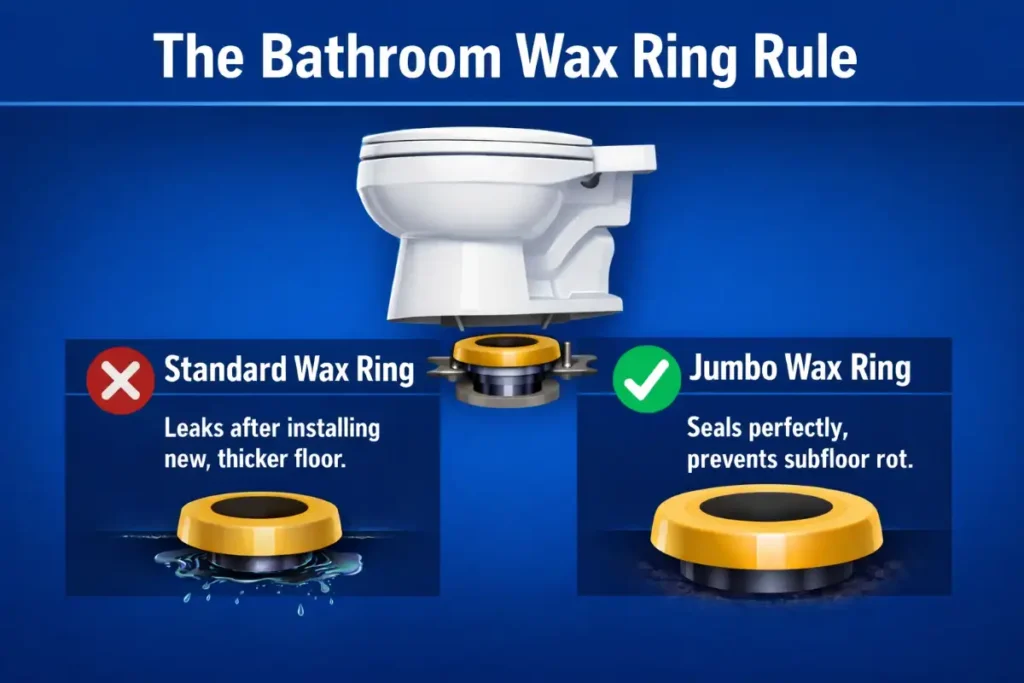
When you put down a new floor, the floor usually goes up in height. If your installer puts a standard wax ring back under the toilet, it might not seat properly on the pipe.
The Result: The toilet will leak a tiny bit every time you flush, because it leaks under the floor. Two years later, your subfloor is rotted.
The Fix: Always buy a jumbo wax ring or a flange extender. It costs $15 and prevents a massive repair bill.
Specialty Flooring: From Slate to Sheet Vinyl
The Budget Champion: Sheet Vinyl
If you are on a tight budget, installing sheet vinyl in the bathroom is actually a smart move. Because it’s a big sheet, there are zero seams for water to leak through. It can last 20 years if you take care of it.
Natural Stone: Slate and Marble
- Slate: Naturally slip-resistant because of its texture. But it requires you to seal it every year. That’s a chore.
- Marble: The ultimate luxury. Use a honed finish instead of a polished one; it hides scratches and isn’t slippery.
Eco-Friendly: Linoleum
Linoleum isn’t vinyl. It’s made from linseed oil and wood flour. It’s highly antimicrobial and can last for 40 years. It’s a great choice if you want a green bathroom.
FAQs
What is the best waterproof flooring for a bathroom?
Porcelain tile is the best, but SPC vinyl is the best budget-friendly pick. Both will stop water from reaching your subfloor as long as the edges are sealed with silicone.
How do I find a bathroom flooring contractor near me?
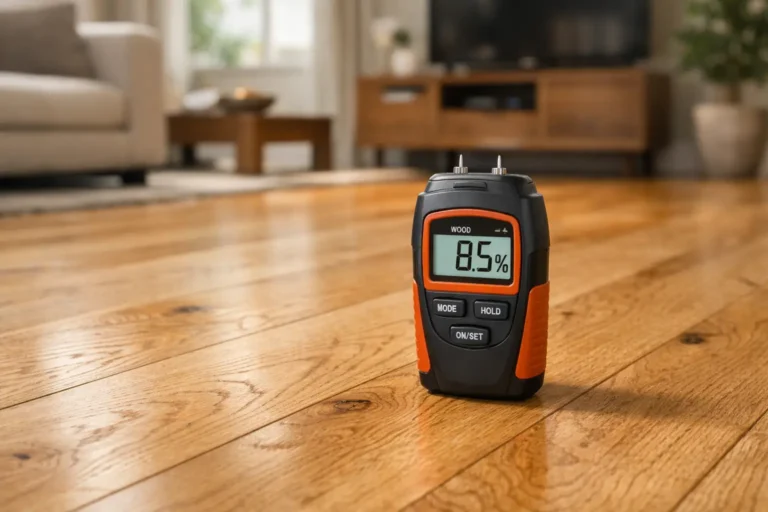
Don’t just pick the cheapest person on Facebook. Ask if they do moisture testing and if they use epoxy grout. If they don’t, keep looking.
Is a heated floor worth the money?
Yes. Tile is a great heat conductor. In 2026, having a heated bathroom floor is a major selling point. It makes a cold Monday morning much easier to handle.
Can I install vinyl over my old tile?
You can, but you shouldn’t unless you fill the grout lines with leveler first. If you don’t, the tile pattern will eventually show through your new vinyl.
Conclusion
I’ve seen many pretty floors fail. If this is your forever home, go with large-format porcelain tile and epoxy grout. It is the only way to be 100% sure you won’t have a problem in 10 years. If you are refreshing a rental or a guest bath, go with SPC vinyl. It’s fast and handles water like a pro. Just make sure the subfloor is level before you start.
Before you start, get a professional quote for bathroom flooring. Make sure they check for subfloor repair issues. It’s better to know the real price now than to be surprised halfway through the job. You can review official moisture damage prevention guidelines via the EPA’s Mold Guide or TCNA Standards.
If you want to rethink carpet for other areas, view our Carpet Calculator.