Best Flooring for Pets 2026: Scratch-Proof & Waterproof Guide
If you have a 70lb dog or a cat with bathroom issues, your floor isn’t just a surface; it’s a target. You can spend thousands on a gorgeous White Oak floor on Monday, and by Friday, it can be covered in deep claw marks and permanent dark spots from accidents.
In 2026, every floor is marketed as “pet-proof.” A floor might be waterproof, but so slippery that your senior dog develops joint issues from slipping. Or it might be scratch-resistant but made with chemicals that your pet breathes in all day while napping.
This guide will discuss how to protect your home from claws and spills without turning your living room into a dangerous ice rink for your pets. We will compare LVP, Laminate, and Tile to find the perfect balance.
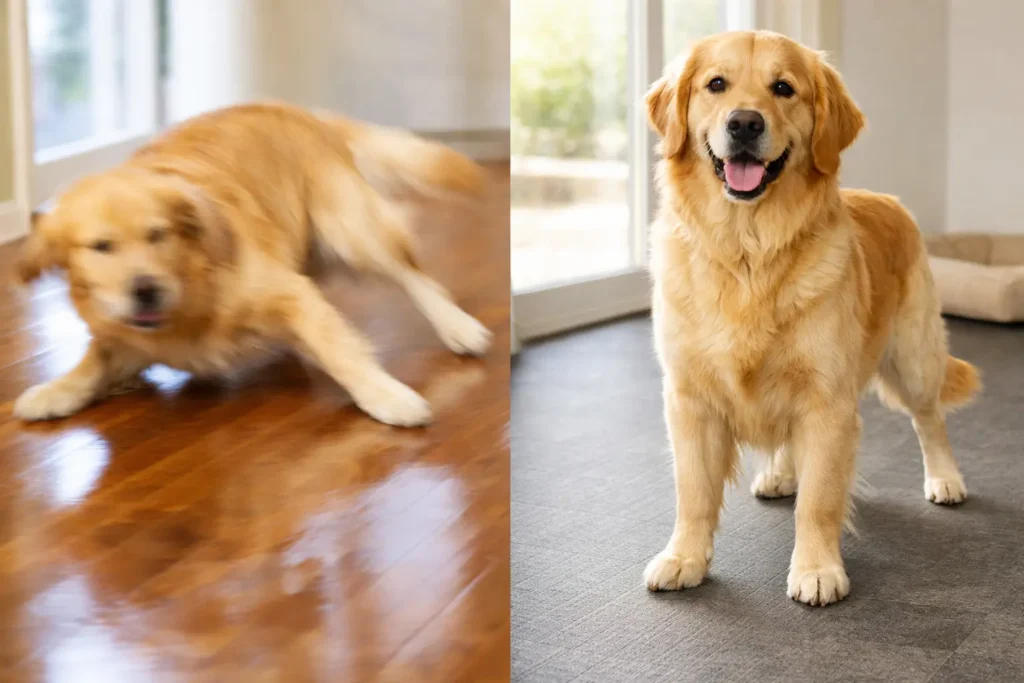
Table of Contents
Traction: The Safety Factor
Why “Pet-Proof” Often Means Slippery
Most homeowners obsess over scratches, but for your pet, traction is the real life-or-death issue. Many high-performance floors have a thick, smooth wear layer. While this is great for cleaning, it’s a nightmare for dogs.
- 🚨 The Problem:
Ultra-glossy floors turn into ice rinks. If a dog can’t get a grip with its paws, its legs splay out. Over time, this causes joint damage and can lead to expensive surgeries. - ✅ The Fix:
Look for floors with EIR (Embossed in Register) or Brushed textures. These aren’t just for looks; the physical grooves provide the micro-grip your dog needs to walk confidently.
For more professional tips on making your home safe, check out the ASPCA’s guide to a pet-friendly home.
The Soak Time Reality Check
How long do you have before the floor is ruined?
Accidents happen. Whether it’s a puppy learning the rules or an older cat, moisture is the #1 killer of pet-friendly homes. By 2026, the “Waterproof” label will be used loosely. You need to know your actual Soak Time.
| Flooring Type | 2026 Soak Limit | The Real-World Result |
|---|---|---|
| SPC Vinyl (LVP) | Infinite | The plastic core won’t rot, but mold can grow underneath. |
| Waterproof Laminate | 24–72 Hours | Fine for water bowls; bad for hidden “overnight” accidents. |
| Engineered Wood | 2–4 Hours | It will swell and stain if liquid hits the seams. |
| Porcelain Tile | Infinite | Completely immune, but very cold on pet joints. |
Scratches: Laminate vs. LVP
Which one survives the Zoomies?
No floor is 100% scratch-proof, but some resist scratches more than others.
Laminate is the 2026 winner for claw resistance. Laminate uses a top coat of aluminum oxide, one of the hardest minerals on earth. Look for an AC4 or AC5 rating.
LVP is softer. Even the best LVP with a 20 mil wear layer can be scuffed by a heavy dog making a sharp turn.
The Sound of Claws
Keeping the house quiet at 2 AM
If your pet is active at night, the click-click-click of claws on a hard floor can keep you awake.
Laminate is the loudest. It acts like a drum skin, echoing every step. In 2026, the best solution is SPC Vinyl with an attached Cork backing. Cork is a natural sound-dampener that absorbs claw impact rather than reflecting noise into the room.
Chemical Safety: The Nose-to-Floor Rule
Ensuring your pets aren’t breathing toxins
Pets spend 90% of their lives within two inches of your floor. They breathe in whatever your floor is off-gassing. In 2026, you must avoid bargain vinyl floors that use recycled plastics containing Phthalates or Formaldehyde.
Look for these labels:
- 🌱 FloorScore Certified: Meets strict indoor air quality standards.
- 🛡️ Greenguard Gold: The highest standard for low chemical emissions.
- 🧪 Phthalate-Free: Essential for pets that sleep directly on the floor. For more on indoor air quality, visit the EPA Website.
2026 Comparison: Pet Performance Specs
| Feature | Luxury Vinyl (SPC) | High-End Laminate | Ceramic/Stone Tile |
|---|---|---|---|
| Accident Proof | 100% Waterproof | 48-72 Hour Limit | 100% Waterproof |
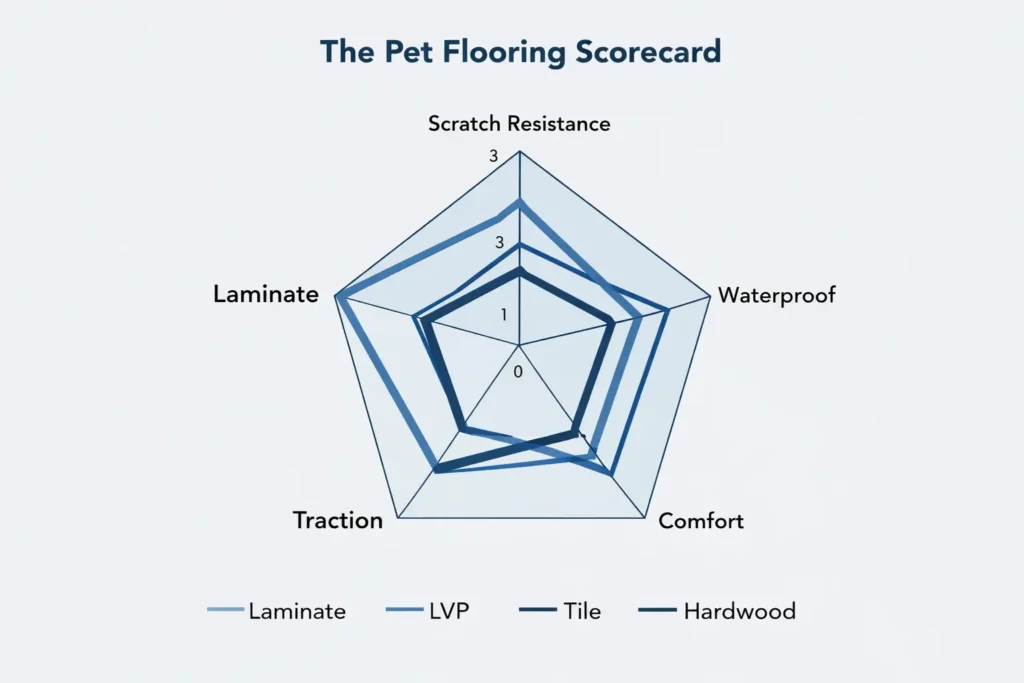
| Scratch Resistance | Good (20 mil+) | Best (AC4/AC5) | Permanent |
| Dog Traction | Moderate (Textured) | High (Embossed) | Low (Slippery) |
| Sound Level | Quiet (Thud) | Noisy (Click) | Very Noisy |
| Joint Comfort | Softer/Warmer | Harder | Cold/Hard |
FAQs
What is the best floor for an old dog with bad hips?
A textured LVP or a low-pile carpet tile. If you want a hard surface, look for a COF (Coefficient of Friction) rating of 0.60 or higher.
Can I use a steam mop on pet messes?
Never. Steam mops are causing flooring warranties to be voided in 2026. The heat forces the mess deeper into the joints and ruins the glue. Use a pH-neutral cleaner instead.
Why does my floor still smell after cleaning?
The liquid has likely seeped through the click joints and is sitting in the underlayment. Once it’s under there, you can’t clean it. This is why seam sealer is an excellent investment during installation.
Is Bamboo flooring good for pets?
Only Strand-Woven bamboo. Traditional bamboo is actually a grass and is very soft. A dog will ruin it in a week. Strand-woven bamboo is twice as hard as oak hardwood and resists scratches well.
Conclusion
The perfect pet floor is a trade-off. If your primary concern is scratches from a big dog, buy a high-quality AC5 Laminate with a textured surface. It is the most rigid surface on the market.
If your primary concern is accidents and ease of cleaning, choose 20 mil SPC Vinyl. It is 100% waterproof and much quieter for the house.
Ready to start? Before you order, read our How to Calculate Square Footage Guide to avoid running out of material on installation day.