Carpet Roll Width Calculator Guide: 12-Foot vs 15-Foot Rolls (2026)
Quick answer: A 13-by-18-foot room measures 234 square feet, or 26 square yards. But those 26 square yards aren’t necessarily what you’ll purchase. In a straightforward cut plan with six inches of trimming length per piece, a 12-foot-wide roll requires 36 square yards and a seam. A 15-foot-wide roll needs about 30.83 square yards and can cover the room with one piece. Roll width, seam placement and cut direction decide the real order.
Carpet shopping gets confusing fast when the room is measured in square feet, the price is posted by the square yard, and the carpet itself comes off a roll that’s either 12 or 15 feet wide. All three numbers describe different things. The room’s size stays the same, but the amount you buy can change when you switch roll widths.
That’s why an installer doesn’t just enter the room area and add ten percent. They look at where the carpet will run, which direction the pile faces, how many sections will be cut from the roll and where the seams will land. You can do enough of that planning yourself to understand a quote and ask the right questions.
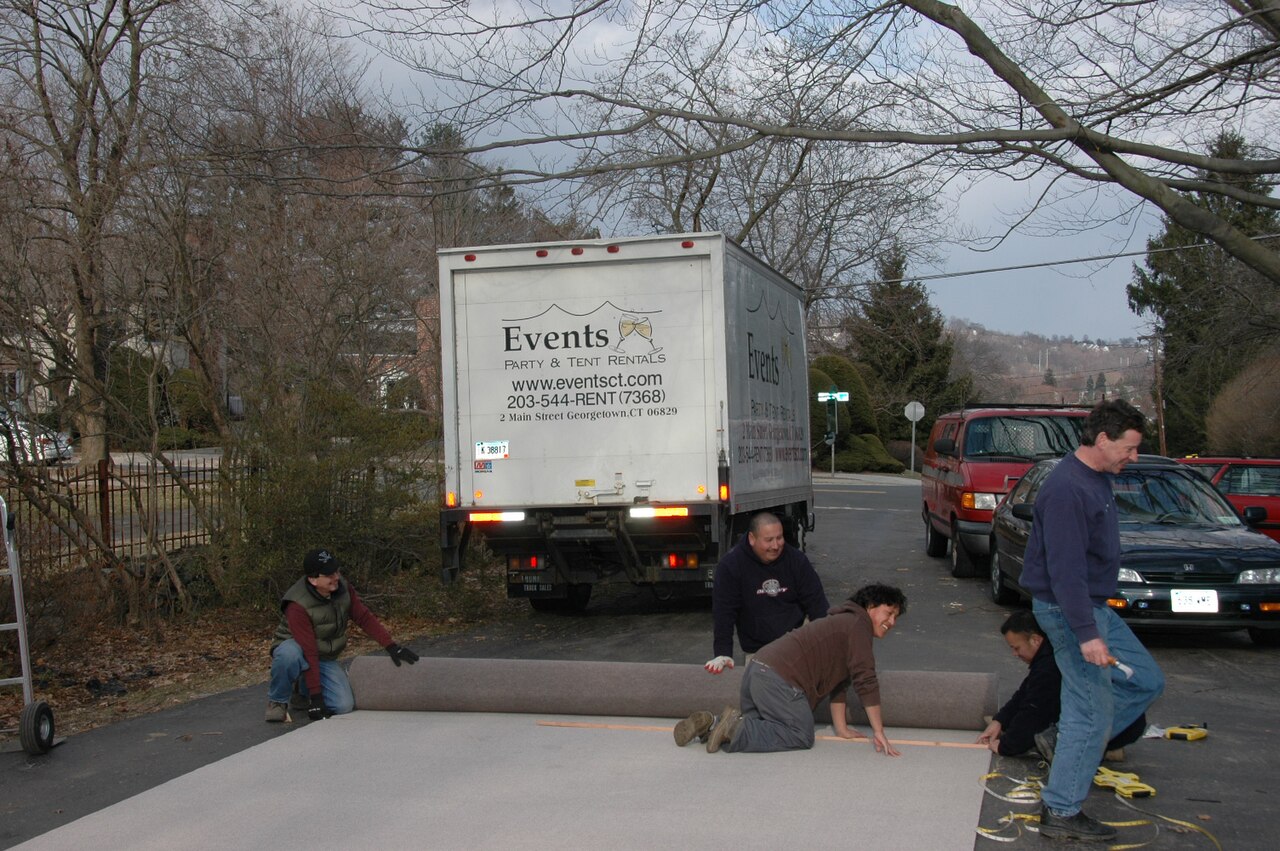
Table of Contents
How wide is a roll of carpet?
For residential broadloom, 12 feet is a common roll width and 15 feet is another available option. Some products are made in other widths, including 13 feet 6 inches, but you can’t assume every style comes in every size. Ask the retailer for the actual usable roll width of the color and product you’re considering. The Carpet and Rug Institute (CRI) also publishes residential installation standards covering measurement and layout.
A roll width isn’t the length you’ll buy. Think of the width as fixed and the length as something the store cuts for your project. A 12-foot roll cut 10 feet long contains 120 square feet of material. A 15-foot roll cut the same 10 feet long contains 150. The second one is wider, but that doesn’t automatically make it the better fit.
| Roll width | Area in 1 linear foot | Area in 1 linear yard (3 ft) | Square yards in 1 linear yard |
|---|---|---|---|
| 12 feet | 12 sq ft | 36 sq ft | 4 sq yd |
| 15 feet | 15 sq ft | 45 sq ft | 5 sq yd |
That last column is worth remembering. A linear yard is three feet along the roll; a square yard is an area measuring three feet by three feet. They’re not interchangeable. Always confirm whether a quoted yard is a linear yard of full-width material or a square yard of carpet.
Square feet to square yards: the easy conversion
Start with the actual room dimensions. Multiply length by width to get square feet. Then divide by nine to convert to square yards. Nine works because one yard is three feet, and a square yard contains 3 x 3 = 9 square feet.
Room area: 13 ft x 18 ft = 234 sq ft.
Area in square yards: 234 / 9 = 26 sq yd.
Buying formula: purchased square yards = (roll width in feet x total ordered roll length in feet) / 9.
Use that first conversion when comparing carpet prices, padding estimates and room sizes. But stop short of treating 26 square yards as an order quantity. The roll may leave offcuts along the walls, and a room wider than the roll may need a second piece. If you’re dealing with a hall or an L-shaped opening, our room measurement guide explains how to measure the separate sections accurately.
Worked example: a 13-by-18-foot room on 12-foot and 15-foot rolls
This is a useful room to compare because one side measures 13 feet, just beyond a 12-foot roll. Let’s assume a plain, unpatterned carpet and an example allowance of six inches total extra cut length per piece. That’s half a foot added to the measured cut, not half a foot at each end. Your installer might specify a different trimming allowance.
Option A: 12-foot-wide carpet
To avoid using two pieces running the full 18-foot length, turn the proposed layout so the fixed 12-foot roll width spans the 18-foot side of the room. Two widths cover 24 feet, leaving trimming along the room’s edges. Both pieces need to be 13 feet long, plus the half-foot cut allowance.
Widths needed: round up (18 / 12) = 2 pieces.
Cut length per piece: 13 + 0.5 = 13.5 ft.
Total linear feet from a 12-ft roll: 2 x 13.5 = 27 ft.
Carpet purchased: 12 x 27 = 324 sq ft.
Square yards to buy: 324 / 9 = 36 sq yd.
That creates one seam between the two pieces. The purchased area is 90 square feet above the floor’s 234 square feet. Some of those offcuts might work in a closet or adjoining room, but you shouldn’t count on that until the installer draws a real cut plan.
Option B: 15-foot-wide carpet
Now place the roll width across the room’s 13-foot side. One 15-foot width covers that dimension. The single piece needs to run along the 18-foot side, again with a half-foot total cutting allowance.
Widths needed: round up (13 / 15) = 1 piece.
Cut length: 18 + 0.5 = 18.5 ft.
Carpet purchased: 15 x 18.5 = 277.5 sq ft.
Square yards to buy: 277.5 / 9 = 30.83 sq yd.
The 15-foot option covers the room without a seam in this simple layout and uses 46.5 fewer purchased square feet, or about 5.17 fewer square yards. That doesn’t mean a 15-foot carpet will always cost less: it may be a different product or price tier. Compare actual installed quotes rather than assuming identical square-yard prices.
| 13 x 18 ft room | 12-ft roll | 15-ft roll |
|---|---|---|
| Floor area | 234 sq ft | 234 sq ft |
| Full-width pieces | 2 | 1 |
| Ordered length | 27 linear ft total | 18.5 linear ft |
| Gross carpet purchased | 324 sq ft | 277.5 sq ft |
| Purchased square yards | 36.00 sq yd | 30.83 sq yd |
| Estimated lengthwise seams | 1 | 0 |
Check both carpet directions before choosing the winner
People often compare only one direction, especially when a room appears longer than it is wide. But you can lay out the fixed roll width across either room dimension, provided the carpet pattern, pile direction, seam plan and manufacturer instructions allow that orientation.
For a basic rectangle, write the room’s two dimensions on paper. First see how many roll widths are needed to cross the width of the room; each piece then needs to run along the length. Swap those dimensions and calculate again. Keep the better workable plan, not automatically the smaller number on your calculator.
For example, a 12-foot roll in a 13-by-18-foot room could be planned as two pieces only 13.5 feet long, as we did above. If you instead try to cover 13 feet across the room with two 18.5-foot-long pieces, you’ll order a much larger area. Rotating the plan matters. Some patterned carpets won’t allow that rotation, which is why the installer must approve the layout.
| Room size | Net floor | 12-ft roll, best simple orientation | 15-ft roll, best simple orientation |
|---|---|---|---|
| 9 x 11 ft | 11.00 sq yd | 12.67 sq yd, 0 seams | 15.83 sq yd, 0 seams |
| 12 x 14 ft | 18.67 sq yd | 19.33 sq yd, 0 seams | 20.83 sq yd, 0 seams |
| 13 x 18 ft | 26.00 sq yd | 36.00 sq yd, 1 seam | 30.83 sq yd, 0 seams |
| 14 x 20 ft | 31.11 sq yd | 38.67 sq yd, 1 seam | 34.17 sq yd, 0 seams |
To keep the comparison consistent, each row assumes a plain carpet, six inches of total trim length per piece, full-width rectangular drops and no reuse of the offcuts in other areas. Store cutting increments and pattern matching can change the final number. The table is a practical starting point for reviewing an installer cut sheet, not a replacement for one.
Notice the 9-by-11-foot room: the 12-foot roll buys less carpet. For 13-by-18 feet, the 15-foot roll wins. There is no universally best width. The right product width depends on the shape of your project.
Do the seam lines matter as much as the yardage?
Yes. A seam can be well made and still visible. A change in light, a textured carpet or a busy doorway can make two pieces easier to spot. The Carpet and Rug Institute’s installation tips recommend discussing seam placement with your installer instead of expecting seams to disappear.
Ask the installer to draw the seam on the room sketch before the order goes in. Think about the way people walk through the room, where windows throw light across the carpet and whether a seam would sit in a doorway. Keep the pile direction consistent wherever adjoining pieces meet. If you’re using a striped or repeating pattern, matching it may require additional length on each cut.
That’s also why trying to reuse every narrow offcut isn’t always the right move. A scrap may fit a closet by dimensions but run the wrong way for the pile, or it may create a seam across the door. The installer should tell you where offcuts are usable and where they aren’t.
Before accepting a quote, ask for the proposed seam locations, carpet direction and cut quantities. CRI’s carpet installation guidance specifically calls for accurate measurements and an installation plan that includes seams and unusual room shapes.
How to turn a cut list into a real carpet order
A carpet cut list doesn’t need to be complicated. Each row should tell you the room or section, the roll width, the number of full-width drops, the required cut length, where the cut is used and whether it creates a seam. When the store quotes a total amount of carpet, you should be able to trace that number back to the list.
| Item | 12-ft roll plan | 15-ft roll plan |
|---|---|---|
| Living room cut 1 | 12 x 13.5 ft | 15 x 18.5 ft |
| Living room cut 2 | 12 x 13.5 ft | Not needed |
| Gross square feet | 324 | 277.5 |
| Gross square yards | 36 | 30.83 |
| Seams in the room | One planned seam | No planned seam |
Here’s a quick pricing check. If either product is quoted at exactly $30 per square yard, the carpet material in this example would be $1,080 for the 12-foot layout and $925 for the 15-foot layout. That $30 is just a round rate to demonstrate the multiplication; use your store’s actual price and include any separate seaming, padding and installation charges before deciding.
In a larger project, ask whether the leftover piece from the living room can cover a closet or a hallway without reversing the pile or violating seam rules. A thoughtful cut sheet can save material, but fitting an offcut doesn’t always mean avoiding the extra installation time.
Why carpet padding is measured differently
Carpet padding covers the floor under the finished carpet. The floor area, not the full-width gross carpet order, is the starting point. In our 13-by-18-foot room, that’s 234 square feet or 26 square yards. A supplier may add an allowance for pad cuts and seams, and pad roll sizes vary, but you wouldn’t automatically order 36 square yards of pad just because the carpet comes from a 12-foot roll.
If you want a rough pad example, a five-percent planning allowance gives 234 x 1.05 = 245.7 square feet, or 27.3 square yards. The final pad order still depends on available pad widths, installation requirements and the layout. Use our carpet cost calculator to see room square yards and compare padding tiers before requesting quotes.
Stairs are different again. A carpet runner needs the tread depth and riser height measured across each step, plus any nose wrap and finishing length. Don’t use a room-style broadloom formula on stairs without a runner cut plan. Our L-shaped room, hallway and stair measuring guide shows a complete set of stair-surface measurements.
What to tell the carpet store before it places the order
- Give every room’s actual dimensions. Include closets, hallways, doorways, stairs and landings on a sketch, even if some are staying unchanged.
- Ask for the carpet’s exact available widths. Not every color and style is sold in both 12- and 15-foot rolls.
- Show the intended carpet direction. If pieces meet, the pile needs to run consistently. Check patterned carpets for required pattern matching.
- Ask where the seams will be. A seam along a walking path or doorway may be less appealing than a layout that costs a little more in carpet.
- Request the cut lengths. Get the number of drops, the cutting allowance on each and the total linear feet to be ordered.
- Compare square yards actually purchased. Don’t compare only the room’s square feet with the total on the invoice.
- Keep padding and labor separate. Confirm pad coverage, tear-out, furniture moves, transition strips, stairs and seam preparation.
- Keep a copy of the approved layout. It’s useful if the room changes during installation or you need to check how the material was ordered.
For extra help with inches, closets and odd corners, see flooring measurement mistakes to avoid. If you’re comparing installation bids across different flooring materials, our labor cost breakdown shows which charges are separate from the carpet itself.
Frequently asked questions
Is a 15-foot carpet roll always cheaper than a 12-foot roll?
No. A 15-foot roll can eliminate a seam in some rooms, but may waste more material in smaller ones. The price of the carpet style and its available widths also matter. Calculate the proposed cut lengths for both widths before comparing costs.
How do I convert 250 square feet of carpet to square yards?
Divide 250 by nine. The measured floor is approximately 27.78 square yards. That isn’t necessarily what you’ll buy from a fixed-width roll because seams, trimming and pattern matching affect the purchased material.
Why is the carpet estimate bigger than my room’s square footage?
You buy full-width cuts from a roll. Some of that material gets trimmed along walls or remains as an offcut. If the room needs a second carpet breadth, the order may be much bigger than the net floor area. Ask the store for its cut sheet so you can see the difference.
What happens if my room is 13 feet wide and the roll is 12 feet?
You generally need more than one width unless another layout or product fits. In the 13-by-18-foot example above, a 12-foot product can be planned as two 13.5-foot-long pieces. A 15-foot product covers the 13-foot dimension with one piece.
Can carpet offcuts be used in a closet?
Sometimes. The leftover needs to be wide and long enough, in the correct pile direction, and suitable for the way the closet connects to the rest of the flooring. Your installer should check seams and appearance before promising to reuse it.
Are carpet seams invisible after installation?
No installer should promise that every seam will disappear. Good seam construction and thoughtful placement make a difference, but light, carpet texture, traffic and pattern can make seams noticeable. Agree on their positions before the installation begins.
Does carpet padding need the same waste percentage as the carpet?
Not automatically. Pad is usually planned from the actual floor area with its own cutting allowance and available roll dimensions. It isn’t governed by the finished carpet’s 12- or 15-foot seam layout in exactly the same way.
Sources and photo credit
Installation and seams: Carpet and Rug Institute residential and commercial installation standards and CRI homeowner installation tips. Both are useful when discussing seams, carpet direction and professional installation with a retailer.
Roll-width and estimating reference: U.S. Army Corps of Engineers carpet design guidance, together with the retailer’s actual product information. Confirm 12- and 15-foot availability for the specific carpet you want.
Photo: Don Williams, Wikimedia Commons, CC BY 3.0. The image shows carpet being cut for an event space; this guide’s room diagrams are original illustrations.
Bottom line
Use square feet to measure the room, divide by nine to understand the floor’s square yards, and then calculate what the roll actually has to supply. A 12-foot roll can be the sensible choice for a smaller bedroom. A 15-foot roll can save a seam and several purchased yards when a room sits just wider than 12 feet. The smartest order is the one that fits your actual room, carpet direction and approved cut plan, not the one that looks simplest on a square-foot calculator.